When disaster strikes, it is not only homes, roads, or belongings that are lost. One thing that often receives less attention, despite its impact being felt every night, is light. In Aceh Tamiang District, the flash floods that hit the area in November 2025 not only damaged residential areas but also disrupted electricity networks and street lighting. Streetlights were knocked down, cables were damaged, and electricity supplies were temporarily disrupted. As night fell, villages that were once brightly lit were plunged into darkness.
Access to evacuation sites, public facilities, and emergency services was disrupted. Vulnerable groups, including children, older people, and women, were among those most affected, as limited lighting can increase security risks and the risk of violence in dark and isolated public spaces and evacuation sites.
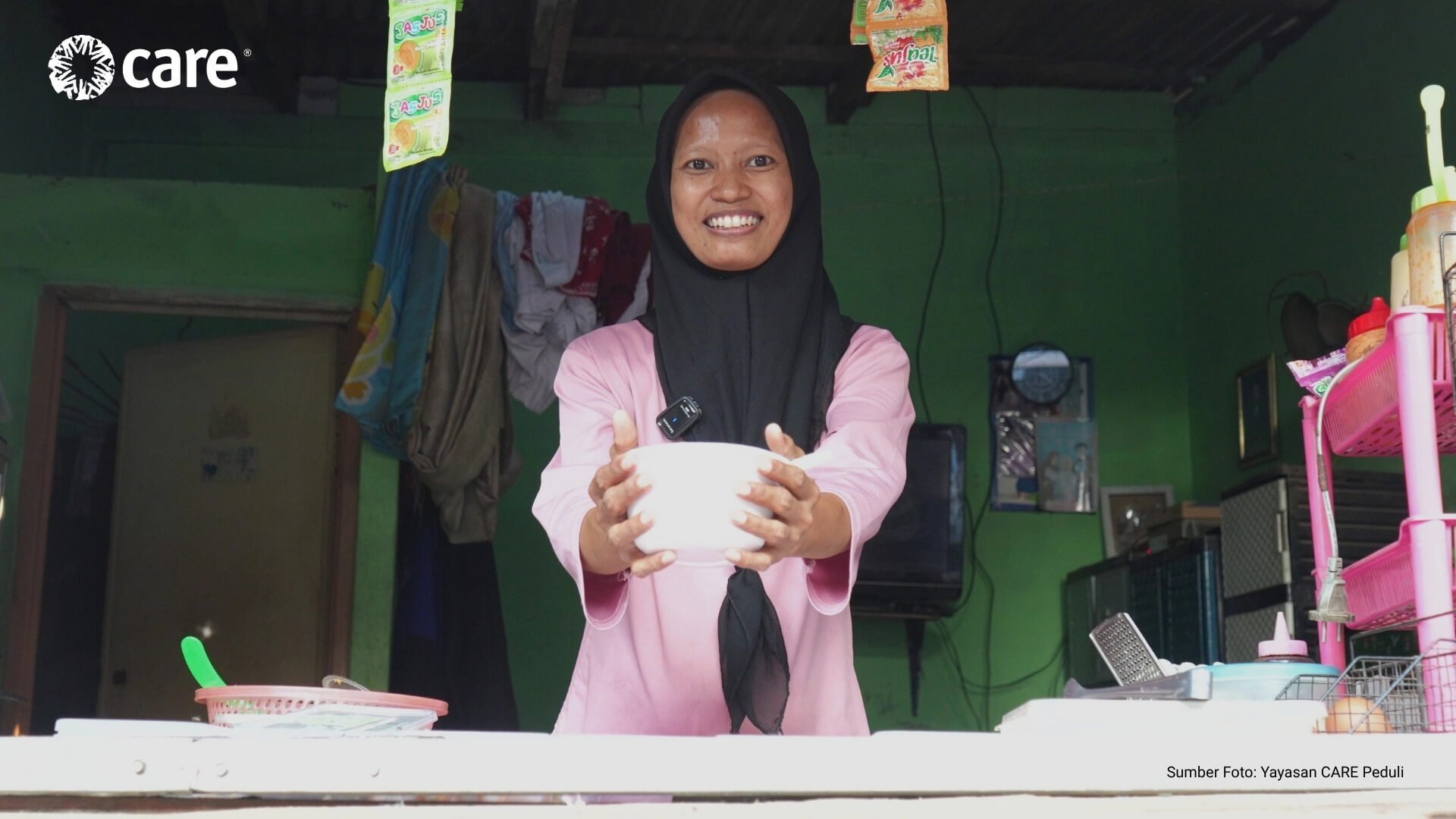
Mariyam, a flood survivor in Aceh Tamiang, described how she and her family navigated daily life after the disaster without adequate lighting.
“After the disaster, many things changed. Roads could be damaged, access became limited, and at night the surroundings became much darker and more difficult to navigate,” she said.
She added that the anxiety became even more pronounced if her family had to evacuate again.
“Especially if at any time we have to evacuate together as a family because the situation worsens again. In situations like that, lighting becomes a very important need,” she said.
Mariyam’s experience shows how, after a disaster, even simple daily activities can become more difficult once night falls. Electricity access and permanent lighting facilities cannot always be restored immediately, while families must continue their daily lives amid conditions that have yet to fully recover. In such circumstances, lighting solutions that are quickly available and easy to move are not simply about providing light, they help families carry out essential activities.
Light Brings Back a Sense of Safety
Providing access to lighting and lighting facilities has been an important consideration in CARE Indonesia and its partners’ disaster response in Aceh Tamiang. Solar-powered lamps were selected as part of the disaster response assistance.
After a disaster, the main electricity network is often not fully reliable, particularly when power outages persist due to damaged infrastructure. Powered independently by sunlight, solar-powered lamps can continue to provide light at night, regardless of the condition of the electricity grid.
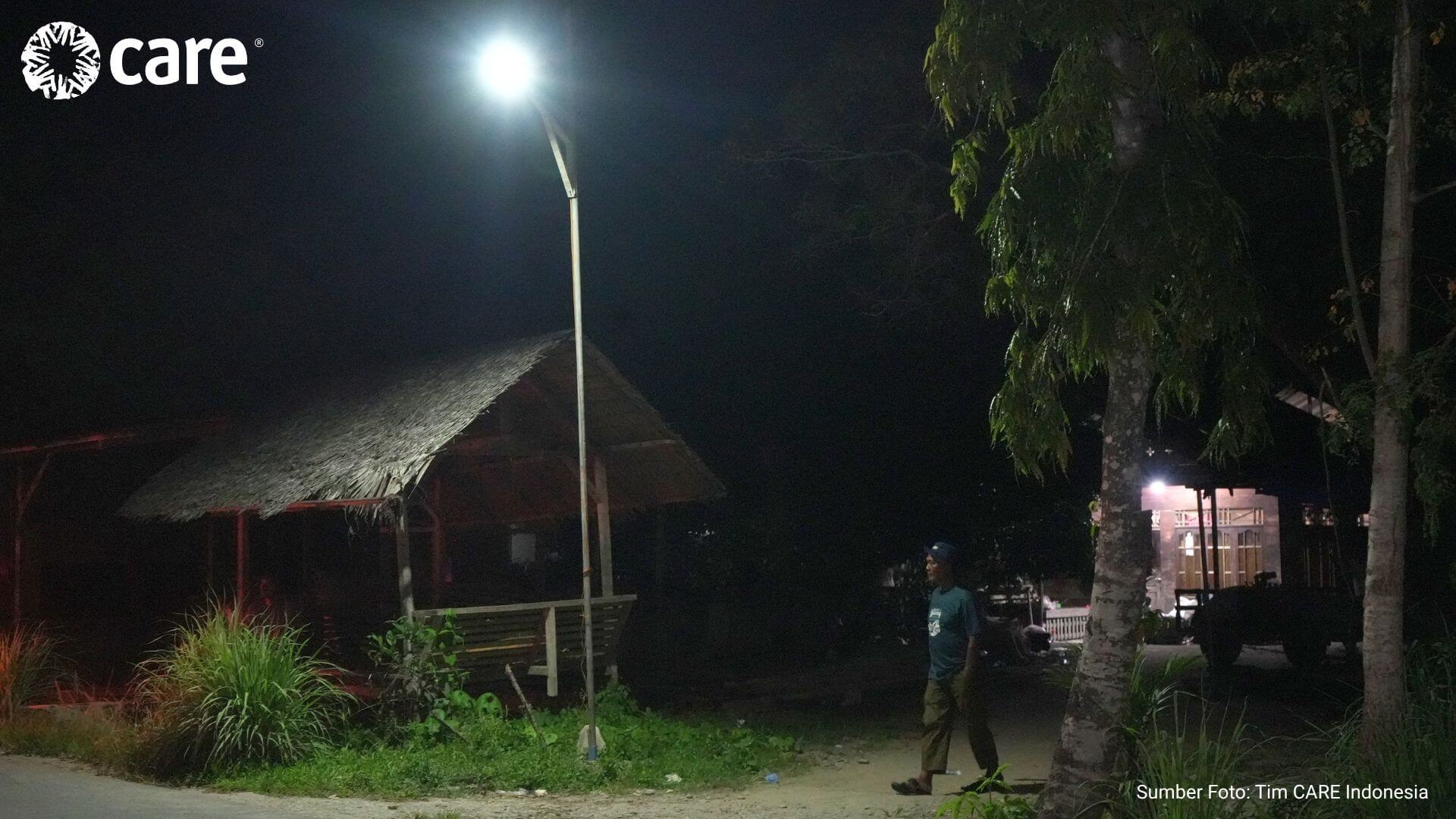
In Aceh Tamiang District, post-disaster assistance included the installation of 2,500 solar-powered lamps along major roads across the district. Their benefits have been felt directly by disaster-affected families.
According to Mariyam, having lighting along roads has helped people feel safer when carrying out activities at night, both on main roads and in village lanes. Lighting at evacuation sites has also helped provide a greater sense of security.
“Yes, I feel safer and more at ease. Before, when night fell, some areas felt very dark, so we were worried whenever we had to travel or carry out activities outside the house,” she said.
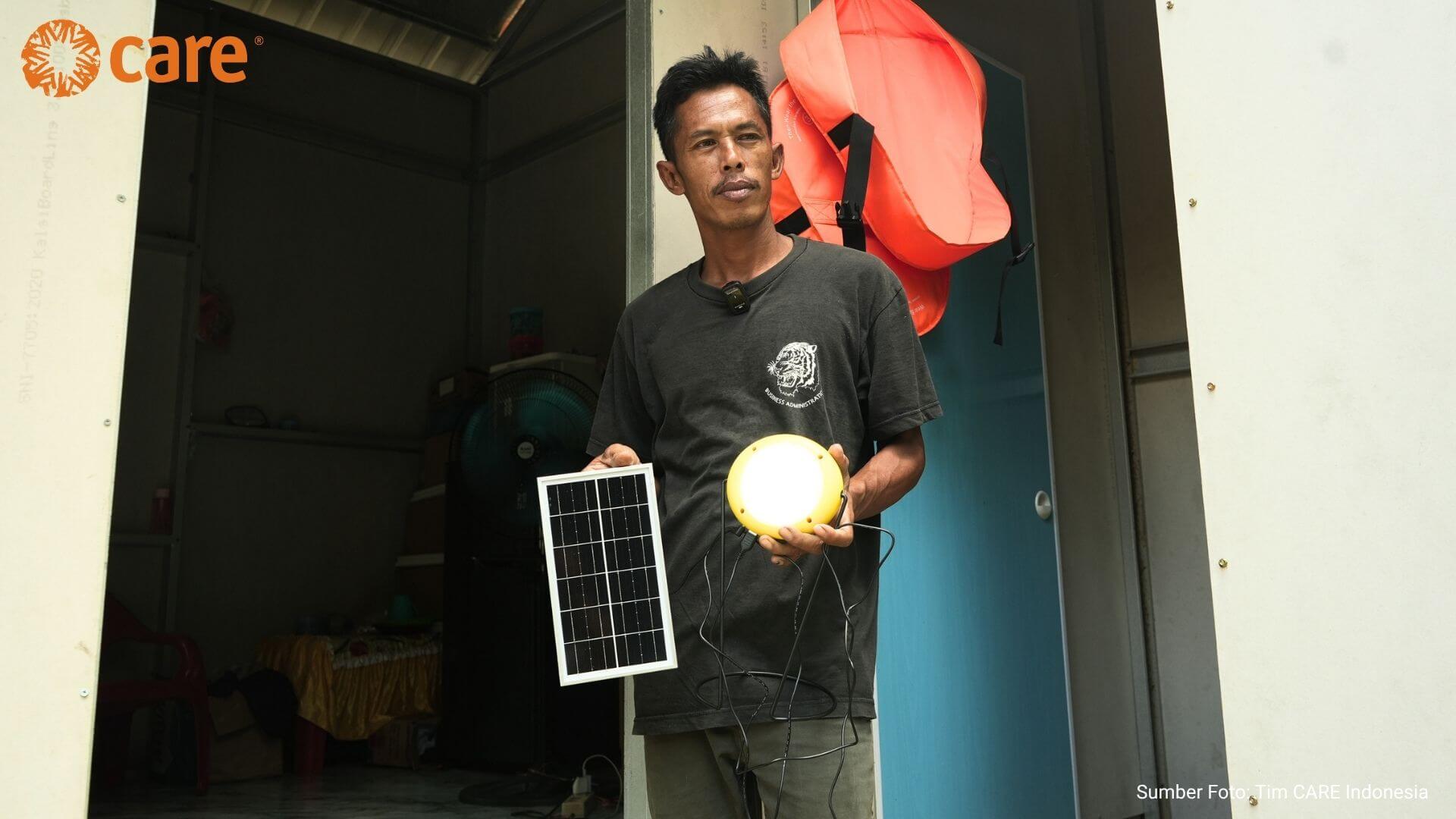
Bringing Light Inside the Home
Solar-powered lighting, available in various sizes and forms, can also reach the homes of disaster-affected families. With a small solar panel and two light bulbs, these systems can be easily distributed to families to ensure that light remains available inside their homes, gradually helping restore the home as a safe space for family members.
Through the distribution of 425 CARE PACKAGE® for Emergency (CP4E) packages across Aceh Tamiang, Sigi, and Nagekeo Districts, solar-powered emergency lamps have become part of the assistance provided to disaster-affected families.
Ariyanto, a flood survivor in Aceh Tamiang who received a CP4E package, said that lighting was among the most urgent basic needs following the disaster. Amid damaged homes and electricity supplies that had yet to be fully restored, the small lamp provided his family with a reliable source of light for activities at night, helped children feel safe, and made it easier to prepare in case they needed to evacuate again.
“After the flood came, our house shifted several meters from where it originally stood. The electricity was also cut off, so we were completely in the dark. The emergency lamp in the CP4E has been very helpful for us to see at night. The solar-powered lamp also makes it easier to recharge because it can use sunlight,” he said.
The portable solar-powered lamp received by Fransiska in Nagekeo District through the CP4E package has also become one of the most useful items for her, as it provides a practical solution once darkness falls.
“This lamp has been very helpful for me and my family to carry out activities in the tent while we are staying at the evacuation site. We also do not have to worry about charging the battery when it runs out because we can simply put the lamp outside so it can be exposed to sunlight,” she added.
Similarly, Siti, another CP4E recipient in Sigi District, said she had greatly benefited from the portable solar-powered lamp. For her, the lamp has been particularly helpful for her child, who finds it difficult to sleep in complete darkness.
“Alhamdulillah, we received this assistance. There are many useful items, including a water container, mosquito net, lamp, and cooking utensils. I immediately put the lamp out in the sun because my child has a disability, so we need to keep the light on at night,” Siti explained.
The experiences of communities in Aceh Tamiang, Sigi, and Nagekeo show that renewable energy-based lighting is not merely a temporary solution but a fundamental need in disaster response. Dependence on electricity networks that are vulnerable to damage during disasters makes solar-powered lighting a reliable, independent, and rapidly deployable option for affected communities.
Going forward, the integration of renewable energy-based lighting from the emergency response phase should continue to be encouraged so that a sense of safety among disaster survivors can be restored more quickly.
Writer: Kukuh Akhfad
Editor: Swiny Adestika