
A Story of Women Waste-Pickers in Tegallega Saving Their Way for Stronger Future
Every morning, before the sun has fully risen, women waste-pickers in Tegallega, Bogor, are already out working. They make their way from one street to another, collecting plastic bottles, cardboard, and other discarded items that still have value. The heavier the load they bring home, the greater their chance of earning enough to put food on the table and meet their families’ needs.
Yet, for years, their lives followed the same cycle. Whatever they earned from collecting recyclables was quickly spent on daily necessities. Then, the next morning, they would start all over again.
Santi, one of 19 women in the women group there, has long relied on waste-picking, collecting recyclable materials, and running a small side business to make ends meet. Like many of the women around her, she was accustomed to working hard simply to get by, with little opportunity to plan for the future. “For us, trying to do some savings felt like something only people with extra income could afford,” Santi says.
Learning to Trust, When Five Thousand Rupiah Becomes a Beginning
When the women were first introduced to the women-led economy business group or locally named Kelompok Usaha Perempuan Sejahtera /KUPAS, through a community-based savings and loan approach, their first reaction was uncertainty.
“Our money is already barely enough. How could we possibly save?” That question reflected the concern shared by many members, including Siti.
Their doubts were not only about money, but they also wondered who would be responsible for the group’s savings, what would happen if the money was lost, and whether they could trust one another to repay their loans. Trust was the initial thing to build before they could start saving.
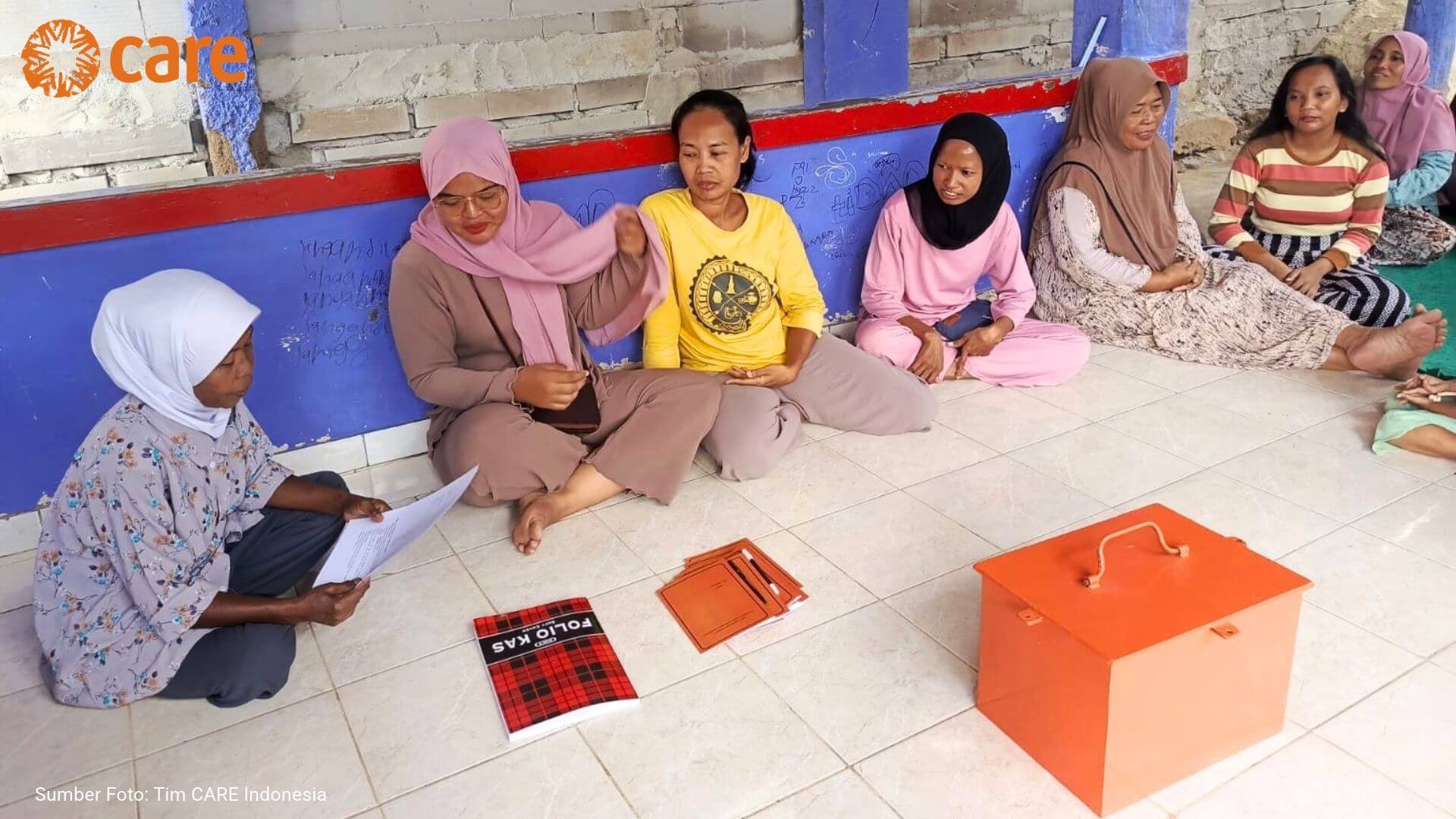
Weekly gatherings were started in the initial journey, where all members had the chance to get to know one another, develop their own agreed rules, democratically elect group leaders, and learn about a cash-box system secured by three locks, with each key entrusted to a different person. Slowly, trust began to take root.
The casual meetings became the turning point. All members agreed to start saving together. Each member committed to setting aside Rp5,000–10,000 from what she earned from waste-picking that day. The amount may have seemed small. But for many of them, it marked the first time that the money they had worked so hard to earn was not immediately spent. Instead, they were setting something aside together, creating a shared fund and building something for tomorrow.
When Women Begin Making Their Own Decisions
Months went by, the women group’s savings steadily grew, reaching enough to provide loans to its members. To some, a small loan might seem insignificant. But for them, it meant something much bigger.
They themselves had a say for the first time, in who could access a loan and how much they could borrow. The decisions were made by the women, not their husbands, not the middlemen they sold their recyclables to, and not outsiders.
Their weekly meetings also began to take on a deeper meaning. They were no longer simply a place to save money, but a space to learn, exchange ideas, and support one another. Before, they had been more hesitant to speak up, slowly began sharing their opinions, discussing small-size business ideas, and working together to plan their next steps.
More Than Savings: When a Cash Box Opens the Door to New Possibilities
By the fifth month of coming together, the women’s savings had continued to grow. Alongside their savings, additional capital support from CARE Indonesia, in collaboration with Mahija and funded by The Coca-Cola Foundation, opened doors to opportunities that once felt out of reach.
Women members began building small-size business together while also growing their individual income. Some expanded their recyclable-material businesses. Others started ultra-micro enterprises. Santi, for example, opened a small coffee stall to bring in additional income.
“With the income from my small coffee stall, I finally earn enough to buy clothes and cosmetics for myself,” Santi says with a smile.
For many people, buying a new outfit or cosmetics might seem like an ordinary thing. For Santi, it means much more. It is a sign that her hard work is no longer only enough to help her family survive. She now has a little room to spend on something she wants, something that, for years, had always come after the family’s most basic needs.
Her perspective on saving has changed, too. “I used to think, saving was only for people who had extra money. Now I realize that saving is actually for people like us who have very little, so that we can still have something left for tomorrow.”
Sri, the leader of KUPAS Tegallega, has witnessed a similar transformation. For her, the biggest change is not the growing amount of money in the group’s cash box. It is the way her fellow women waste-pickers have learned to strengthen one another and build their future together.
“What makes this group different is that we have a shared purpose. It is not only about saving money, but about making that money grow. We are also supported to learn how to manage small-size businesses, discuss our challenges, and encourage one another. Although the profit from the additional business are still low, but the benefits are already making a real difference for the group,” Sri says.
Today, saving and loan group with the cash box that was once filled with doubt has become a symbol of trust and togetherness. And with every Rp5,000 or Rp10,000 they set aside, these amazing women are gaining more than savings. They are building confidence, creating opportunities, and finding the courage to dream a little further.
When Trust and Togetherness Pave the Way Women Waste-Pickers in Bintara Build Stronger Household Economy
For years, women waste-pickers in Bintara Jaya have lived with the uncertainty of an income that can change from one day to the next. On some days, they collect enough recyclable materials to bring home a little extra. On others, a full day of waste-picking barely earns enough to put food on the family table.
When unexpected expenses arise, like medicine for a sick child, a broken cart, or school costs, borrowing money has always been their quickest way out. They may turn to neighbours, waste collectors, individual lenders, or even loan sharks. They know all too well that high interest rates can make it even harder to break free from the cycle of debt.
In a life where every rupiah was already spoken for, the idea of saving seemed almost impossible. Many worried about whether their money would be safe. Others could not imagine setting anything aside when every rupiah they earned was already needed for the family’s daily necessities.
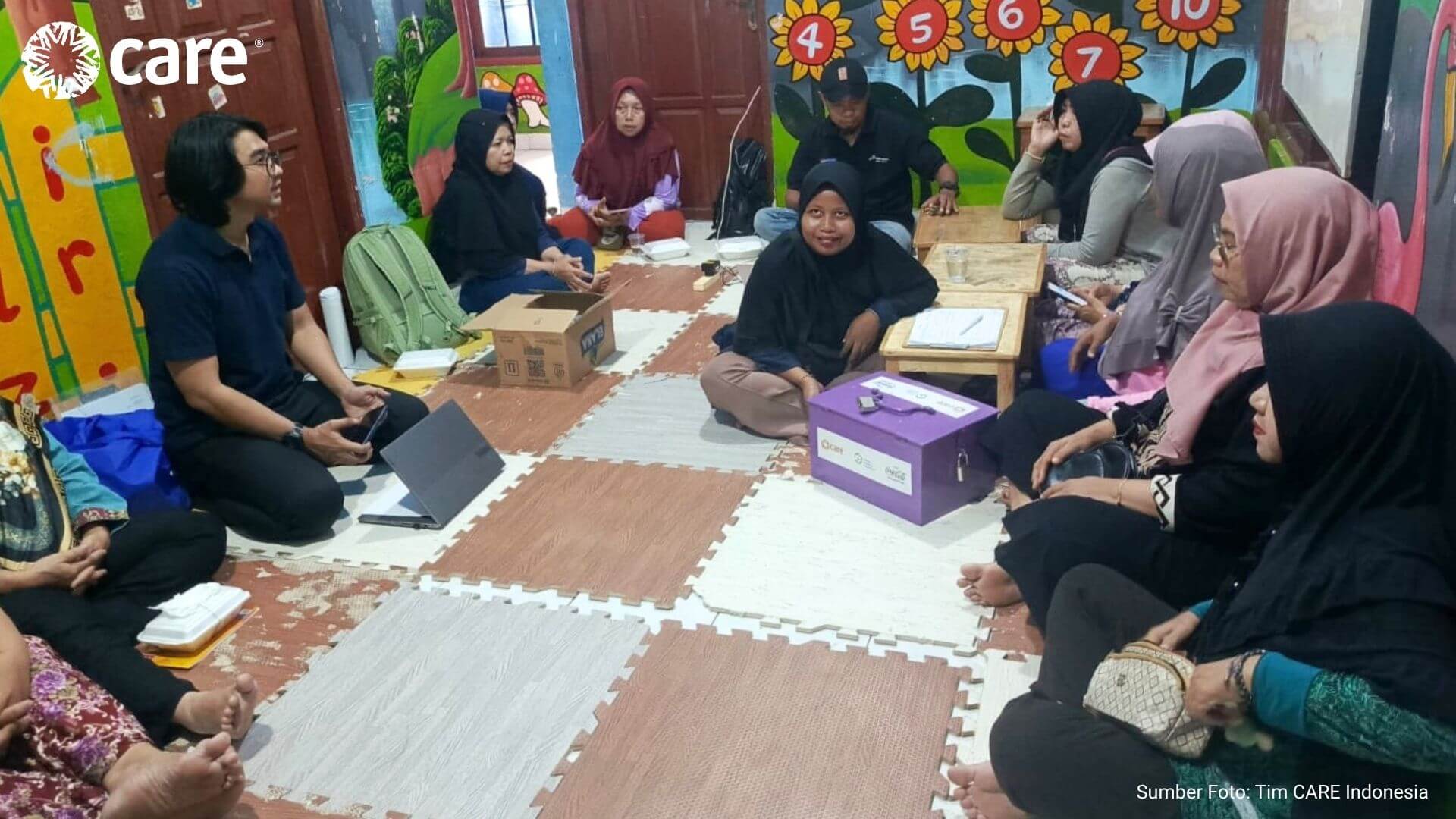
But no one was expected to trust the process overnight. Through support from CARE Indonesia, in collaboration with Mahija and funded by The Coca-Cola Foundation, the women waste-pickers were introduced to the women-led economy business group or locally named Kelompok Usaha Perempuan Sejahtera (KUPAS) approach, a women-led savings and loan group designed to grow through trust, participation, and collective action. They began meeting regularly each week, creating a space where the women could get to know one another, share their concerns, and slowly build the confidence to work together.
They took part in various learning sessions, from keeping track of household income and expenses and building a habit of saving, to exploring gender equality through discussions on women’s rights in everyday life. They also discussed how to build businesses together and navigate the challenges they faced along the way. As the meetings continued, so did the sense of solidarity among the members.
For Yuyun, one of the group’s members, building trust, both among the women and in the savings-and-lending system itself, was one of the biggest challenges at the beginning. Many members worried that their savings might be lost or not managed properly.
“The hardest part at the beginning was that people simply didn’t trust it yet. I even felt discouraged because I had invited people to join, but they were still suspicious and didn’t want to come,” Yuyun recalls.
Over time, Yuyun found that the weekly meetings became an effective way for members to grow closer. Having a shared agreement on how the group’s savings and lending system would be managed also helped ease their concerns. Little by little, trust began to grow.
She added, having a safe and transparent way to store the group’s savings helped ease members’ concerns. The money was kept in a secure cash box with several locks, while the keys were entrusted to three different group leaders. This simple system gave members greater peace of mind, over time, encouraged more women to join the group.
“After a few weeks, they could see for themselves that their money was safe and that the group was really operating. Even if the group leader wanted to run away with the money, she couldn’t. I hold one of the keys. The money is also kept at our homes. That’s when they started to trust us. Eventually, some of those who initially didn’t want to join decided to become members too,” Yuyun says.
The Trust that Build Habit of Savings and Growing Together
As trust grew among the members and they saw how transparently the savings and loan system was being managed, something began to change. Little by little, saving became a habit. Each woman was free to save according to her own financial capacity, allowing the habit to grow without the pressure of meeting a fixed target. Instead of feeling burdened by a required amount, members could contribute what they could afford, most importantly, keep doing it consistently.
For the group leaders, however, there had been some doubts at the beginning. As the group’s leader, Ria knew that most members had unpredictable incomes, much of which was quickly spent on their families’ daily needs. She understood how difficult it could be to set aside money every week.
Over time, those doubts began to fade. Ria saw the women consistently commit to saving whatever they could afford. For many of them, it was the first time they had ever had savings that they were intentionally setting aside for the future.
“At first, I also wondered whether the women would keep saving. I knew what their financial situation was like. But, as it turns out, they have continued to save according to what each of them can afford. It’s not just about saving, we’ve also learned how to keep track of our income and expenses. We’ve gained so much new knowledge from being part of this group,” Ria says.
Nurhayati, one of the KUPAS members, is happy to have savings of her own. In the past, whatever she earned was usually spent by the end of each day, leaving nothing behind. While the amount she has been able to save may not yet have dramatically changed her family’s financial situation, the simple habit of setting aside a portion of her income has given her something she did not have before: a sense of purpose and the reassurance that there is money she can turn to when an urgent need arises.
“Whenever I have some money left, I put it into the group savings. I think of it as money I don’t need to use for now. So, if I ever really need it, I know I still have some savings,” Nurhayati says.
The group’s accumulated savings, together with grant funding, have also become a source of loans for members looking to strengthen and expand the small businesses they already run.
Some members use their loans to buy additional sacks and weighing scales, allowing them to collect more recyclable materials. Others use the money to purchase larger quantities of recyclable items, sort them, and sell them for a better return. For others, the loan provides extra capital to sell fried finger foods after a day of waste-picking, or to start a small breakfast and snack stalls.
Nurhayati used her loan to expand her own small food stall. With the KUPAS loan, she was able to purchase a freezer, allowing her to offer a wider variety of products while also keeping ingredients fresh for longer. “Having a freezer means I can sell more products. I can make and sell ice cream and other menu variations,” she says.
The Women-Led Groups that Lead the Way Out of Debt
For KUPAS members, being able to save according to their own means and access loans without the burden of high interest, has opened a new sense of hope for improving their financial situation. Saumi is one of them.
She knows that when an unexpected expense arises, borrowing from local lenders or loan sharks can feel like the quickest solution. But the high interest rates can leave families struggling to break free from debt.
Today, Saumi does not regret becoming a member of KUPAS. With a smile, she says that the group’s shared savings and collectively managed funds have given her and other members a safer and more dignified way to manage financial shortfalls when daily needs become difficult to meet.
“When an unexpected need comes up, people usually turn to lenders. But the interest is high and burdensome. With this group, we have hope that we won’t have to keep depending on them,” Saumi says.
KUPAS lending system, built on mutual trust among its members, has also strengthened their commitment to repay loans according to the agreements they make together. For Ria, Leader of KUPAS Bintara Jaya, this was not something the group expected from the beginning. She initially had reservations about accepting members who were already carrying debts, worried that they might struggle to repay another loan. But the group’s commitment to equal opportunity proved otherwise.
“At first, we were hesitant because some members already had several loans elsewhere. But after receiving a loan from the group, one of them actually became more motivated to make regular repayments and was very cooperative,” Ria says.
Saumi has seen the same change. The opportunity offered to every member has strengthened communication within the group and encouraged women to take greater responsibility, not only for repaying their loans, but also for maintaining their savings and meeting their commitments.
“We have learned that someone who is struggling should not automatically be seen as incapable of managing a loan. Sometimes, they simply need a fairer opportunity,” Saumi says.
Writer: Meiry Nasution & Kukuh
Editor: Swiny Adestika
