A survey conducted by GoodStats, titled Financial Management Behavior of Indonesians 2024, found that seven out of ten Indonesians do not have savings. One of the factors behind this is impulsive spending on non-essential wants rather than prioritising savings and other financial needs.
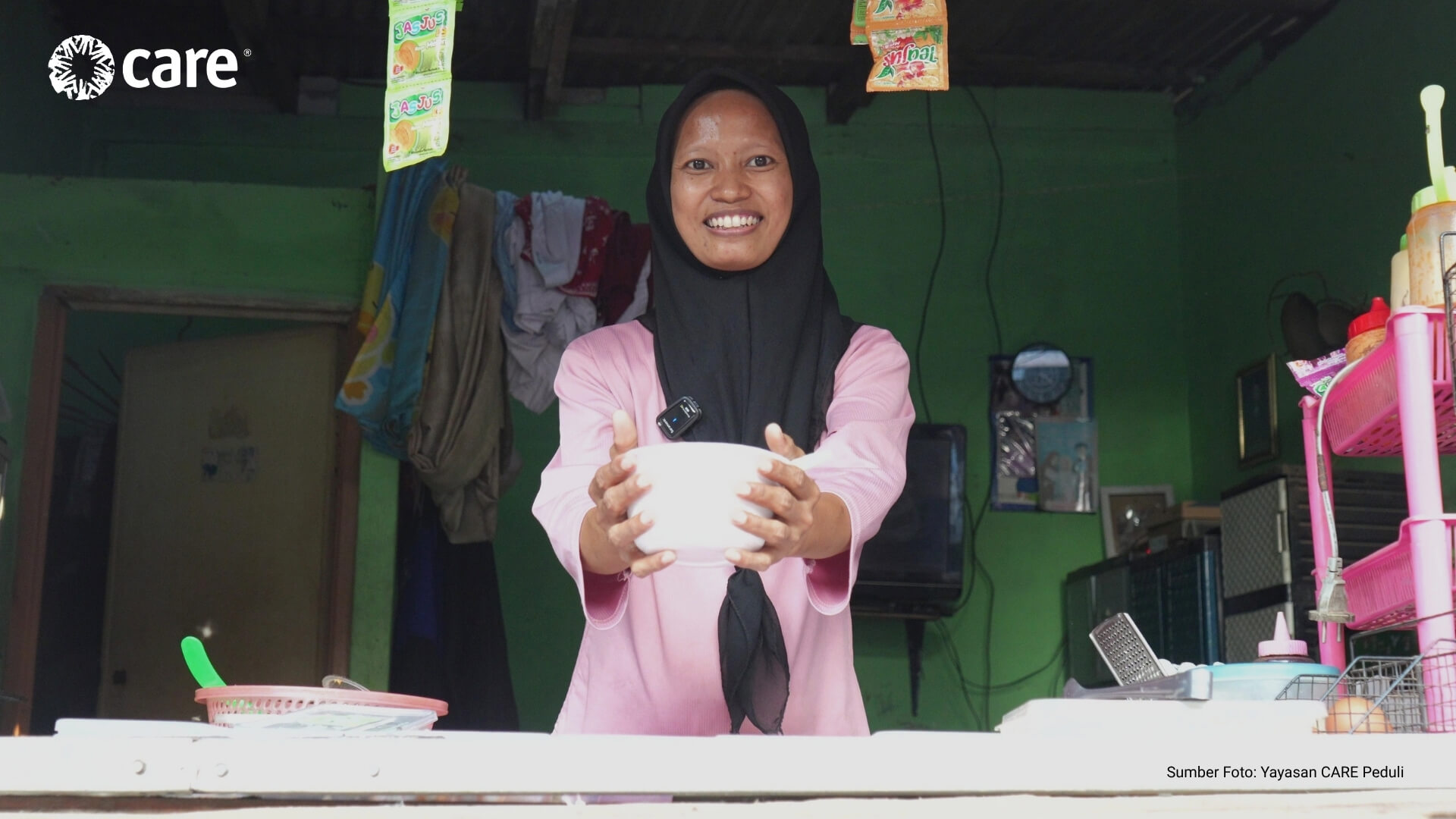
Nurhayati, a member of the KUPAS Bintara Jaya Sejahtera Women’s Business Group in Bekasi City, said she once struggled to save money. Even though she ran a home-based food business, she found it difficult to set aside part of her income for savings. According to her, becoming a member of KUPAS has had a positive impact on both her financial management and the food business she runs.
“I used to find it very difficult to save. Even though I worked and had a seblak business from home, I still struggled to save money or have savings that I could use in an emergency. But after joining KUPAS, my business and my ability to manage finances have both improved,” Nurhayati said.
She explained that through KUPAS, she learned about financial literacy and gained access to loans for business capital within the group. By participating in several training sessions, she was able to further develop her food business.
“I borrowed money from KUPAS to buy a refrigerator to store the ingredients for my seblak. This means the ingredients last longer, and I can offer more varieties, which makes customers like the food even more. Thanks to the savings and loan, my business has been able to grow. Now, when business is particularly busy, I can earn up to IDR 500,000 in profit,” she added.
The various training sessions Nurhayati attended as a KUPAS member also helped her better understand how to manage finances and develop her business. Knowledge that she previously had limited access to is now being applied in her daily activities. For her, learning together with other group members makes managing a business easier because she can exchange experiences and receive input from others.
“At KUPAS, I was taught how to record my income and expenses. I apply this knowledge to my business and the income I receive. That is why I can now monitor my family’s finances,” she said.
The changes have also been felt within her family. Nurhayati said that, at first, her husband did not believe she could build savings while also contributing additional income to the household. However, after seeing her business grow and her ability to save improve, his perspective began to change.
Her involvement in KUPAS has given Nurhayati an opportunity to demonstrate that the business she runs can contribute to meeting her family’s needs.
“My husband did not believe that I could save money and contribute to our family’s finances. After I joined KUPAS and my business grew, he could see the results for himself. I can now have savings, and my seblak business also helps meet our family’s needs. When my husband comes home from work, he often helps at the stall, sometimes carrying goods or preparing customers’ orders,” she said.
Writer: Kukuh Akhfad
Editor: Swiny Adestika