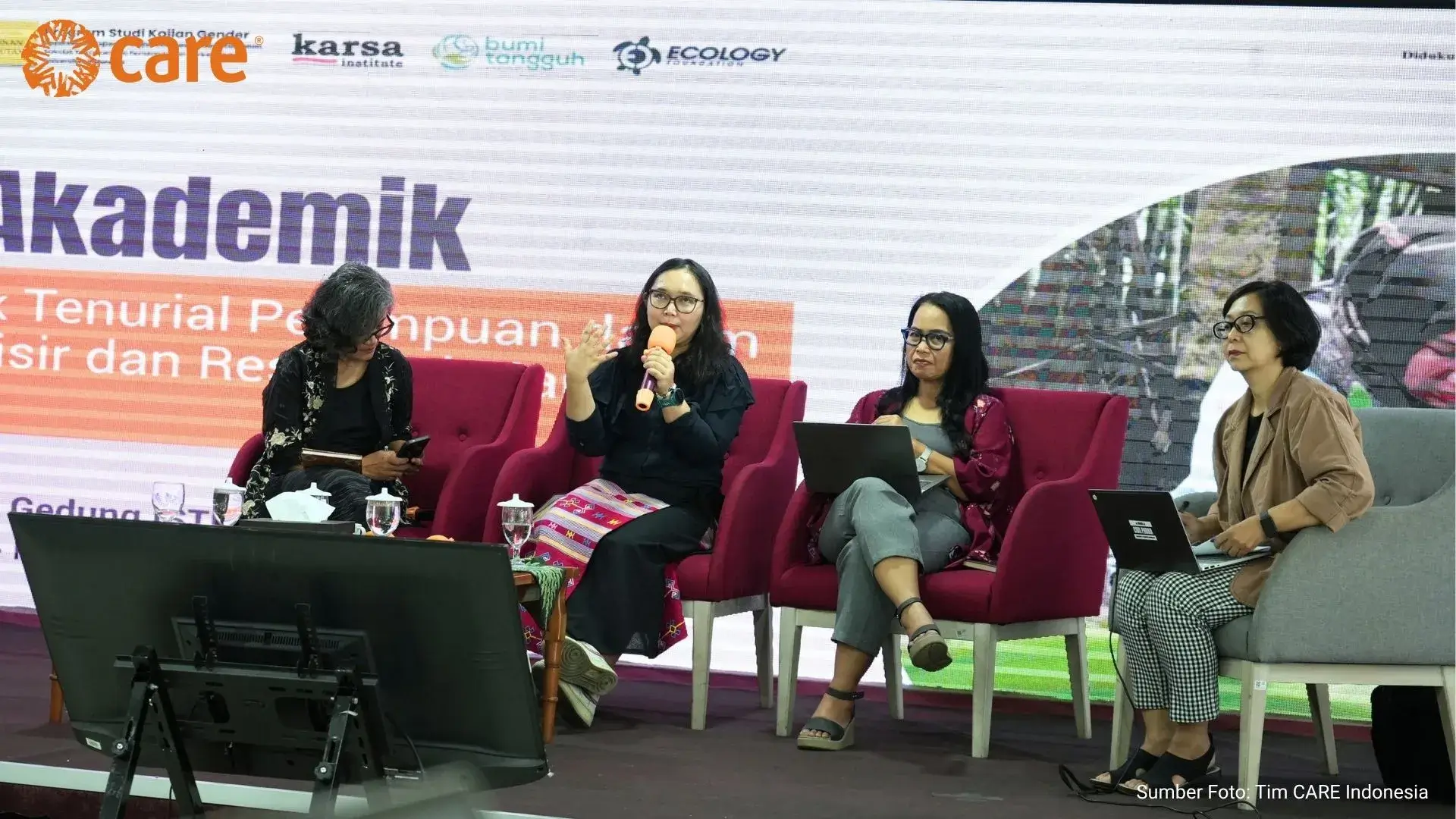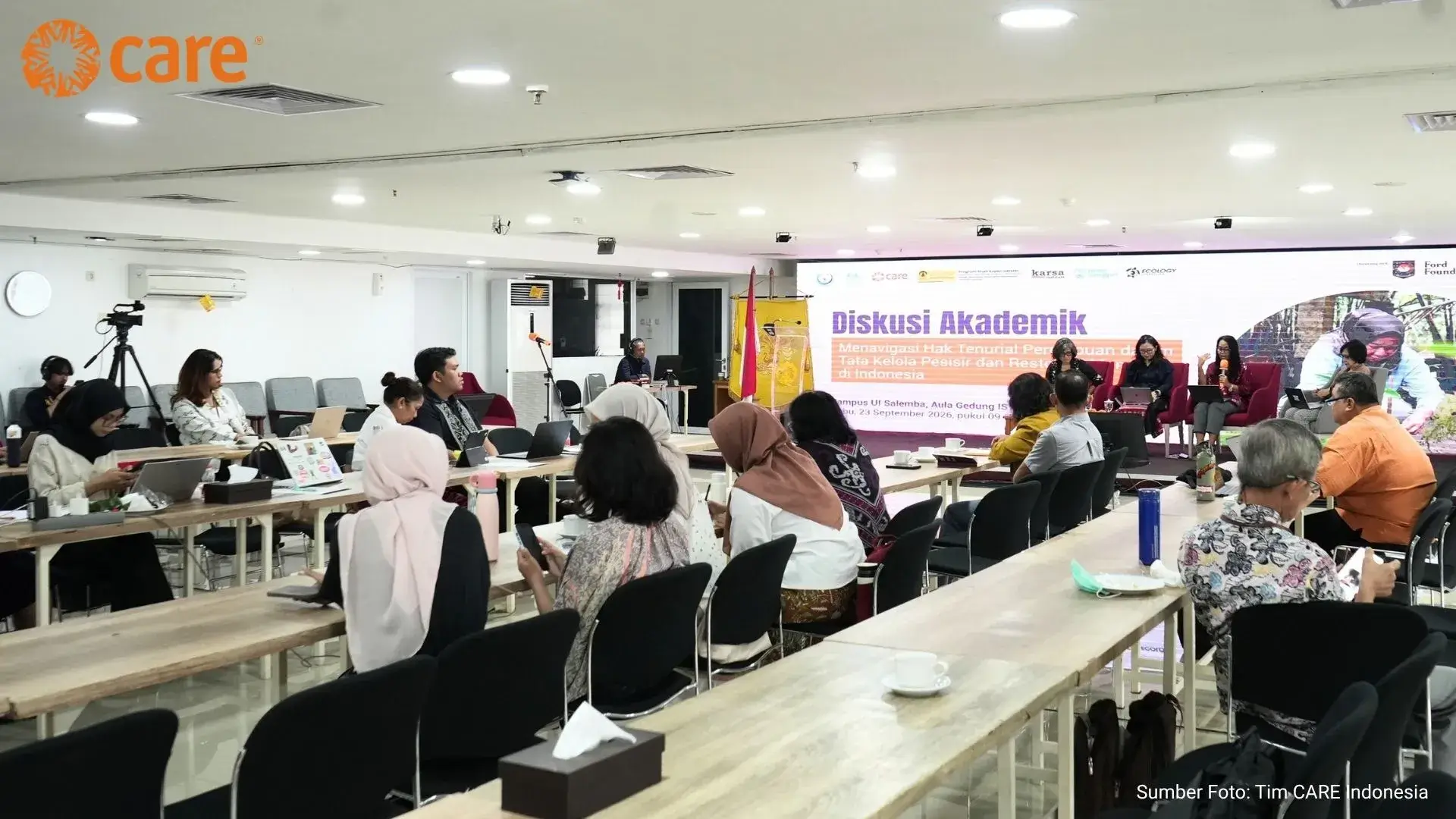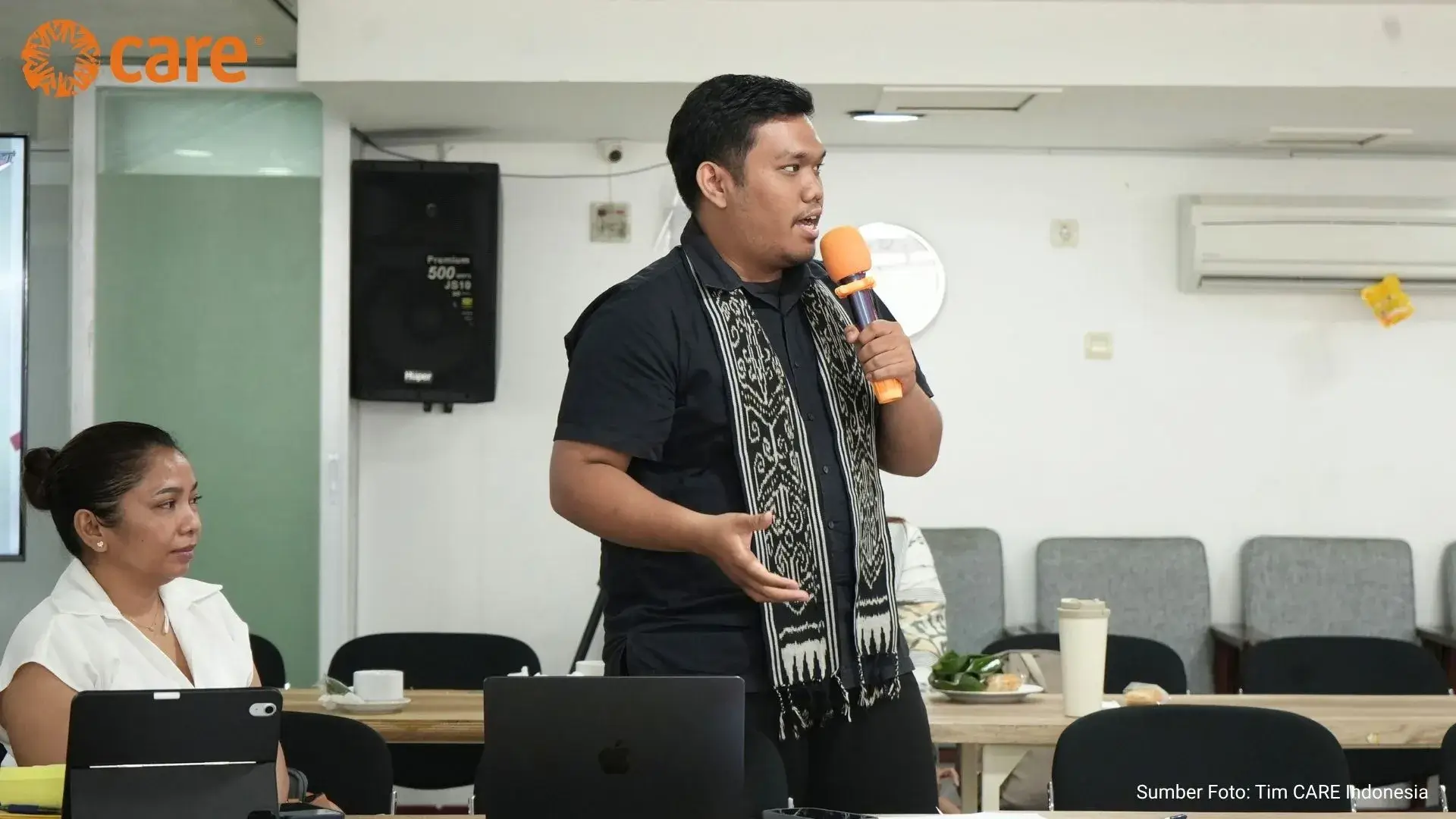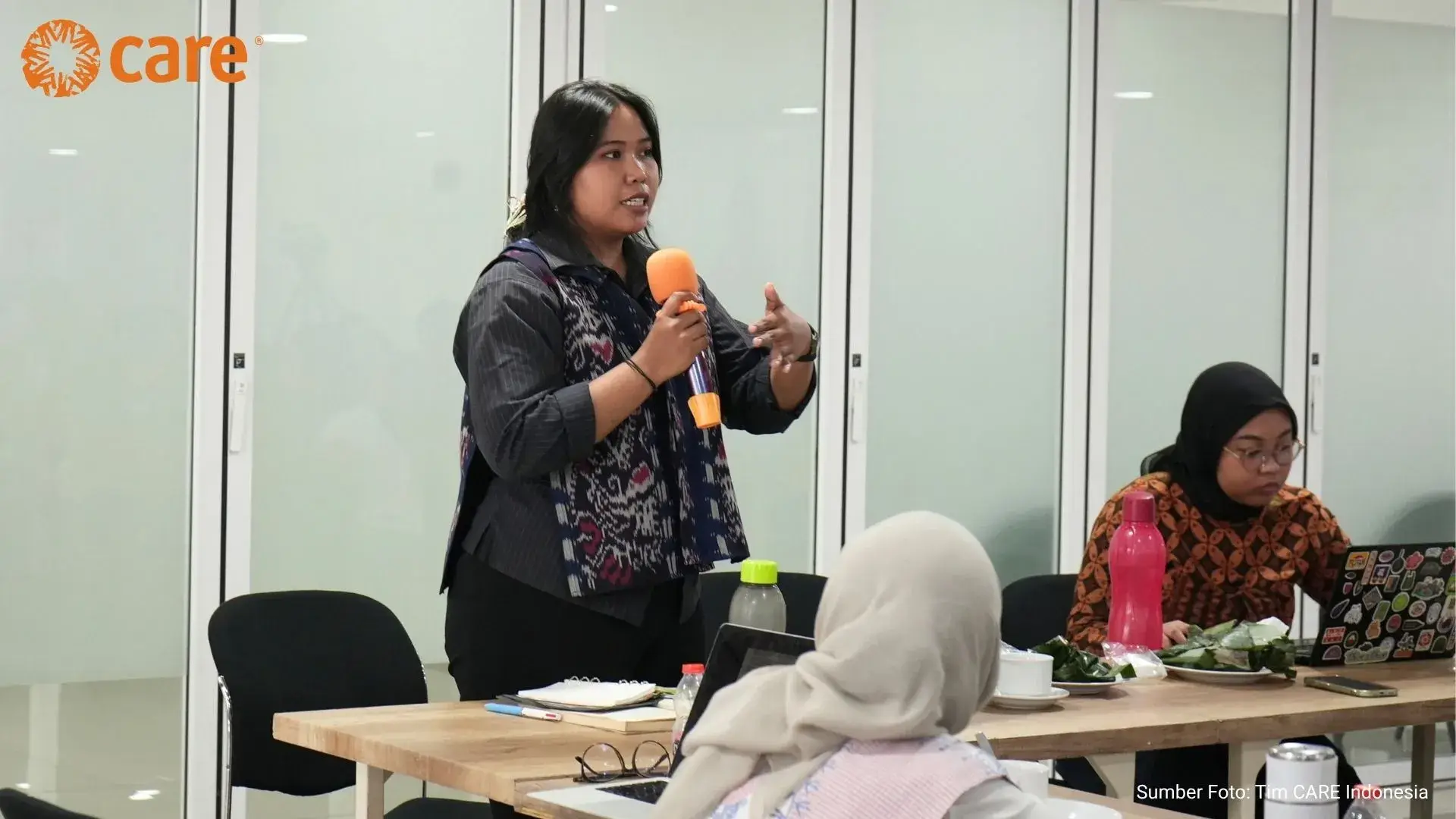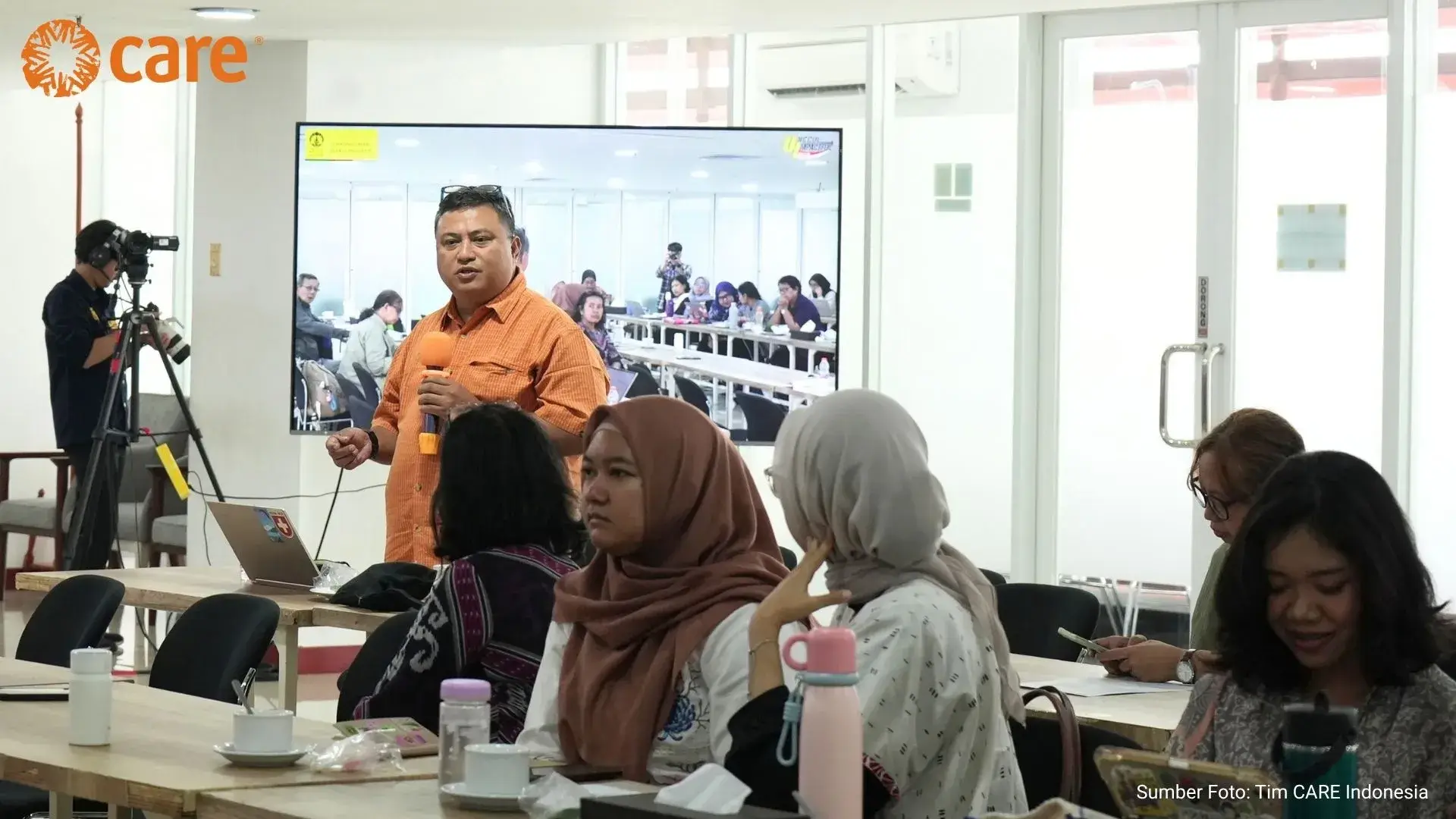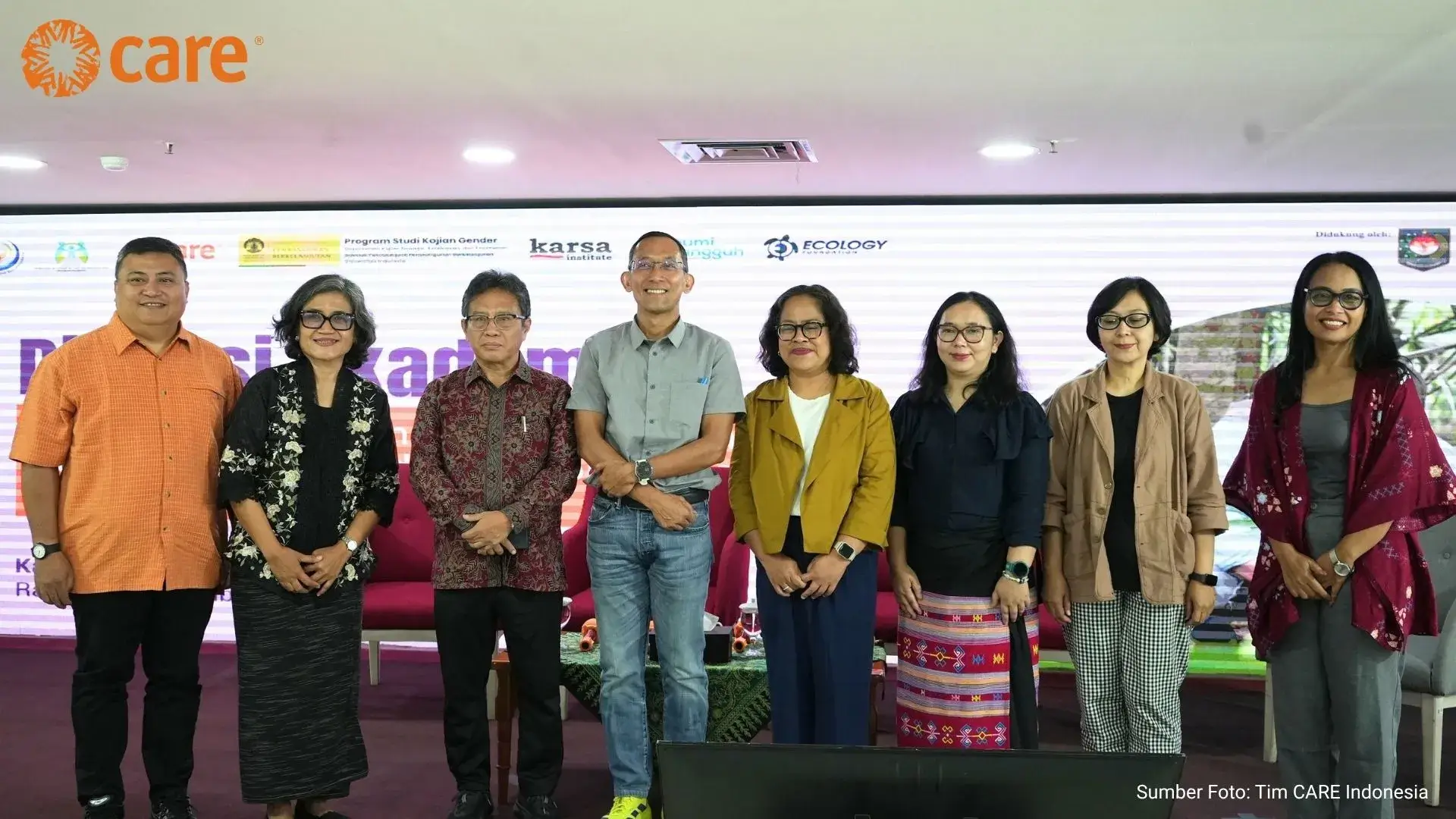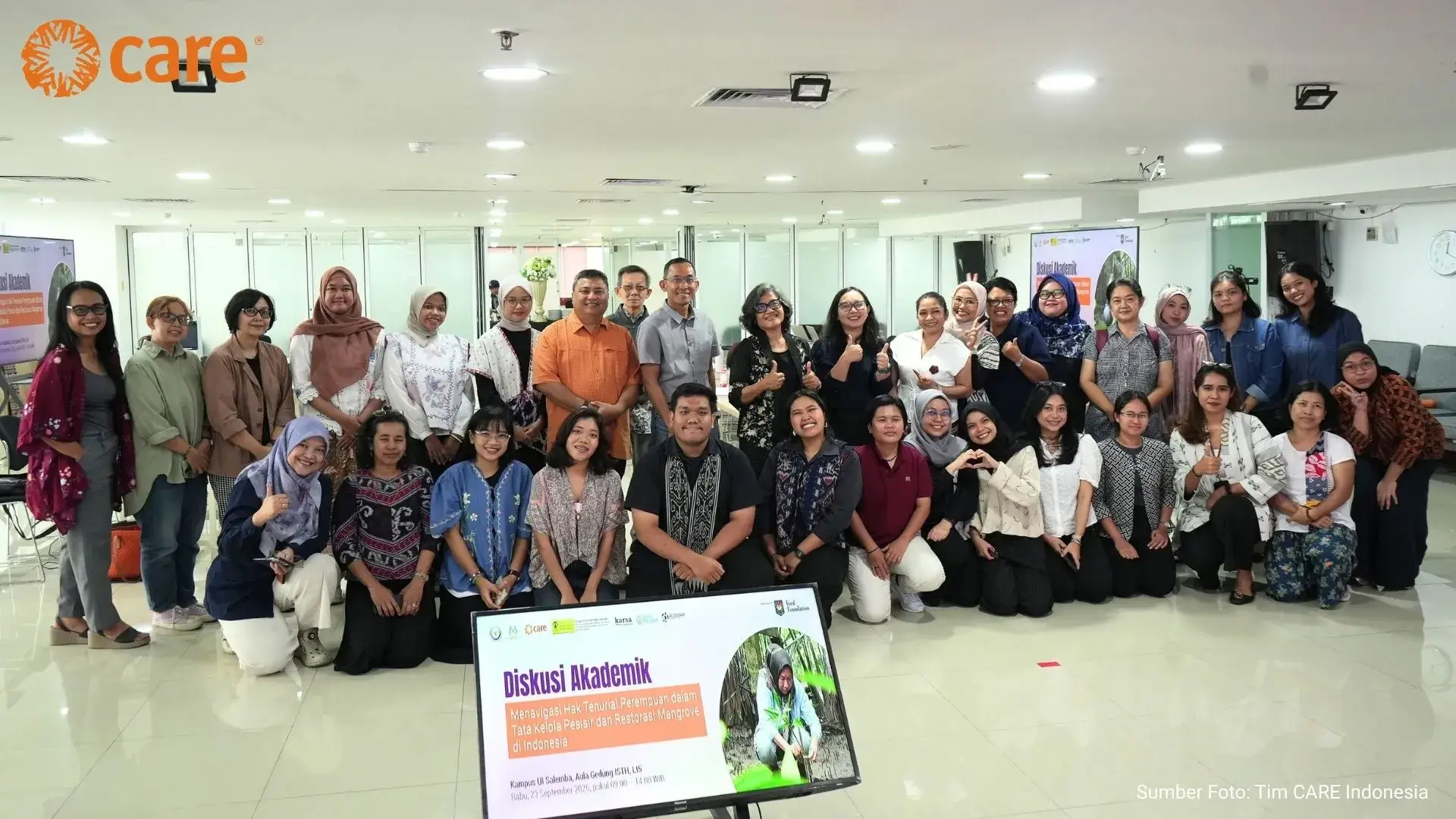
CARE Indonesia, together with the Sustainable Development Systems and Politics Study Group (Kelompok Kajian Sistem dan Politik Pembangunan Berkelanjutan) at the University of Indonesia, held an academic discussion titled “Women’s Tenurial Perspectives in Coastal Governance and Mangrove Restoration in Indonesia” on Wednesday, September 23, at the IASTH Building, UI Salemba Campus. The discussion aimed to further develop the direction of research on women and mangrove management.
The discussion explored the roles and limitations faced by coastal women in ecosystem conservation. Graduate students and invited participants actively discussed how coastal women’s involvement has so far often been limited to planting, nursery management, and maintenance activities, while their access to benefits and decision-making power over resource management remains limited.
One of the key points highlighted during the discussion was the importance of recognising the different social realities among women themselves, including the context of Indigenous communities. Efforts to empower women and strengthen their participation in coastal conservation should therefore go beyond issues of access alone and address the broader dimensions of tenurial security and justice. The relational dimensions of women’s rights, which are often influenced by marital status, as well as differences in how women and men use mangrove ecosystems, were also discussed.
At the end of the discussion, one recommendation for efforts to empower coastal women was to further explore the diverse circumstances they face, including those of women with disabilities, widows, and younger generations. The discussion also highlighted the importance of recognising women’s agency and the various forms of resistance they demonstrate in protecting mangrove ecosystems.
Mia Siscawati, Head of the Gender Studies Program at Graduate School of Sustainable Development, University of Indonesia (SPPB UI), explained that tenurial systems refer to the ways in which communities define and regulate individual or collective access to land and other natural resources. These systems vary across regions and are shaped by practices and arrangements that have existed for generations.
“This is what researchers need to take into account when conducting studies. We need to consider intersectionality, including the context of Indigenous communities. It is not only about women, but also other vulnerable groups. Communities living around mangrove ecosystems have different social layers, and women who have access to resources and those who do not may also come from very different backgrounds,” she concluded.