For families with limited incomes, setting aside money for savings is no easy task. Daily necessities and unexpected expenses often force them to use the money they have managed to save. This is also the experience of Rusmiati and Surtinah, members of the KUPAS (Kelompok Usaha Perempuan Sejahtera) women’s group who work as waste pickers at Pinus Elok public housing in Jakarta.
However, since joining KUPAS, with support from CARE Indonesia and Mahija Parahita Nusantara, both women have made saving part of their efforts to strengthen their financial well-being and create opportunities to develop their businesses. Rusmiati explained that before joining KUPAS, she was not accustomed to saving because her income was barely enough to cover daily expenses. Through the group, she gained access to business loans and an opportunity to expand her fried snack business.
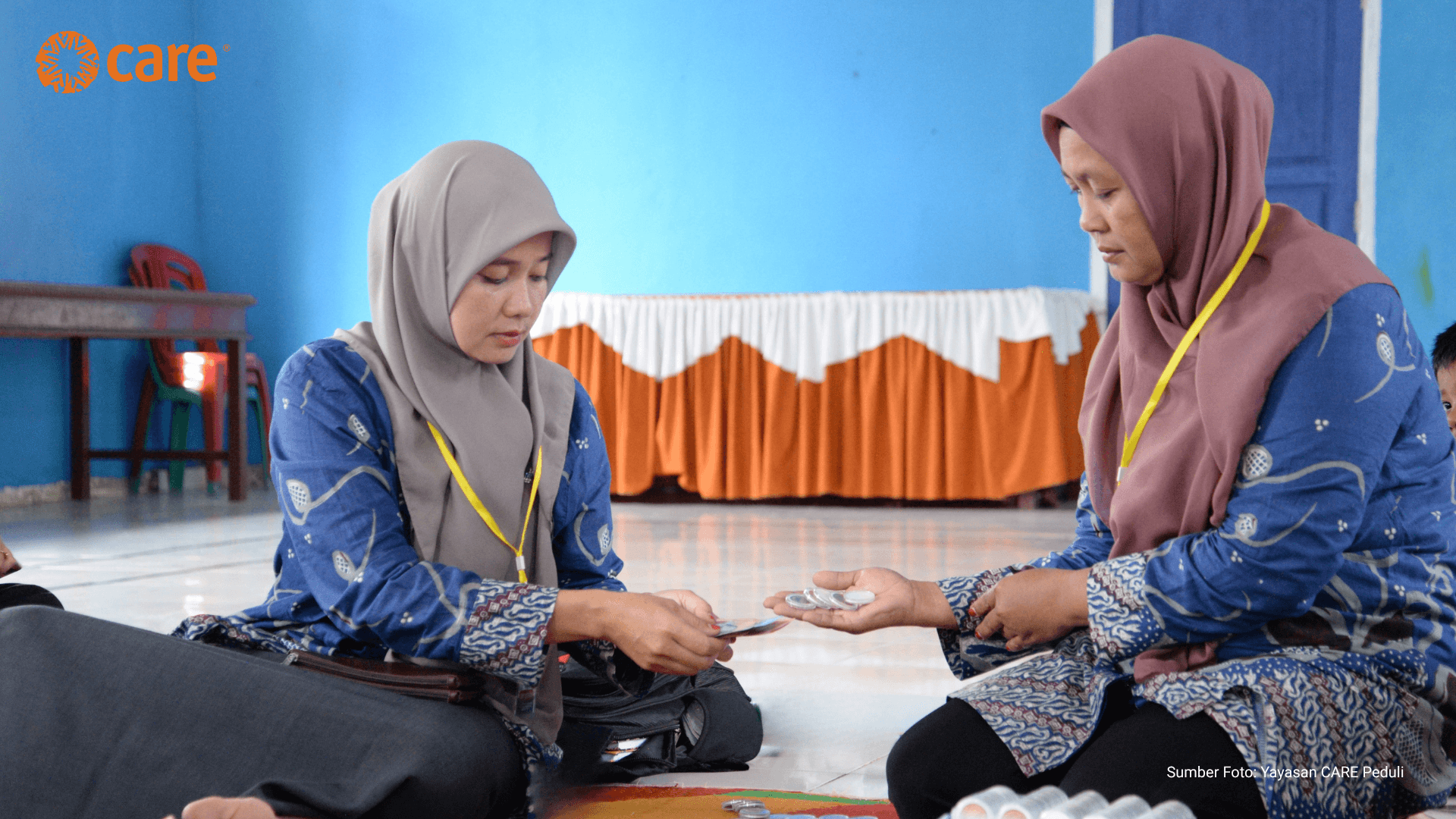
“I save money so I can borrow funds to add to my business capital because there is no interest. Saving through KUPAS is easy and trustworthy. There are mentors from CARE, the members are reliable, and the money storage box is secure,” she said.
With additional capital, Rusmiati has been able to increase production and expand her market reach. She no longer sells her products only directly to customers but also supplies fried snacks to small shops in the surrounding area.
“At first, I only sold fried bananas, stuffed tofu, and vegetable fritters. After joining KUPAS, I was able to get an additional loan for business capital. That meant I could start supplying my fried snacks to local shops,” she added.
According to Rusmiati, the empowerment she has experienced through KUPAS has not only improved her personal financial situation but has also contributed to broader economic opportunities and capacity-building among waste pickers in her community.
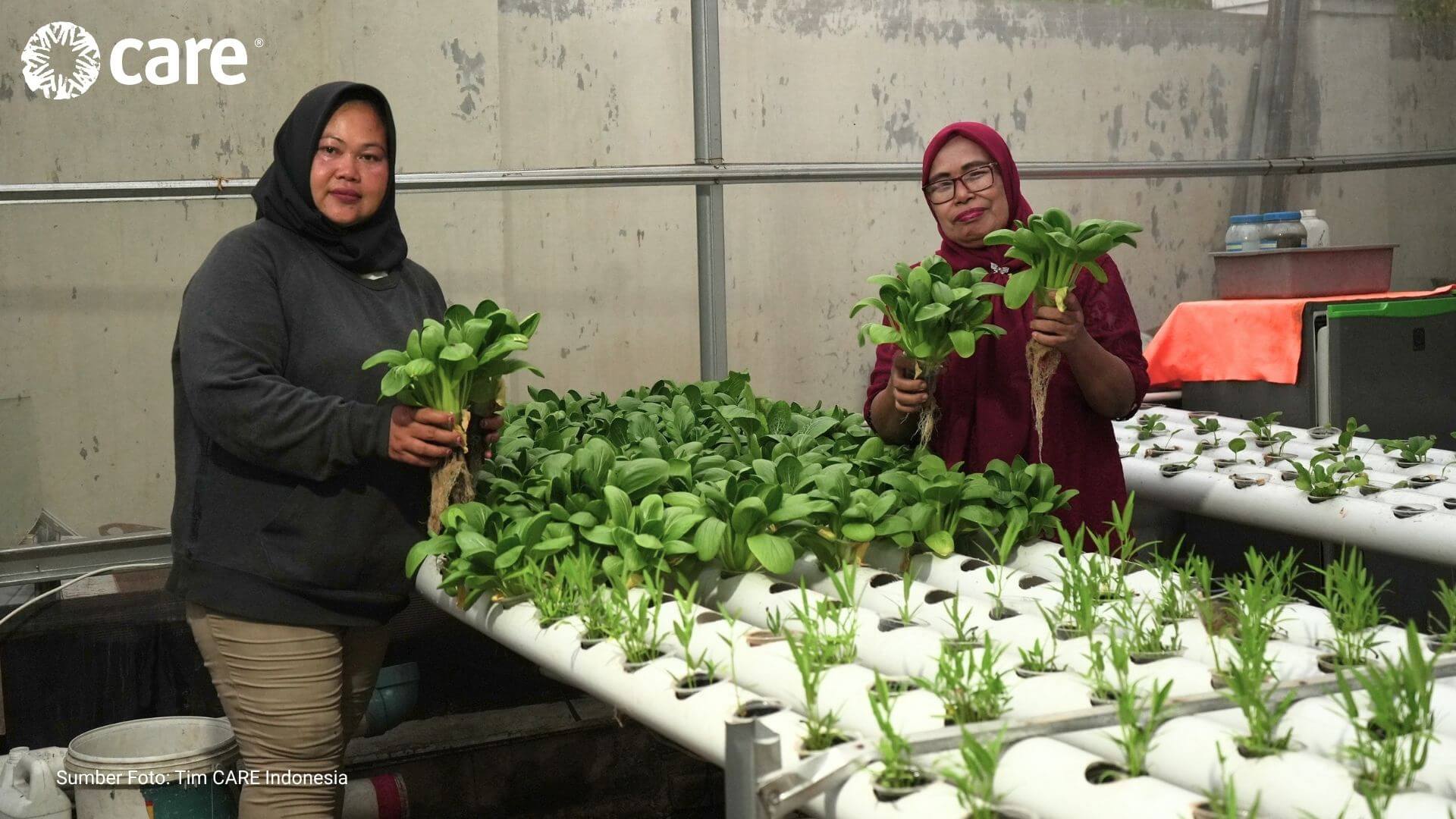
In addition to selling fried snacks, Rusmiati has started growing hydroponic vegetables with two fellow KUPAS members. They cultivate pak choi and water spinach, then offer their harvest through residents’ messaging groups and by going around the public housing complex. She explained that the income from their first harvest has not yet been distributed as profit because it is being reinvested in seeds and growing supplies.
“We started growing vegetables in July and have now had our first harvest, generating a total of IDR 100,000 in revenue. We are reinvesting the money to buy seeds. We expect that by the third harvest, we will be able to make a profit and divide it among the three of us,” she said.
Surtinah has also experienced an improvement in her financial situation. Previously, she could only set aside some of the income from her small shop at home. However, those savings were often used to cover unexpected expenses, such as electricity bills or school fees.
After joining KUPAS, Surtinah began saving more consistently and learned new ways to record financial transactions for both household and group finances. She was entrusted with managing the group’s bank account and depositing money at the bank once sufficient savings had been collected. According to Surtinah, the trust among KUPAS members is reinforced by transparent record-keeping and the financial management practices covered in the training sessions she attended.
Surtinah explained that the group maintains three separate record books, while its savings box is secured with a locking system managed by several committee members. Through KUPAS, she has worked to maintain her saving habit by setting aside IDR 10,000 each week.
“We pool our money and record everything in the books. We do not use just one ledger, but three. The money is then kept in a safe, and three of us hold the keys. Once enough money has accumulated, it is my responsibility to deposit it at the bank. Even if it is only IDR 10,000 a week, I make sure to save,” she explained.
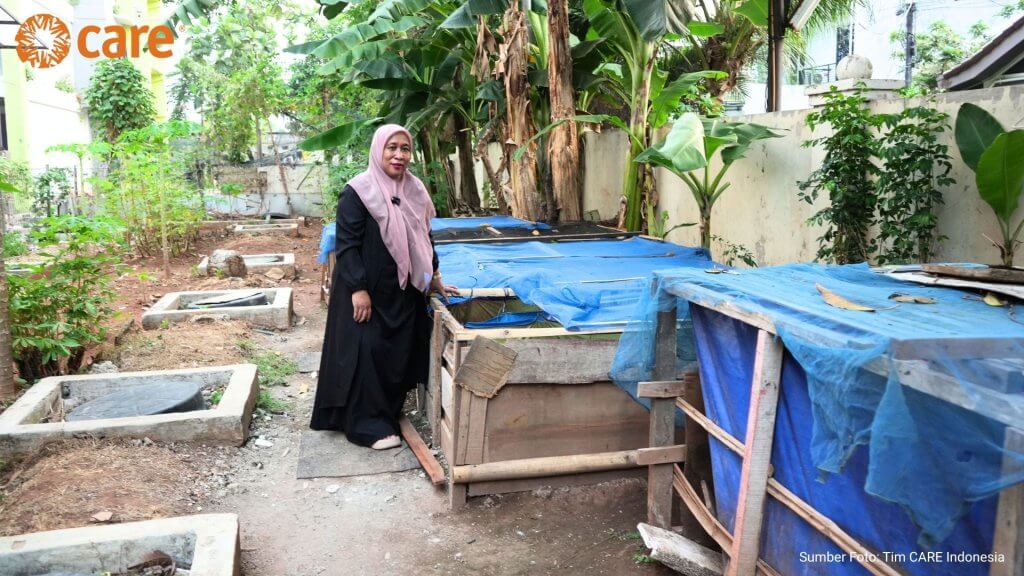
The trust built through KUPAS has also created opportunities for Surtinah and other members to develop a joint business. Since August, she has been managing a catfish and tilapia farming venture with three other members, using IDR 4.5 million in group capital. The business is still in its development stage and has yet to reach its first harvest. Surtinah and her husband take turns feeding the fish in the morning and evening.
“I used to raise catfish on my own at home. After coming together through KUPAS, we formed a business group and decided to try raising catfish together. My husband also helps with the business, particularly with buying fingerlings and fish feed,” she said.
Her husband’s support is also reflected in how they share household responsibilities. According to Surtinah, after her husband participated in gender equality training conducted by CARE, he became more willing to get involved and work together with her in managing the shop, including shopping for supplies and carrying goods.
Surtinah added that her husband has also become more involved in household chores, such as washing dishes and clothes, especially when she is feeling unwell. Their cooperation helps her continue her economic activities while managing household responsibilities.
“When I feel well, I do the housework myself. But when I am not feeling well, my husband is more understanding and helps out, such as by washing the dishes and clothes. Basically, we share the household responsibilities,” Surtinah said.
For Rusmiati and Surtinah, the support they receive and their participation in a women’s group like KUPAS are about more than simply developing the habit of saving money. By strengthening their financial capacity through savings, they are gaining access to new knowledge, broader networks, additional capital, and opportunities to develop both individual and joint businesses. With support from the group, more structured financial management, and greater cooperation at home, both women are working to strengthen their families’ economic resilience, one step at a time.
Writer: Kukuh Akhfad Editor: Swiny Adestika