Amid the economic challenges of oil palm replanting, women in Musi Banyuasin, South Sumatra, are building business opportunities through the strength of their groups. Together with CARE Indonesia, PT Hindoli–Cargill, and the Musi Banyuasin District Government, they are developing home-based enterprises, processing local resources, and expanding their market reach.
Since November 2022, through the PROSPER III program, CARE Indonesia has supported the formation of Women-led Economic Business Groups (KUEP), strengthened entrepreneurship skills, and provided access to business capital. As of April 2026, 505 women have joined 13 KUEPs across 13 villages and developed 18 home-based business groups. Business income has reached IDR 75.9 million, while the groups’ savings and loan funds have reached IDR 1.9 billion.
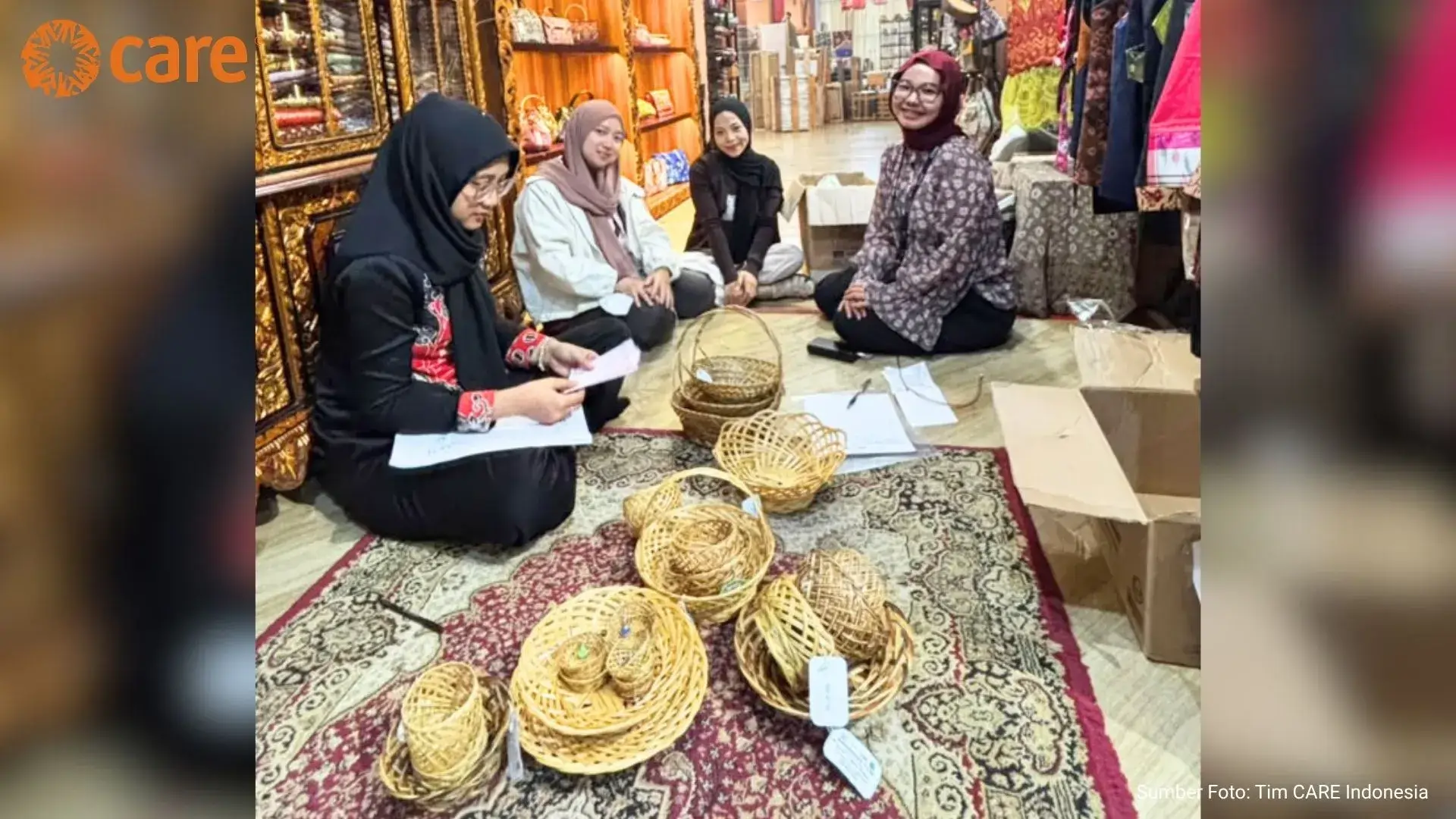
Equipped with knowledge and capital, the women are turning local resources into sources of income. Oil palm fronds that were previously discarded are made into woven palm-leaf-rib (lidi) crafts, while empty fruit bunches are used as a growing medium for straw mushroom cultivation. These efforts show how innovation based on local resources can open up new economic opportunities.
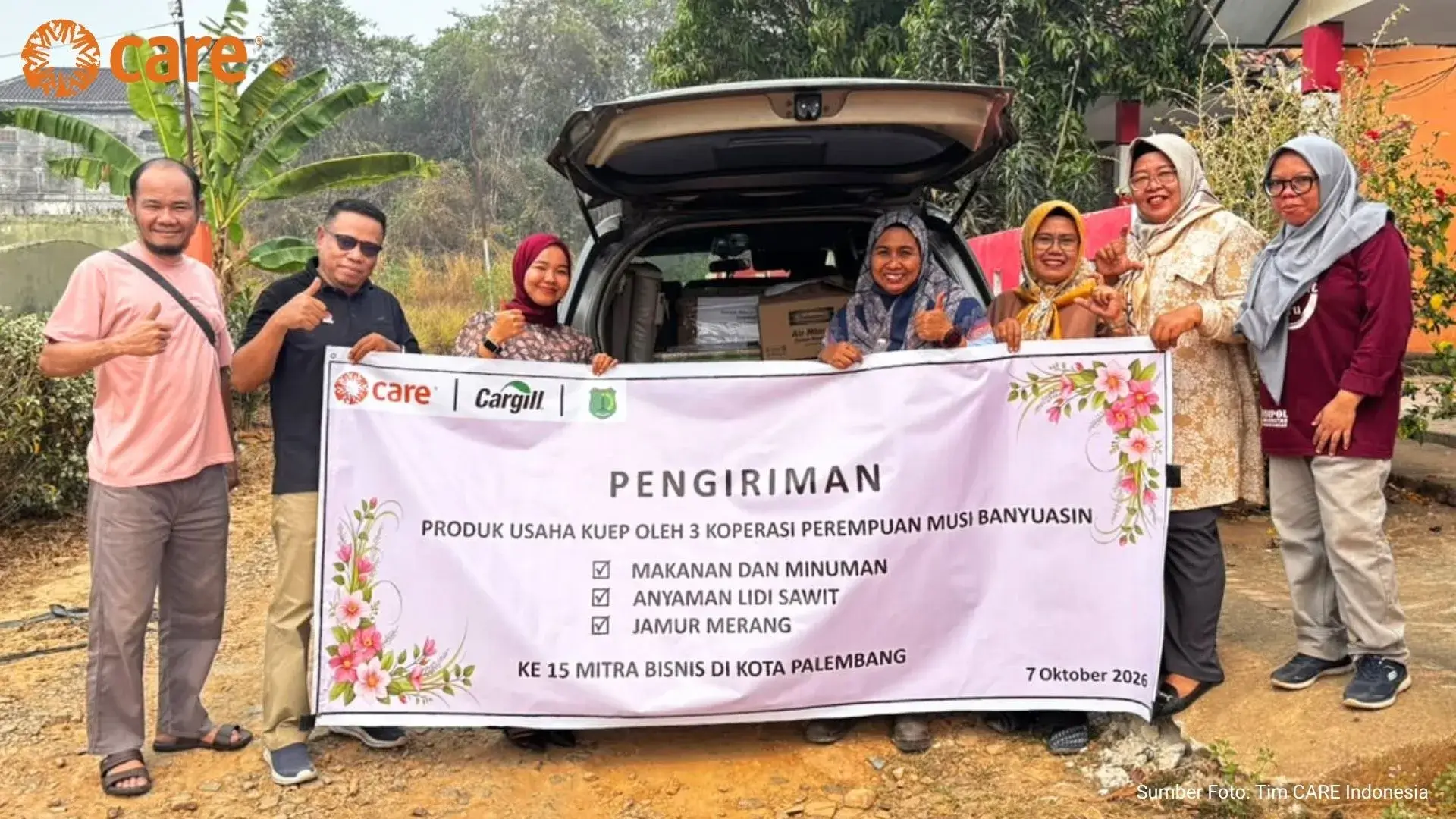
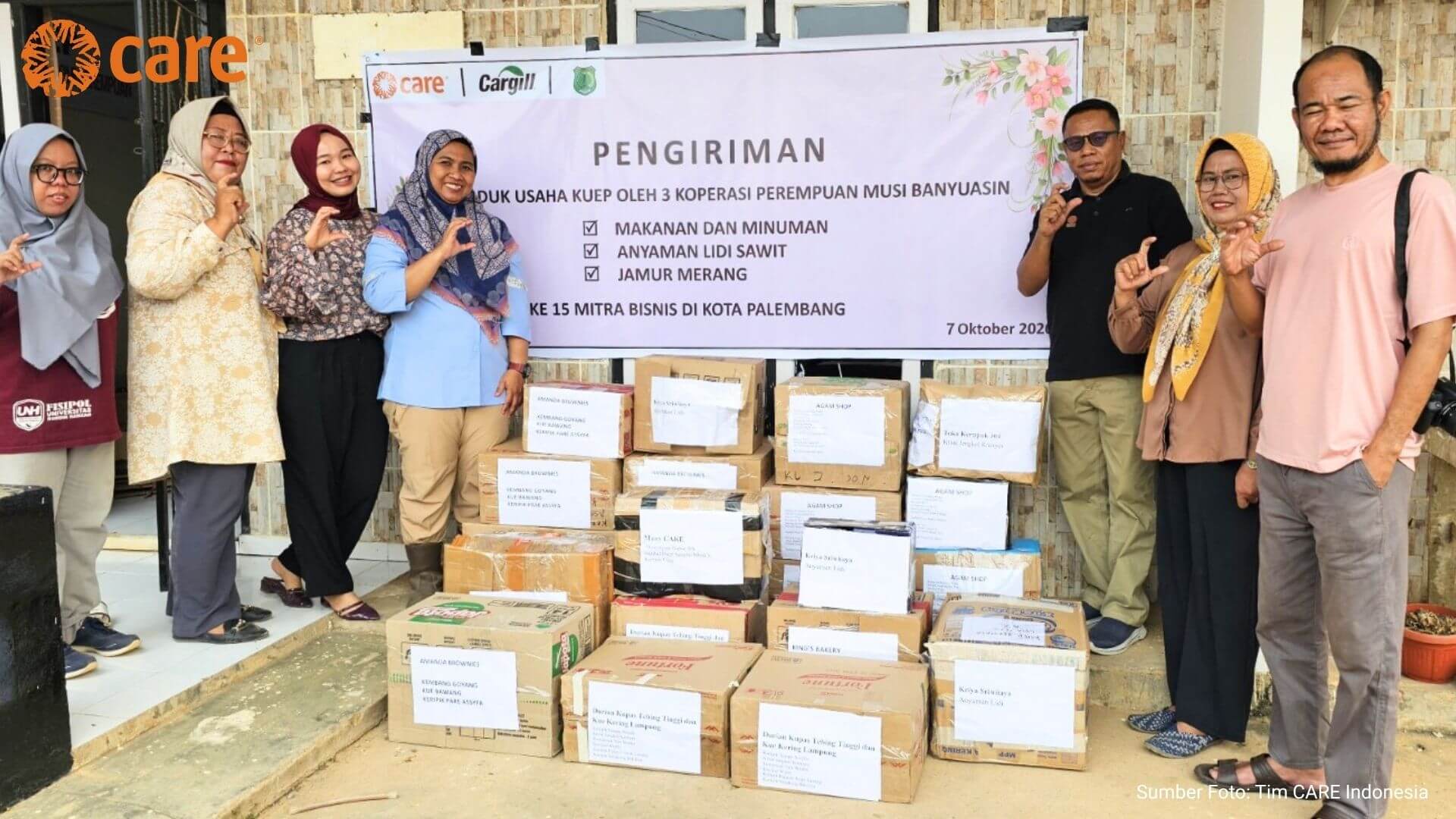
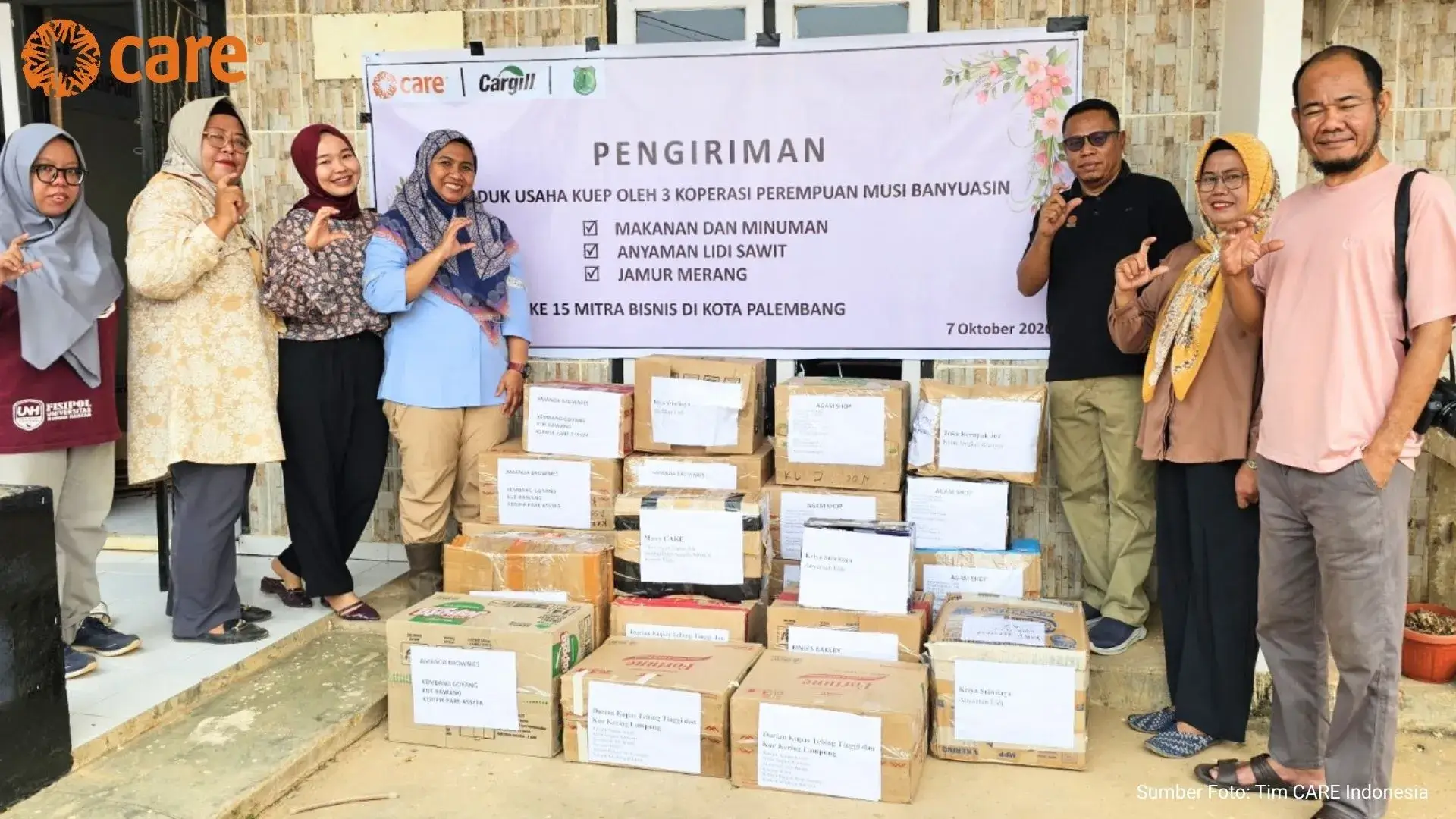
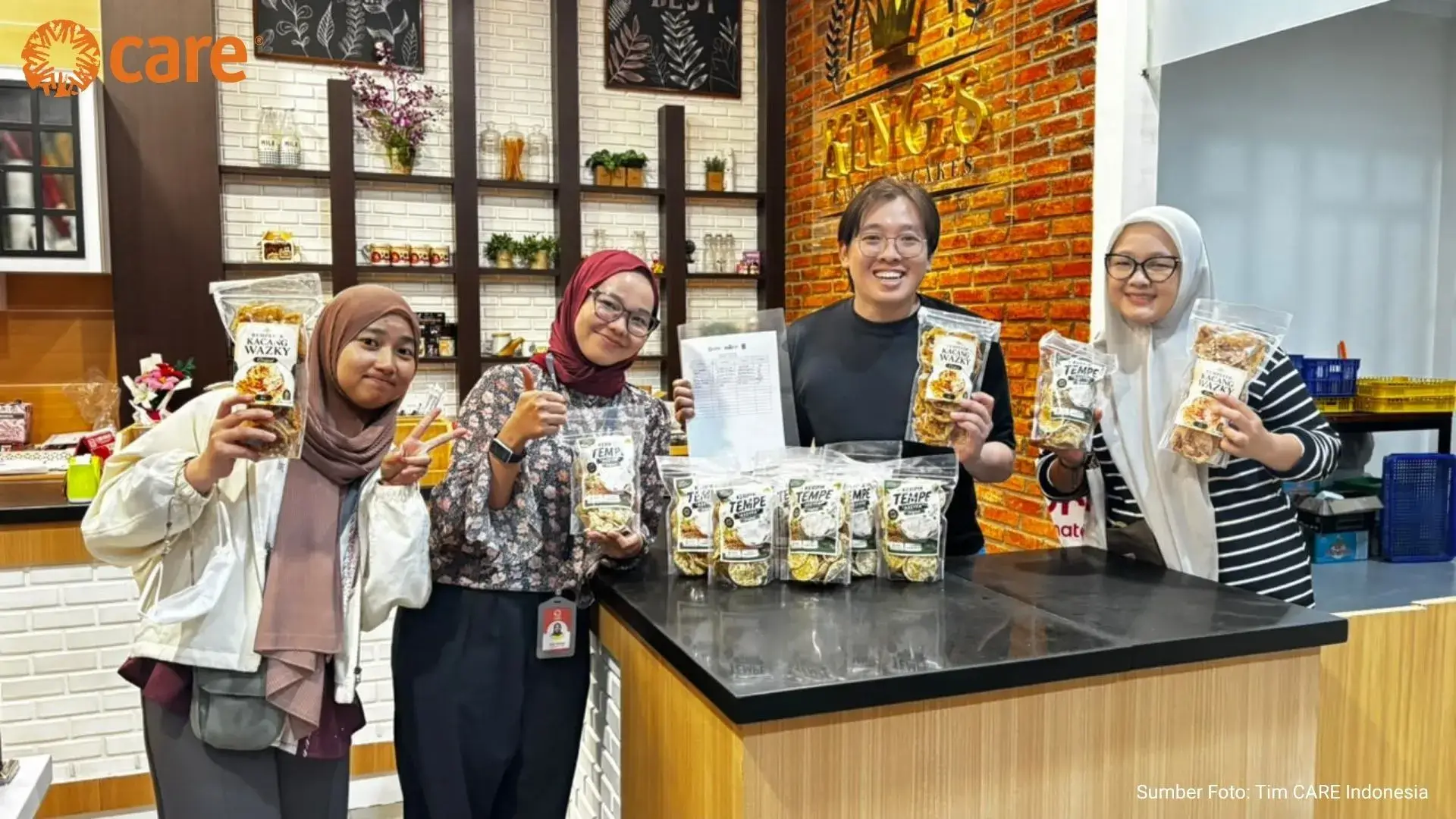
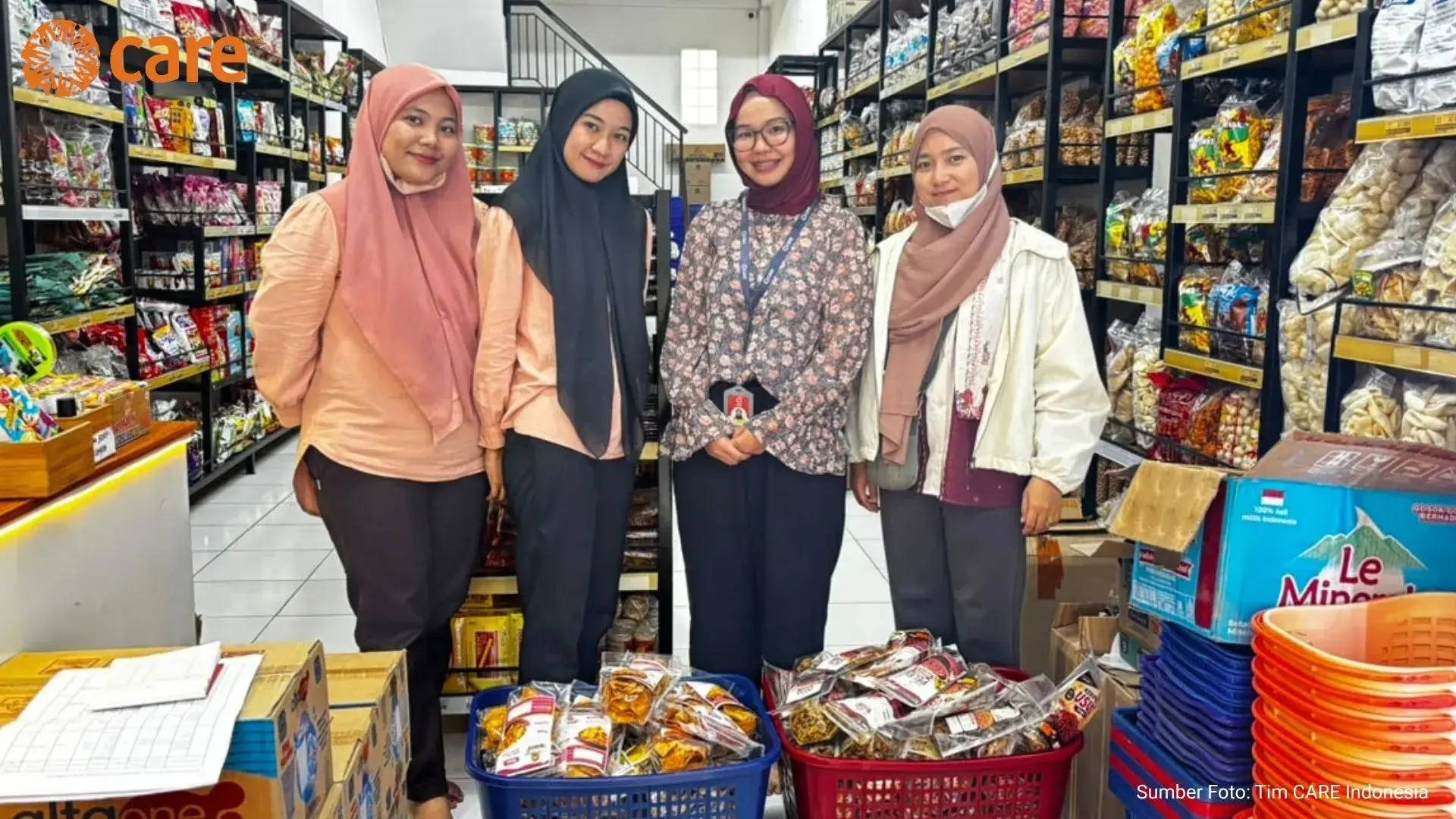
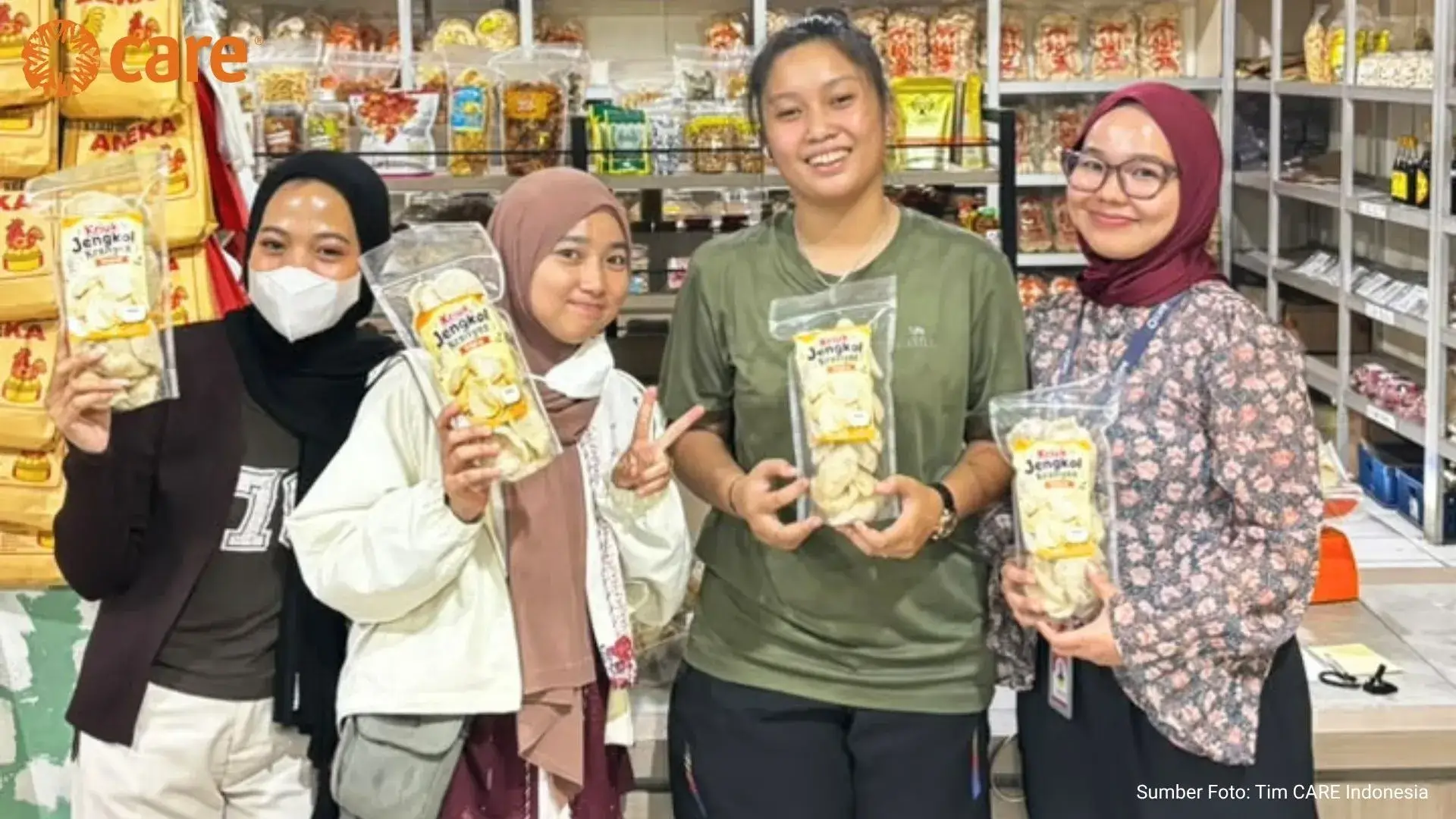
Through producer cooperatives such as Sekawan Perempuan Mandiri, Srikandi Tungkal Mandiri, and Perempuan Tangguh Berjaya, their products are beginning to reach stores in Palembang. As of September 2026, 397 units of 31 types of food products, along with two woven lidi packages, have been distributed to various stores in the city. Potential sales are estimated at around IDR 5 million.
Beyond increasing income, this initiative strengthens women’s ability to manage finances, lead groups, and make decisions collectively. With support from the government, private sector partners, and business actors, their steps toward wider markets are part of a broader effort to build sustainable economic independence for women, families, and communities.
In the communities surrounding palm oil plantations in Musi Banyuasin, South Sumatra, hundreds of women are determined to play an active role in strengthening their families’ economic well-being. When the replanting of oil palm plantations disrupted household incomes, they chose to keep moving forward. Through the PROSPER III programme, CARE Indonesia, in partnership with PT Hindoli–Cargill and with support from the Musi Banyuasin District Government, has supported these women in building businesses that have grown from community-based initiatives to reaching markets in Palembang.
The potential had always been there. However, limited information, access to capital and markets, and domestic responsibilities often posed significant challenges. Since November 2022, with support from the Musi Banyuasin District Government, the programme has established Women’s Economic Business Groups (Kelompok Usaha Ekonomi Perempuan/KUEP), provided entrepreneurship training, and offered business capital. This collaborative effort has begun to deliver tangible results. As of April 2026, 13 KUEP groups across 13 villages had engaged 505 women and established 18 home-based businesses, spanning processed foods, handicrafts, livestock farming, and cultivation. Combined business revenue reached IDR 75.9 million, while the groups’ collective savings and loan funds exceeded IDR 1.9 billion.
At the heart of this progress is the strength of collective action. Through community-based savings and loans using the Village Savings and Loan Associations (VSLA) approach, implemented through KUEP, women learn to save, manage finances, take on leadership roles, and make decisions together. The benefits extend into their households, helping them better manage their daily needs.
Zulkarnain, S.P., Head of the Musi Banyuasin Office of Cooperatives and Micro, Small, and Medium Enterprises (MSMEs), said CARE Indonesia’s support had made a tangible difference for women’s groups and their families.
“We have seen the tangible results of CARE Indonesia’s support for these women and mothers. It has helped increase household incomes,” he said.
What makes these stories even more remarkable is that the women’s businesses are growing by making use of resources available in their surroundings. Unused oil palm fronds are transformed into handicrafts made from palm leaf ribs. Nasagita Murtiwi, a member of KUEP Sumber Agung, said the training opened her eyes to the value of oil palm fronds while also helping her build confidence.
“Through KUEP, we learned that oil palm fronds can be turned into handicrafts and generate income. Now we feel more confident making plates and other handicrafts from oil palm leaf ribs,” she said.
Other agricultural waste is also being put to productive use. Winarni, a member of KUEP Simpati Kencana in Bumi Kencana Village, explained that she and two other group members began cultivating paddy straw mushrooms after noticing the large quantities of discarded empty oil palm fruit bunches. Their business has since grown with capital support from KUEP.
“Two other KUEP members and I started this cultivation business because we saw so many unused empty oil palm fruit bunches. We decided to try growing mushrooms and use the empty bunches as a growing medium. Thankfully, the business has been able to grow because we received funding from KUEP to use as business capital,” she said.
Alongside these initiatives, CARE Indonesia and its partners equip women’s group members with financial literacy, business management, marketing, and product development skills. They also promote gender equality and strengthen awareness of the prevention of and response to gender-based violence, both in the workplace and within communities.
However, good products alone are not enough if they remain confined to village markets. To strengthen market access, the programme has also supported institutional development through the establishment of cooperatives managed by women who are KUEP members. One example is the Sekawan Perempuan Mandiri Cooperative in Sungai Lilin.
Lisa, Chair of the Sekawan Perempuan Mandiri Cooperative, said the group’s business had been operating for three years. She hopes their locally made products will reach more shops and expand into provincial markets.
“Our business has been running for three years, but our market reach is still limited to the village. We hope our shredded meat products and various snacks made from locally sourced ingredients from several villages will attract more partnerships with shops and enable us to expand into provincial markets,” she said. That ambition is beginning to take shape. With support from CARE Indonesia and PT Hindoli, the programme is helping groups improve the quality and quantity of their products while expanding market access. The business readiness and product offerings of all 13 KUEP groups were assessed to identify priority products and potential buyers, also known as offtakers. Business-matching sessions were then organised with companies. Handicrafts made from oil palm leaf ribs have also been showcased at provincial exhibitions, including MUBA Expo and Andalas Expo, and featured in the Musi Banyuasin District Government’s electronic catalogue.
Riska Wahyuni, CSR Manager at PT Hindoli, hopes potential business partners will continue providing feedback to help the handicrafts gain wider recognition.
“Potential partners can continue providing feedback to KUEP so that products that may initially be seen as simple woven crafts made from leaf ribs can gain wider recognition, reaching Palembang and even markets outside the province,” she said.
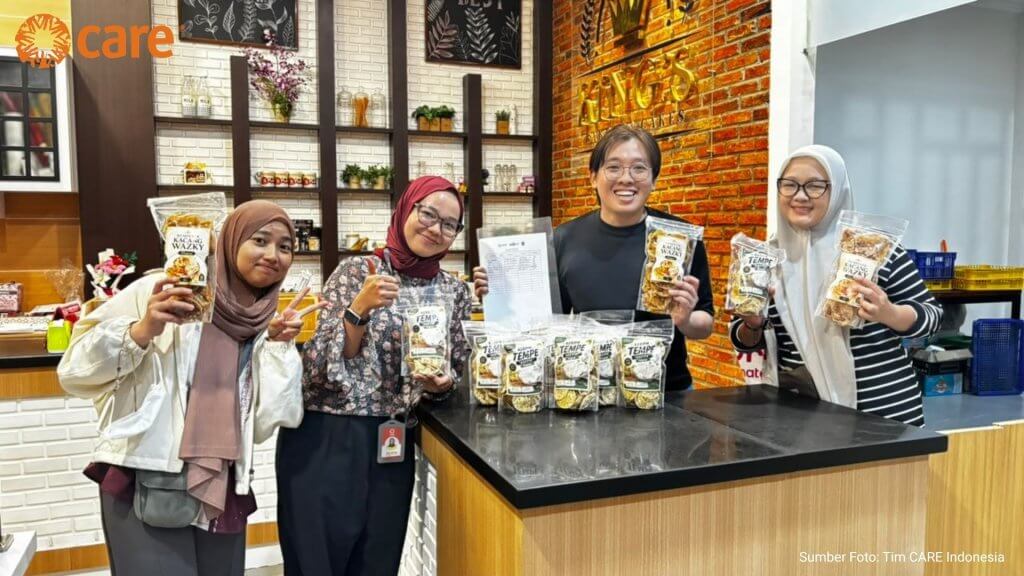
Today, through three subdistrict-level producer cooperatives, Sekawan Perempuan Mandiri in Sungai Lilin, Srikandi Tungkal Mandiri in Tungkal Jaya, and Perempuan Tangguh Berjaya in Keluang, KUEP products are beginning to appear on store shelves in Palembang. These include snacks such as kembang goyang (traditional flower-shaped crackers), savoury onion cookies, bitter melon chips, rempeyek (crispy savoury crackers), shredded chicken, crispy jengkol chips, and pecel peanut sauce. The product range also includes handicrafts made from oil palm leaf ribs and fresh produce such as paddy straw mushrooms.
Several business partners have helped expand the market reach of these products following business-matching sessions. They include Amanda Brownies, King’s Bakery, Agam Shop, Many CAKE, Toko Kerupuk 301, and Kriya Sriwijaya. Products are supplied through both consignment arrangements and direct purchases.
As of September 2026, 397 units of 31 types of food products, along with two packages of assorted oil palm leaf-rib handicrafts, had been distributed to various shops in Palembang. These products are expected to generate total sales of approximately IDR 5 million.
This journey is only the beginning. The long-term sustainability of KUEP depends on the groups’ and cooperatives’ ability to maintain product supply, quality, and buyers’ trust. Continued collaboration among local government, CARE Indonesia, PT Hindoli–Cargill, and business partners therefore remains essential, particularly as production and distribution expand.
By gradually strengthening business capacity and expanding market access through sustained collaboration, economic opportunities that were once limited can become a lasting foundation for the economic independence of women, their families, and their communities.