
Affordable technical solutions, adaptive occupational safety and health policies, and meaningful worker participation, including women workers, are essential foundations for building industries that are healthy, productive, and resilient to climate change.
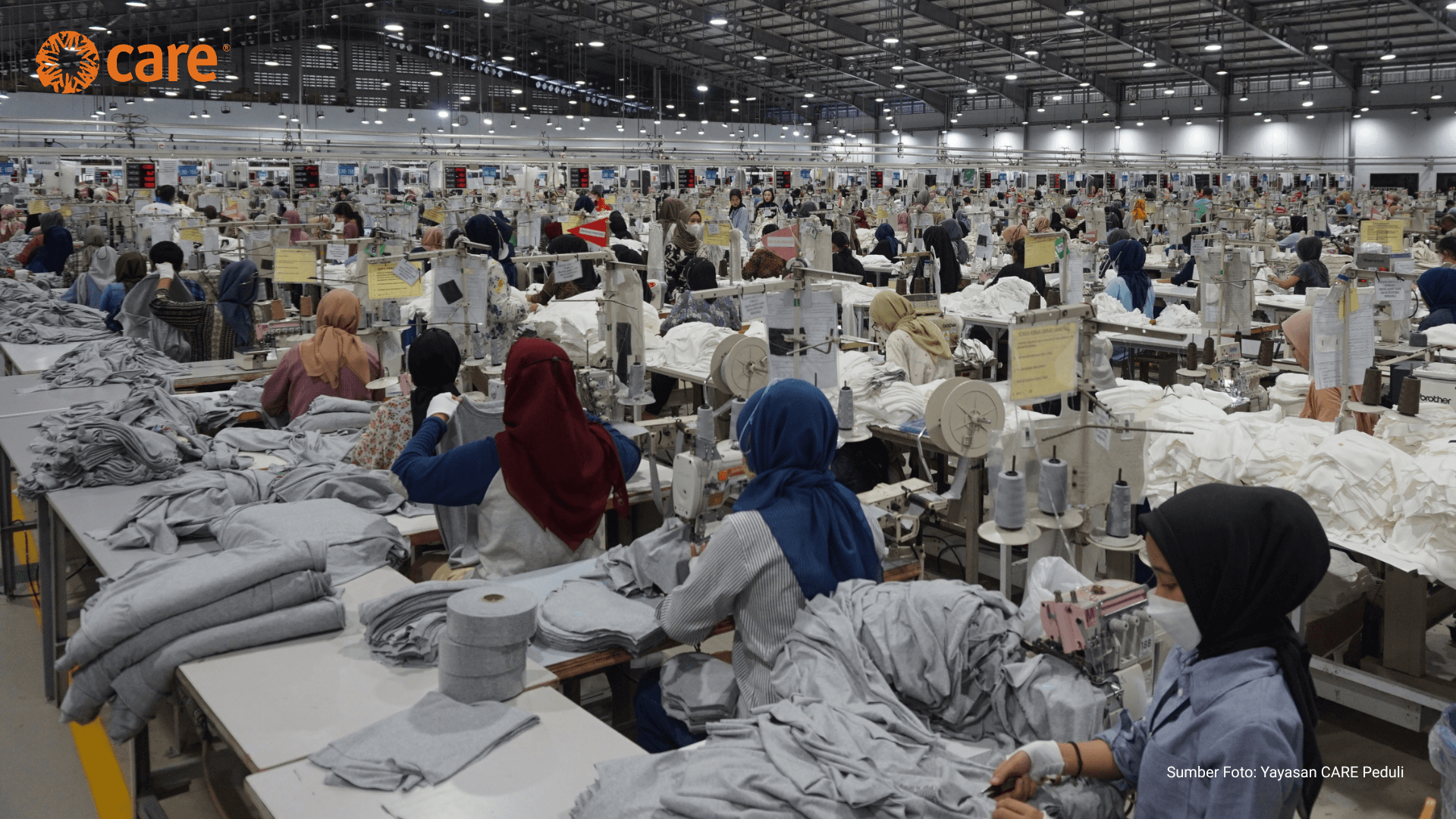
For workers who spend long hours on production floors, rising temperatures are no longer simply a matter of comfort. Hot and poorly ventilated conditions can cause the body to tire more quickly, reduce concentration, and make access to adequate rest and drinking water increasingly important, as highlighted in a 2023 study published in The Journal of Climate Change and Health.
For companies, meanwhile, changing workplace conditions driven by extreme weather present challenges of their own. These conditions need to be addressed as part of occupational safety and health, worker protection, productivity, and business continuity, as reflected in research published in Current Environmental Health Reports in 2026.
Abdul Wahib Situmorang, CEO of Yayasan CARE Peduli (CARE Indonesia), explained that Indonesia’s labour-intensive industries have an opportunity to strengthen worker protection systems, including for women workers, who are often employed on production lines and in roles with relatively high exposure to heat, while also enhancing business resilience.
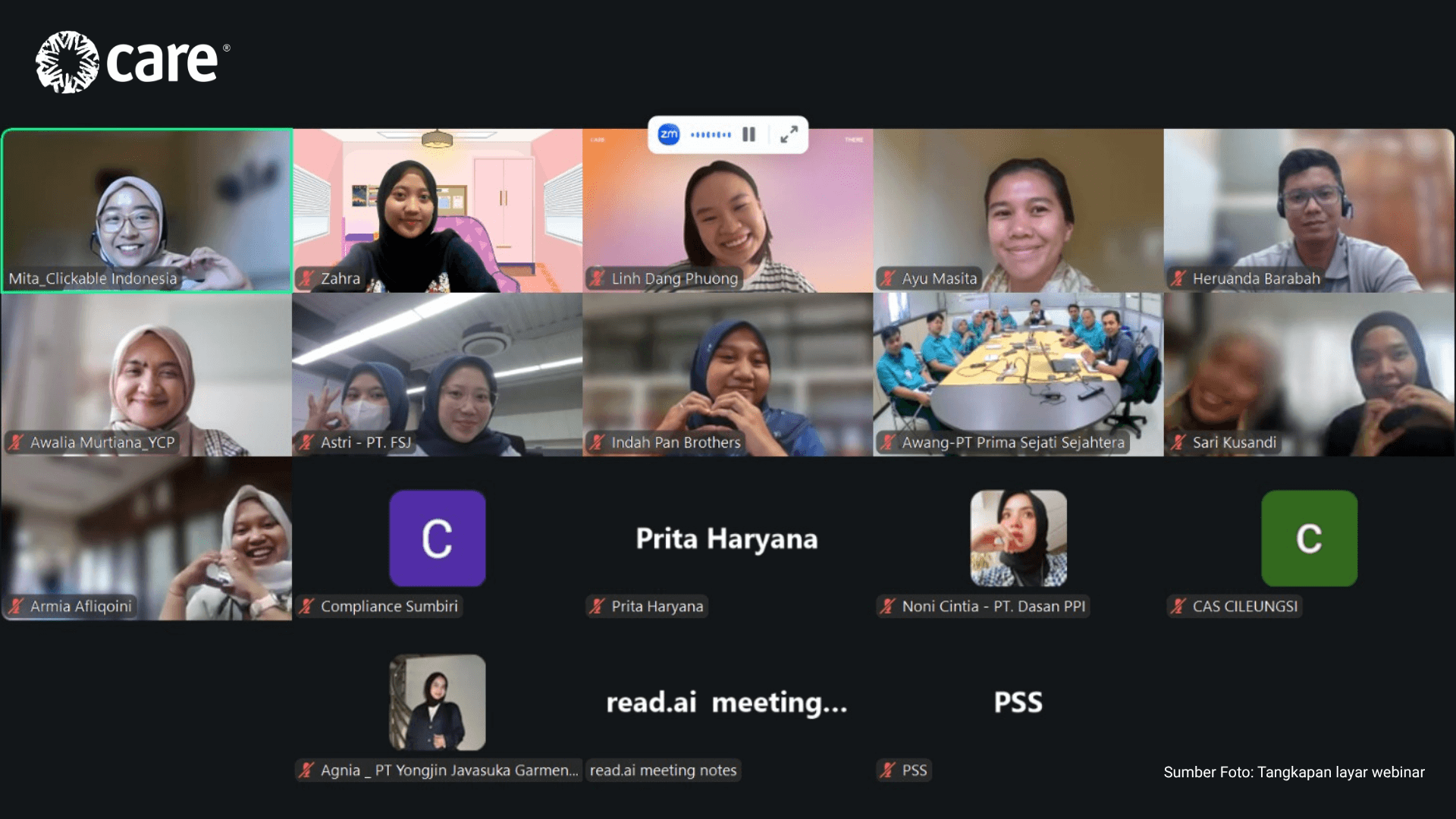
“Protecting workers from extreme heat is not simply an additional cost or a matter of comfort. It is a strategic investment in workers’ health and dignity, continuity of production, corporate reputation, and industrial competitiveness. What is needed is not merely a temporary intervention, but a system integrated into occupational safety and health procedures, human resource management, occupational health services, and dialogue between management and workers,” Abdul said during an interactive discussion held by CARE Indonesia with members of the Gather, Exchange & Navigate (GEN) Network on August 27, attended primarily by businesses from the garment sector.
Abdul added that an effective approach must bring together three priorities that are often viewed separately: worker protection, productivity, and business sustainability. In fact, he said, these three priorities can reinforce one another when companies use on-the-ground data, listen to women workers’ experiences, and implement solutions tailored to the characteristics of each production facility.
Business representatives, particularly from garment factories, acknowledged that adapting to rising temperatures involves complex challenges and considerations. A poll conducted during the discussion highlighted concerns ranging from costs and building characteristics to production processes and targets, as well as how to ensure that existing facilities continue to operate consistently and effectively.
Around 63 percent of participants identified limited budgets as one of the main considerations in improving workplace conditions. Another 19 percent pointed to the need for more specific technical knowledge to address rising indoor temperatures, while 13 percent faced challenges in balancing adjustments to rest and hydration with production targets. Around 6 percent emphasised the importance of more consistent coordination and maintenance of technical facilities.
These figures reflect the practical decisions companies must make every day: determining investment priorities, selecting solutions suited to their facilities, and ensuring that improvements can be sustained amid ongoing operational demands.
Women Workers’ Experiences as a Foundation for Designing Solutions
Discussions also highlighted that the impacts of extreme heat in workplaces, particularly in factory settings, are not experienced equally by all workers. The type of work performed, workstation location, duration of exposure, workload, use of protective equipment, health conditions, and access to drinking water, toilets, and break time can all influence the level of risk faced by individual workers.
Participants noted that in the garment industry, where women often make up a significant proportion of the workforce, greater attention is needed to health-related considerations. Women workers may have different health conditions and needs at different stages of life, including during pregnancy, breastfeeding, or when managing specific health conditions.
“Women workers are not a homogeneous group. The impacts of heat exposure can vary depending on life stage, health conditions, type of work, workload, use of protective equipment, and access to drinking water, toilets, and rest breaks,” said Raihan Zahrah, Gender Officer at CARE Indonesia.
Zahrah added that workers, including women workers, play an important role in mapping heat hotspots across production areas, reviewing rest policies, providing feedback on access to water and sanitation facilities, and assessing whether mitigation measures are genuinely helping.
“For companies, this feedback is not only about meeting workers’ needs. Workers’ experience, including women workers, also be an important source of information for understanding what is happening on the ground and identifying solutions that can genuinely be applied within day-to-day operations,” Zahrah said.
Simple Solutions, Meaningful Impact
Responding to extreme heat does not always require companies to make major changes in a short period of time. During the interactive discussion with GEN members, participants agreed that adaptation can begin by understanding the conditions within each facility. This includes mapping where heat sources are located, identifying when temperatures reach their highest levels, understanding how air moves through the building, recognising which areas are most crowded, and examining how work patterns affect workers’ exposure.
Participants also recognised that every production facility has different characteristics. Heat sources, building design, worker density, types of machinery, and work patterns can vary significantly. As a result, efforts to reduce heat exposure cannot rely on a one-size-fits-all approach.
Noni Cintia, Compliance Specialist at PT Dasan Pacific, shared her observations from the factory where she works. She noted that a larger building felt considerably hotter than a smaller one, despite both having the same building height. Through the discussion, she came to better understand that the difference could be related to the larger building’s greater exposure to direct sunlight due to the absence of shading.
Based on the discussion, she said that adding shading to areas exposed to direct sunlight could be one possible solution. “The smaller factory building is not directly exposed to sunlight because it is shielded by other buildings and has shading. I now understand why there is a difference in temperature between the two buildings,” Noni added.
Armia Afliqoini, Chief Compliance at PT Pan Brothers, also shared that the factory had implemented two different cooling systems. “At our factory, we have implemented two systems. We built a water-based cooling system, which was also adjusted according to the western and eastern sides of the factory building. However, we encountered an issue with increased humidity, which could potentially lead to mould growth. Because of this challenge, we developed a second system. We extract hot air and direct it outside when a rise in temperature is detected. However, we have not yet found a calculation standard that we can use as a reference,” she said.
Armia added that discussions with CARE Indonesia and other GEN members had introduced her to a range of tiered cooling solutions. These included installing exhaust fans or air conditioning, regularly reducing excess humidity, exploring the use of a raised-floor system to create space beneath the floor for channelling hot air, and installing an Air Handling Unit (AHU) to control temperatures in enclosed spaces. She also noted that the discussion provided information on Indonesian National Standards (SNI) related to indoor environmental conditioning and temperature.
Throughout the discussion, participants explored a range of approaches that could give companies room to begin with what is most feasible. Improvements to cross-ventilation and airflow, adjustments to the placement of machinery and workstations, the provision of cooler rest areas, and easier access to drinking water were among the potential measures discussed.
According to Abdul, adapting to extreme heat can also involve adjustments to work patterns, such as scheduling rest breaks, rotating workers in areas with higher heat risks, and using appropriate cooling technologies based on building and environmental conditions.
“Protecting workers from extreme heat is not simply an additional cost or a matter of comfort. It is a strategic investment in workers’ health and dignity, continuity of production, corporate reputation, and industrial competitiveness. In other words, adaptation does not always have to begin with major investments. What matters most is ensuring that interventions genuinely reduce heat exposure and can be sustained over the long term,” Abdul said.
He added that CARE recommends that technical investments should go hand in hand with stronger company systems. “Technical investments must also be accompanied by stronger systems. Temperature measurements and workers’ experiences need to be used to update occupational safety and health procedures, occupational health service protocols, response procedures for heat-related symptoms, as well as work targets and schedules, so that these efforts become part of the way companies manage their workplaces,” Abdul said.
Turning Challenges into Shared Learning
The transition towards workplaces that are more resilient to climate change cannot be achieved by one party alone. Based on CARE’s experience of working in partnership with different stakeholders, Abdul emphasised that collaboration is key. Companies need support from government, workers, industry associations, technology providers, and civil society organisations.
Governments, he said, can contribute through adaptive and gender-responsive occupational safety and health guidance, incentives and access to financing, as well as technical advisory and support services. At the same time, businesses can begin by taking action within their own control—mapping risks, listening to workers, testing solutions, measuring results, and integrating effective practices into their management systems.
“Collaborative platforms such as GEN Indonesia can also provide a space for companies to learn from one another. For businesses, sharing experiences means they do not always have to start from scratch. Solutions that have worked in one facility can inspire others, while experiences with approaches that have been less effective can help other companies avoid unsuitable investments,” he said.
According to Abdul, the value of learning through collaboration lies in how it is translated into meaningful change. “Discussion and training are ultimately not the end goal. What is learned needs to be translated into occupational safety and health procedures, human resource management, occupational health services, mechanisms for dialogue between workers and management, and companies’ investment planning,” Abdul said.
When Workers Safe, Businesses More Resilient
Ultimately, the conversation around extreme temperatures in the workplace is about how industries can prepare for changing risks without compromising the health and safety of the people who keep production moving every day.
For workers, including women workers, a safer workplace means having access to drinking water, adequate rest breaks, facilities that support their health, and safe spaces to raise their needs and concerns.
For companies, such protection can form part of a broader strategy to maintain productivity, reduce operational disruptions, and strengthen business resilience in the face of climate change.
For CARE Indonesia, as Abdul explained, this is where collaboration becomes essential. The goal is not simply to encourage companies to adapt, but to work together to identify ways of making adaptation work both for workers and for long-term business sustainability.
“As temperatures continue to rise, the most resilient industries will not necessarily be those with the largest investments. The industries that are best prepared may be those willing to listen, understand the risks, test practical solutions, and make worker protection part of the way they build their businesses for the future,” Abdul concluded.
