
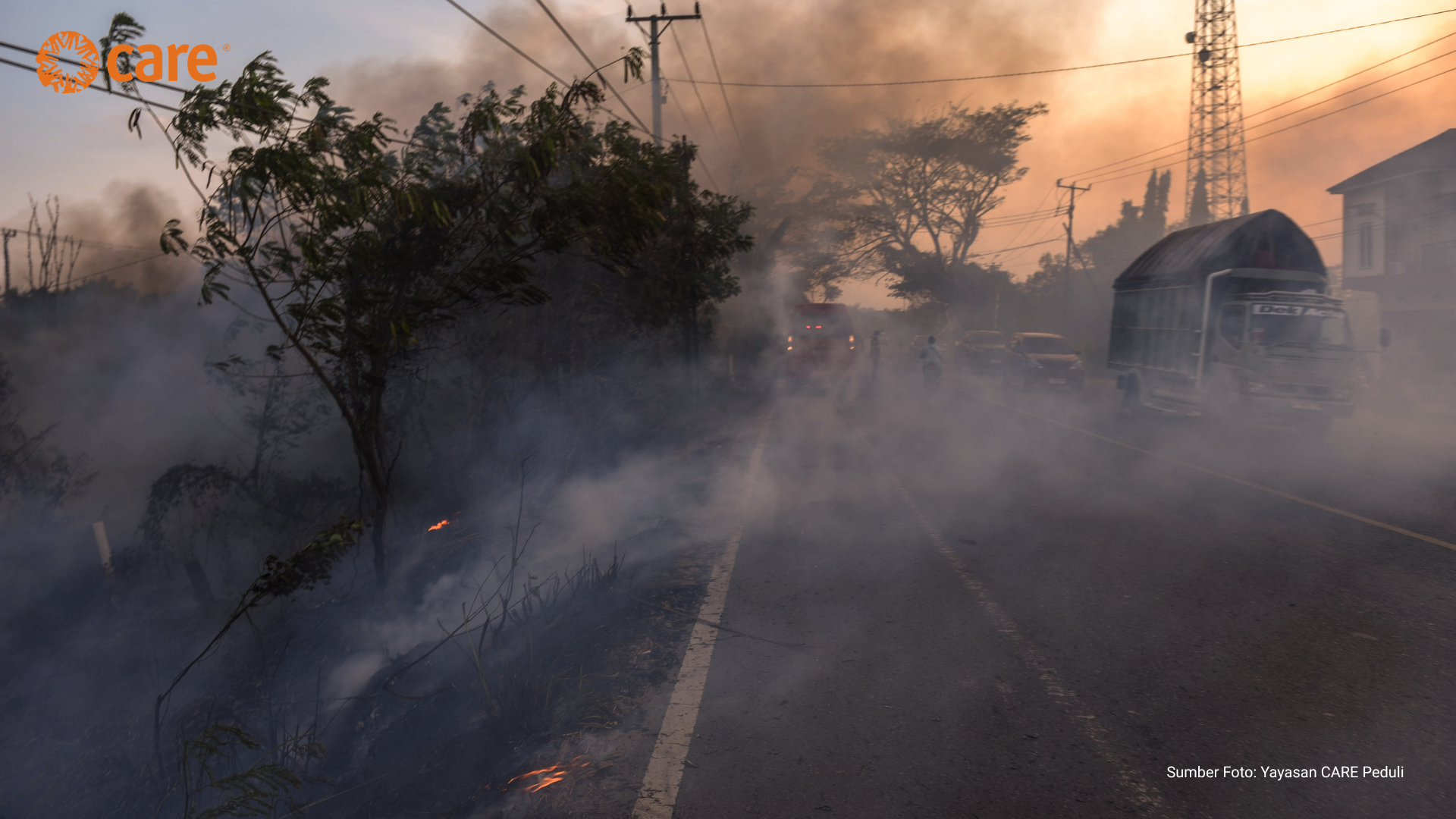
Gender- and inclusion-responsive approaches are essential to ensure that fire control goes hand in hand with protecting health, access to essential services, and the livelihoods of affected communities.
Forest fires occurring across various parts of Indonesia this year require continued vigilance, preparedness, and strengthened collaboration. These efforts are critical to complement ongoing response measures while helping reach people whose needs may not yet be fully addressed.
The Ministry of Forestry recorded approximately 202,000 hectares of forest and land fires nationwide between January and July 2026. Separately, SiPongi data recorded 107,465.47 hectares of burned area between January and June 2026, representing a 366 percent increase compared with the same period in 2025.
The Meteorology, Climatology, and Geophysical Agency (BMKG) has reported that the influence of a very strong El Niño and a positive Indian Ocean Dipole (IOD) continues to contribute to dry conditions across Indonesia. During the second ten-day period of August 2026, the dry season had already affected 79.9 percent of Indonesia, underscoring the need for continued vigilance over drought and forest fire risks in several provinces.
The impacts of forest fires extend far beyond the area burned. According to information published by the Ministry of Health on its official website, approximately 3.4 million people across seven provinces in Sumatra and Kalimantan have been affected by haze and face increased health risks. Response measures have included the deployment of health workers, distribution of masks and medical supplies, and provision of oxygen equipment in affected areas.
Dr. Abdul Wahib Situmorang, CEO of CARE Indonesia, expressed his appreciation to the Ministry of Forestry, the National Disaster Management Agency (BNPB), BMKG, the Ministry of Health, local governments, the Indonesian National Armed Forces (TNI), the Indonesian National Police, Manggala Agni, health workers, volunteers, civil society organizations, businesses, and local communities working across fire prevention and suppression, Weather Modification Operations, health services, and community protection.
According to Abdul, the scale and complexity of the situation underscore that an effective response depends on coordination, clear division of roles, and complementary contributions from different stakeholders.
“The success of forest and land fire management should not be measured only by how quickly fires can be brought under control, but also by the extent to which people can remain safe, healthy, and able to sustain their livelihoods. Fire control and community protection are not two separate agendas; they need to move forward together,” he said.
Fire Control and Community Protection: One Integrated Response
Abdul emphasized that forest fires and the resulting haze do not affect everyone in the same way. Children, pregnant and breastfeeding women, older people, persons with disabilities, and people living with respiratory or chronic illnesses may face greater health risks. Households dependent on daily income may also experience lost earnings when work, education, public services, and caregiving activities are disrupted.
“In many households, women carry significant responsibility for caregiving and meeting household needs while also contributing to family income. When family members become ill or schools are closed, the burden in terms of time, costs, and decision-making can increase. This is why data disaggregated by sex, age, disability, location, and livelihood is essential to ensure assistance reaches those facing the greatest barriers,” Abdul said.
He noted that during a large-scale response, it is not always possible to address every need simultaneously. Identifying unmet needs and agreeing on the division of roles among stakeholders are therefore important elements of humanitarian coordination. This helps ensure that resources are used effectively, avoid duplication, and deliver the greatest possible benefit to affected communities.
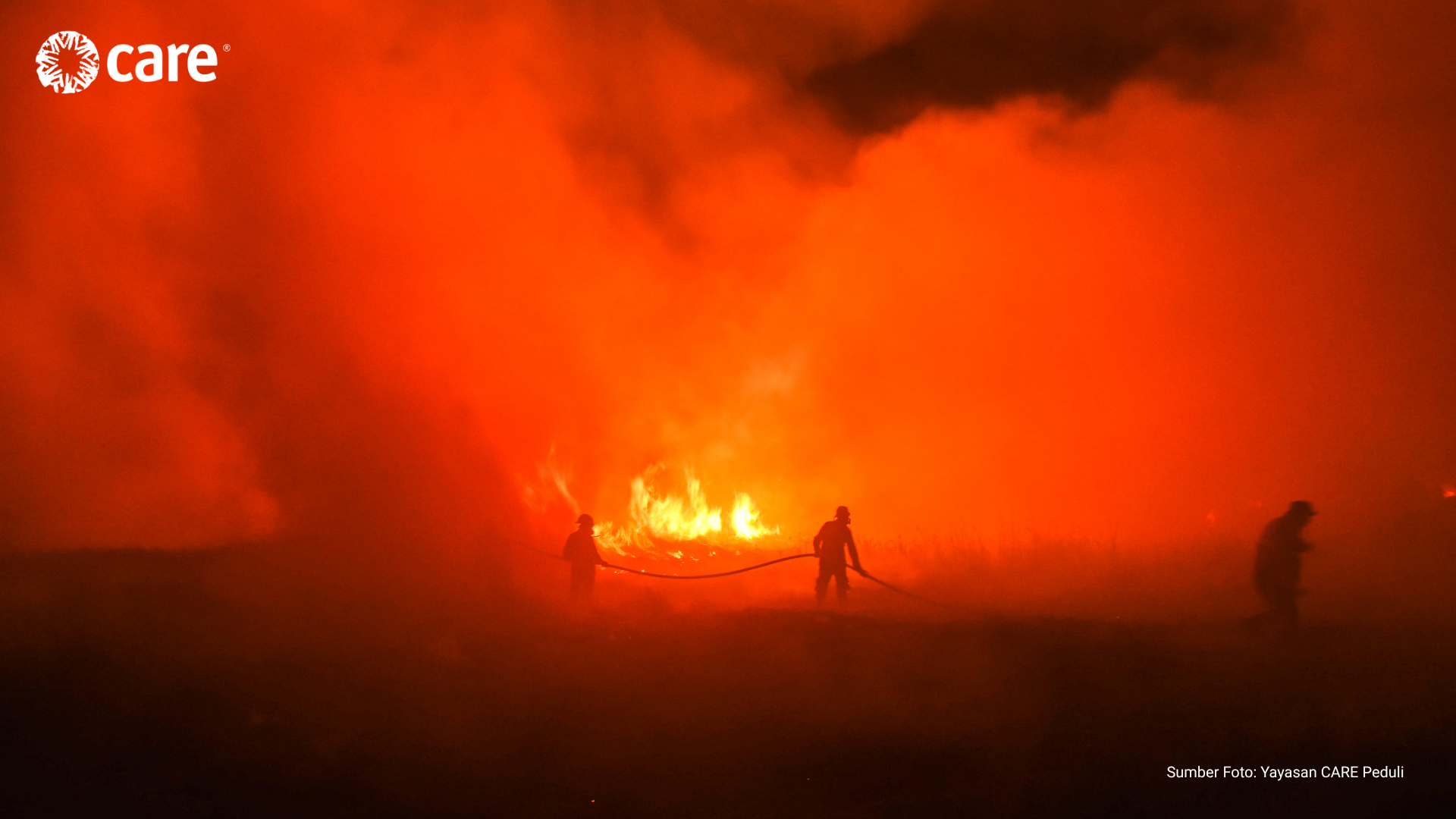 Manggala Agni and Ogan Ilir Regional Disaster Management Agency (BPBD) personnel extinguish a land fire in Ibul Besar 3 Village, Pemulutan District, Ogan Ilir District, South Sumatra, on Saturday (8/8/2026).
Three areas for stronger collaboration
Abdul highlighted that cross-sectoral collaboration can be further strengthened. At least three areas, he said, offer opportunities to reinforce community protection in the response to forest fires.
According to Abdul, the first area for collaboration is expanding health protection and access to cleaner air. He noted that stakeholders can work together by providing clear and accessible air quality information, distributing masks and promoting their proper use in line with health authorities’ recommendations, deploying mobile health services, and providing oxygen support in locations where it is most urgently needed.
“Beyond ensuring that information is delivered quickly and in an easy-to-understand format, it is equally important to maintain the continuity of essential health services for mothers and children, older people, persons with disabilities, and those living with respiratory or chronic illnesses. Support from the private sector and philanthropic organizations can be aligned with needs assessments and the coordination mechanisms established by local governments and health authorities,” he said.
According to Abdul, the second area for collaboration is strengthening inclusive data, access to information, and community leadership. “Collaborative rapid assessments that take into account gender, age, disability, location, and livelihoods can help identify needs that may not be visible in aggregated data. Risk and service information must also be communicated through channels and formats that are accessible to diverse groups within the community,” Abdul explained.
He emphasized the importance of meaningfully involving women’s groups, community health workers, organizations of persons with disabilities, youth groups, community leaders, Indigenous Peoples, and local organizations in needs assessments, planning, information dissemination, and monitoring of assistance.
“Women and communities should not be seen merely as recipients of support. Their roles should be strengthened so they can take the lead and contribute as sources of solutions,” Abdul added.
Abdul then added the third area for collaboration is protecting the continuity of livelihoods, caregiving, and learning.
“Haze can disrupt people’s work, children’s education, and caregiving responsibilities, while also increasing household healthcare expenses. Based on local assessments, support could include short-term social protection, cash or flexible assistance, adaptive work arrangements, and measures to help ensure continuity in learning and caregiving,” he said.
Abdul emphasized that particular attention should be given to women-headed households, daily wage earners, families with sick or vulnerable members, and households with significant caregiving responsibilities.
“Support should be designed together with local communities and aligned with existing government programmes to avoid creating parallel or duplicative mechanisms,” he said.
Abdul explained that CARE Indonesia believes the success of the forest and land fire response should not be measured solely by the amount of land brought under control, but also by the extent to which people remain protected, can access essential services, sustain their livelihoods, and are able to recover.
Through coordinated and complementary collaboration, the 2026 response to forest and land fires can protect communities today while strengthening their resilience to climate-related risks in the future.
“For this reason, CARE Indonesia calls on all stakeholders to strengthen government-led response mechanisms, address unmet needs based on data and evidence, and ensure that women and groups facing heightened risks have a meaningful role in shaping solutions. We are ready to work together to support practical, measurable, and locally appropriate actions,” Abdul concluded.
