
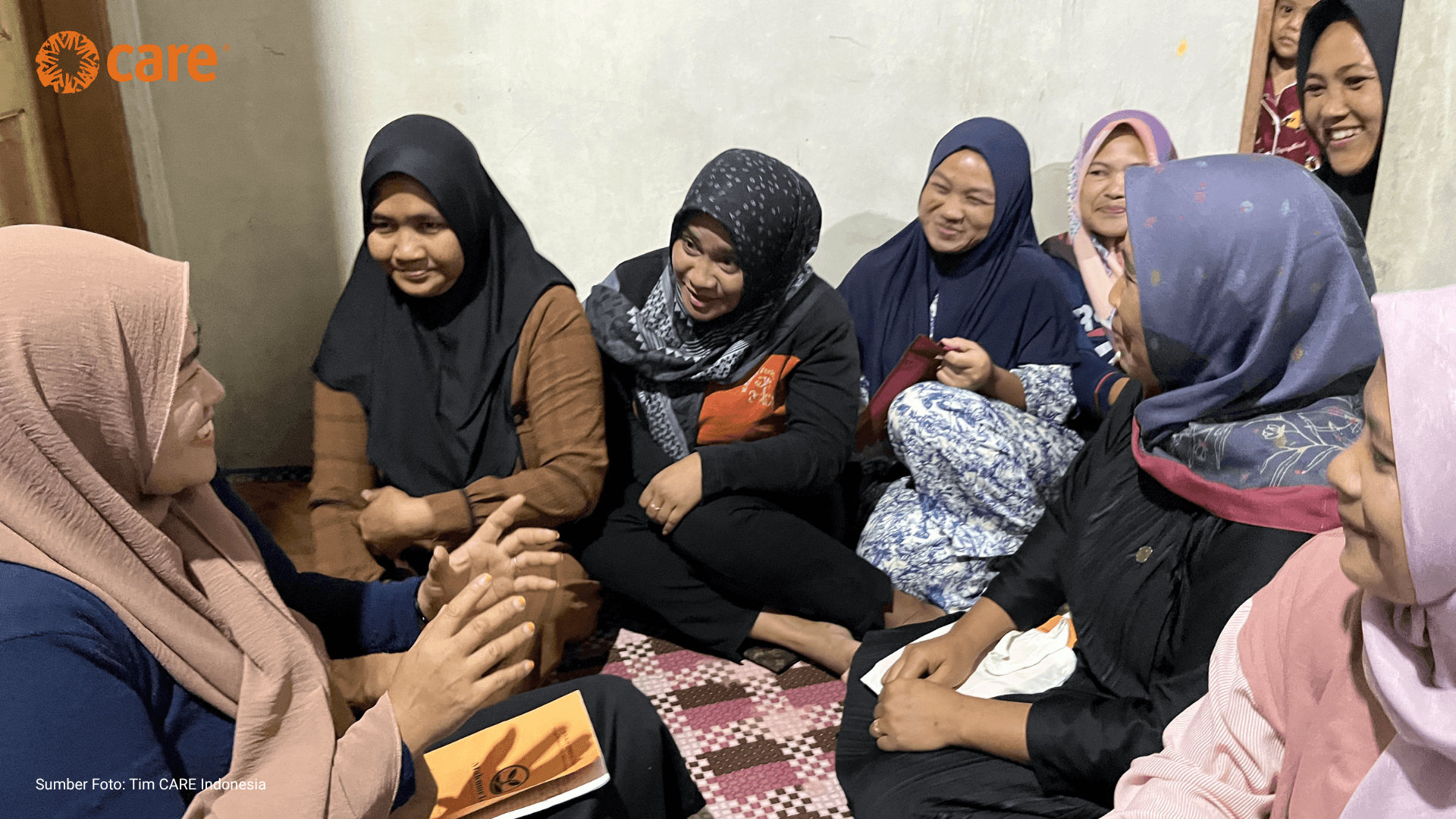
Women play a vital role in the coffee industry. According to the International Coffee Organization (ICO), women contribute up to 70 percent of the global coffee production workforce, participating in activities ranging from crop maintenance and harvesting to post-harvest processing. However, this significant contribution is often not matched by equal access to training opportunities, leadership roles, and decision-making processes within coffee enterprises.
The International Trade Centre (ITC), in its report Women in Coffee: The Case of Indonesia, highlights that women in Indonesia’s coffee sector continue to face barriers in accessing training, leadership positions within farmer groups, business networks, and decision-making opportunities. Yet women possess valuable knowledge, experience, and potential to further develop coffee enterprises and take on broader leadership roles within their communities.
Eri Nuryanti, a coffee farmer from Kemiri Village, Temanggung District, is one of many women who are actively involved in managing her family’s coffee farm. In addition to her household responsibilities, she participates in various pre-harvest activities in the family’s Robusta coffee plantation.
“On our coffee farm, I am usually involved in maintaining the crops, including fertilizing, weeding, pruning unproductive branches, and helping with harvesting during the coffee season,” she said.
These activities have been part of her daily life for many years. Her family’s coffee plantations are located across several areas surrounding the village. For Eri, caring for coffee plants is not only a way to support her family’s livelihood but also a meaningful part of her life.
Beyond her work on the farm, Eri is also an active member of Kelompok Usaha Bersama (KUB) Makmur Lestari, a community-based business group. Within the group, she is responsible for marketing a catfish farming business that is being developed collectively by its members. She believes that community business groups provide valuable opportunities for learning while strengthening women’s economic empowerment.
“Through the business group, we can learn together, share experiences, and strengthen our economic independence through pooled capital and shared business profits,” she explained.
According to Eri, the group also creates a supportive space where women can learn from one another. Members can access capital, discuss business opportunities, and exchange experiences related to managing household finances and livelihoods.
“Being part of a business group helps us strengthen our economic independence through collective investment and profit-sharing,” she added.
Eri has also participated in a range of training programs facilitated by CARE Indonesia and its partners. In addition to business development, these trainings cover leadership, gender and gender equality, as well as the prevention of gender-based violence.
“I have gained a great deal from these trainings. Beyond improving my skills, I have gained new experiences and become more confident in developing my business,” she said.
Agus Tri Wahyuono, Sustainable Agriculture Portfolio Manager at CARE Indonesia, explained that the capacity strengthening received by Eri is part of a broader effort to build a more inclusive and equitable coffee sector, one that provides equal opportunities for both women and men to participate and thrive.
Implemented in Temanggung, Garut, and Jember Districts, the program seeks to strengthen community understanding of gender equality, leadership, inclusive communication, and the prevention and early response to gender-based violence within coffee-growing communities.
“This initiative does not only involve women; it also engages men as part of a collective effort to raise awareness about the importance of gender equality. Through this approach, we hope to encourage a more equitable division of roles within households and coffee enterprises,” he said.
Agus emphasized that the future of the coffee industry depends not only on the quality of its harvests but also on the ability of communities to create inclusive environments free from gender discrimination. When women have access to knowledge, leadership opportunities, and economic resources, they not only contribute to the well-being of their families but also become key drivers of community development and the long-term sustainability of the coffee sector.
“We hope that women will not only participate in coffee production activities but will also have opportunities to build their capacities, take on leadership roles, and engage in decision-making processes at both the group and community levels,” Agus concluded.
Author: Kukuh Akhfad
Editor: Swiny Adestika
