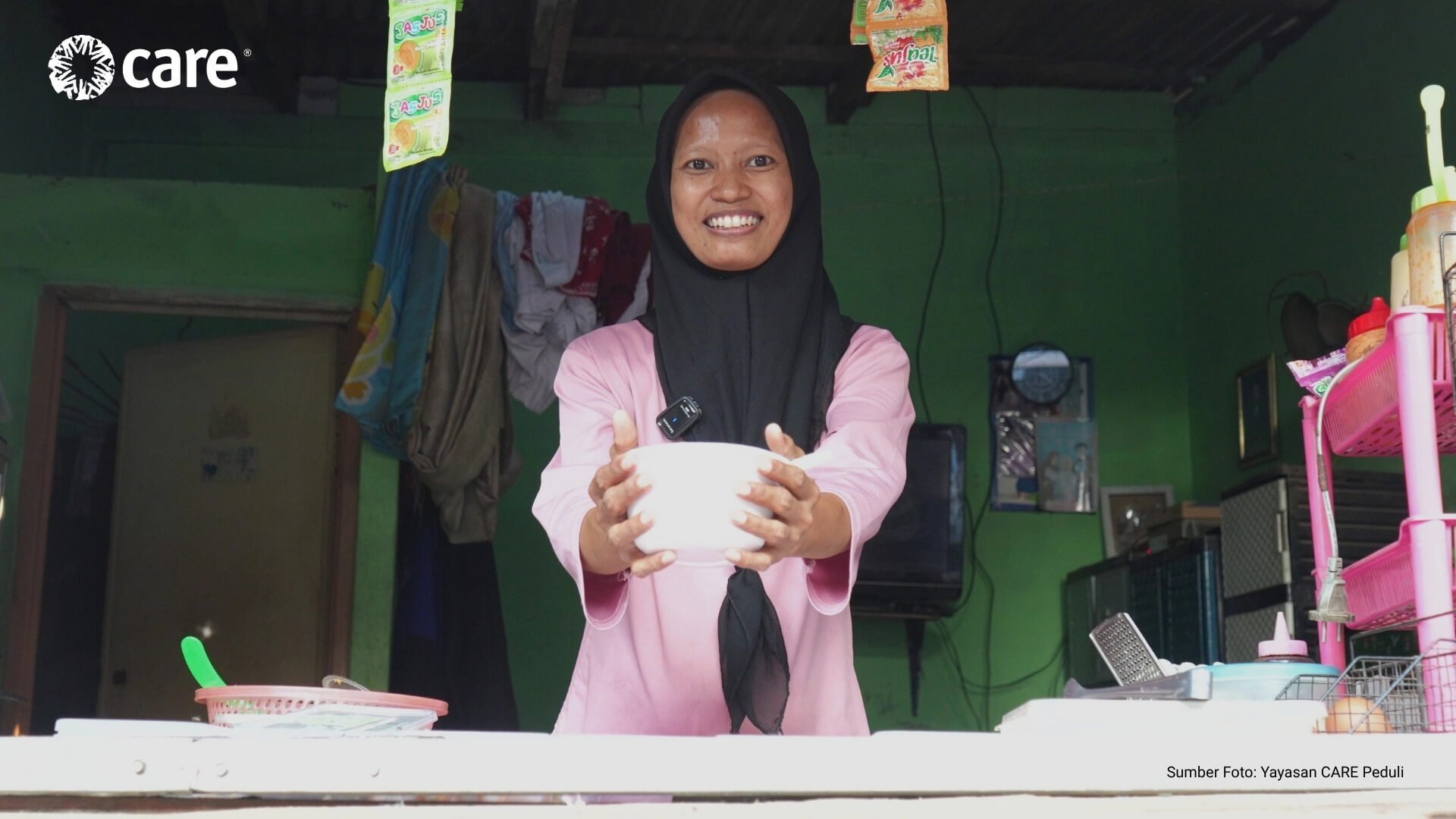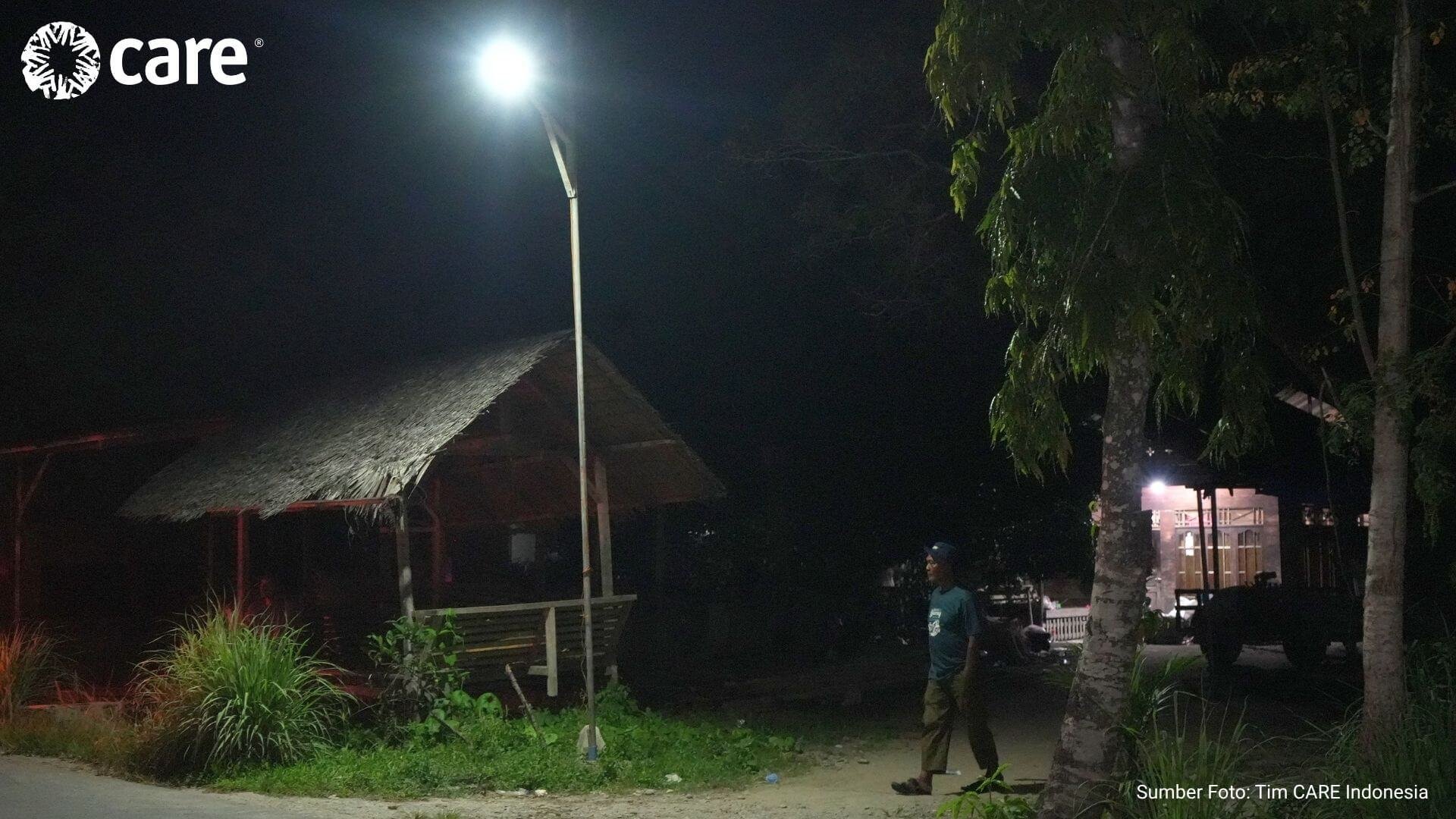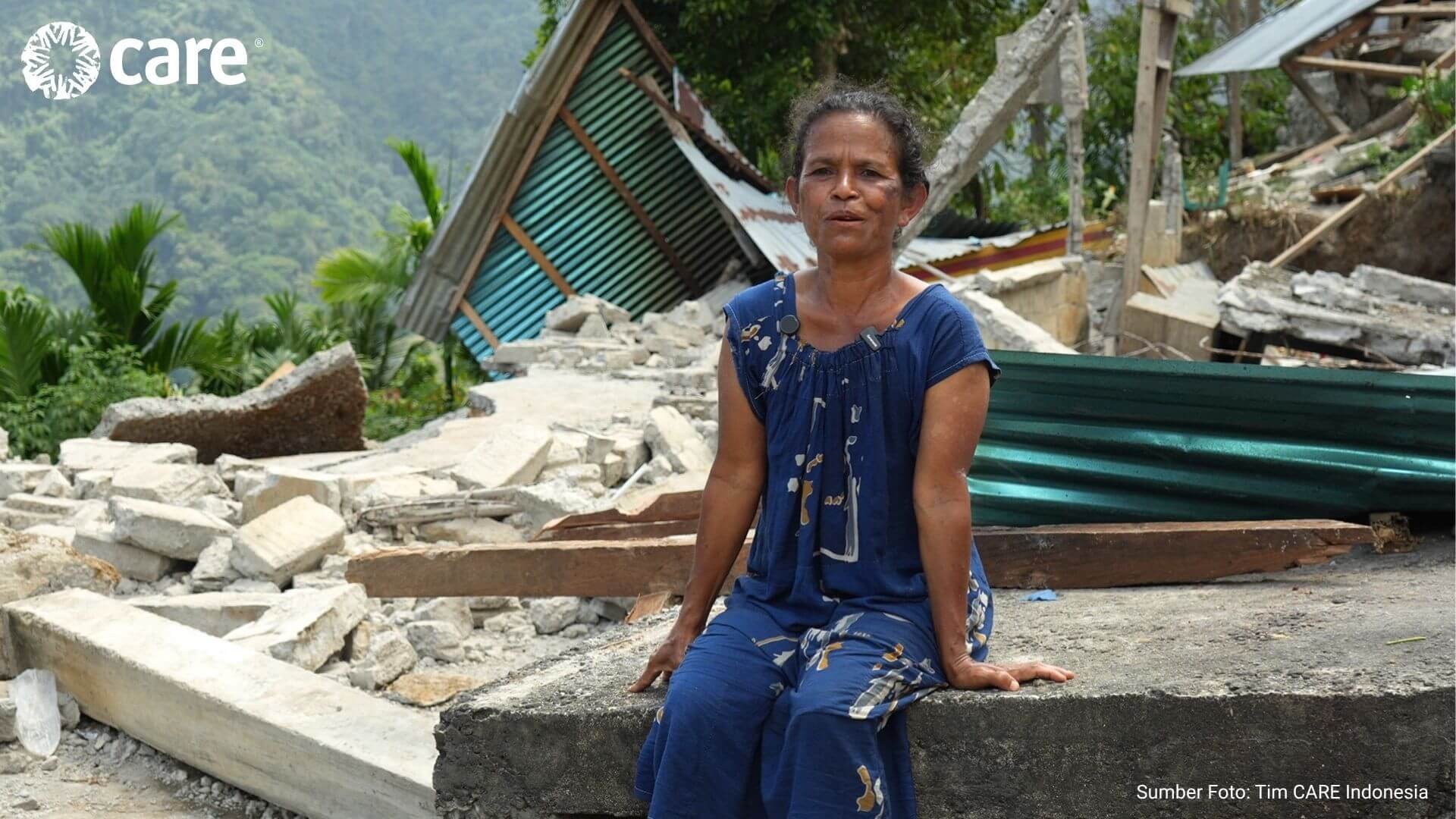
For fishing and seaweed-farming families in the Tamparang Archipelago of South Sulawesi, daily life rises and falls with the sea. Behind every planting cycle, women are quietly keeping the family economy moving.
One of them is Daeng Alang, a resident of Kampung Beru Hamlet in Minasa Baji Village. She has farmed seaweed since the day she married. How long the harvest takes depends on the variety she plants. Once harvested, the seaweed is dried and sold to the village collector, known as the punggawa.
“Day to day, I’m a housewife, a seaweed farmer, and a mother of two,” says Daeng Alang. “The seaweed we grow is usually ready in 10 or 15 days, depending on how well it grows. The Konoti variety takes approximately 20 to 25 days.”
“Currently, the price is 6,000 rupiah per kilogram, while the Konoti variety fetches 22,000 per kilogram,” she says.
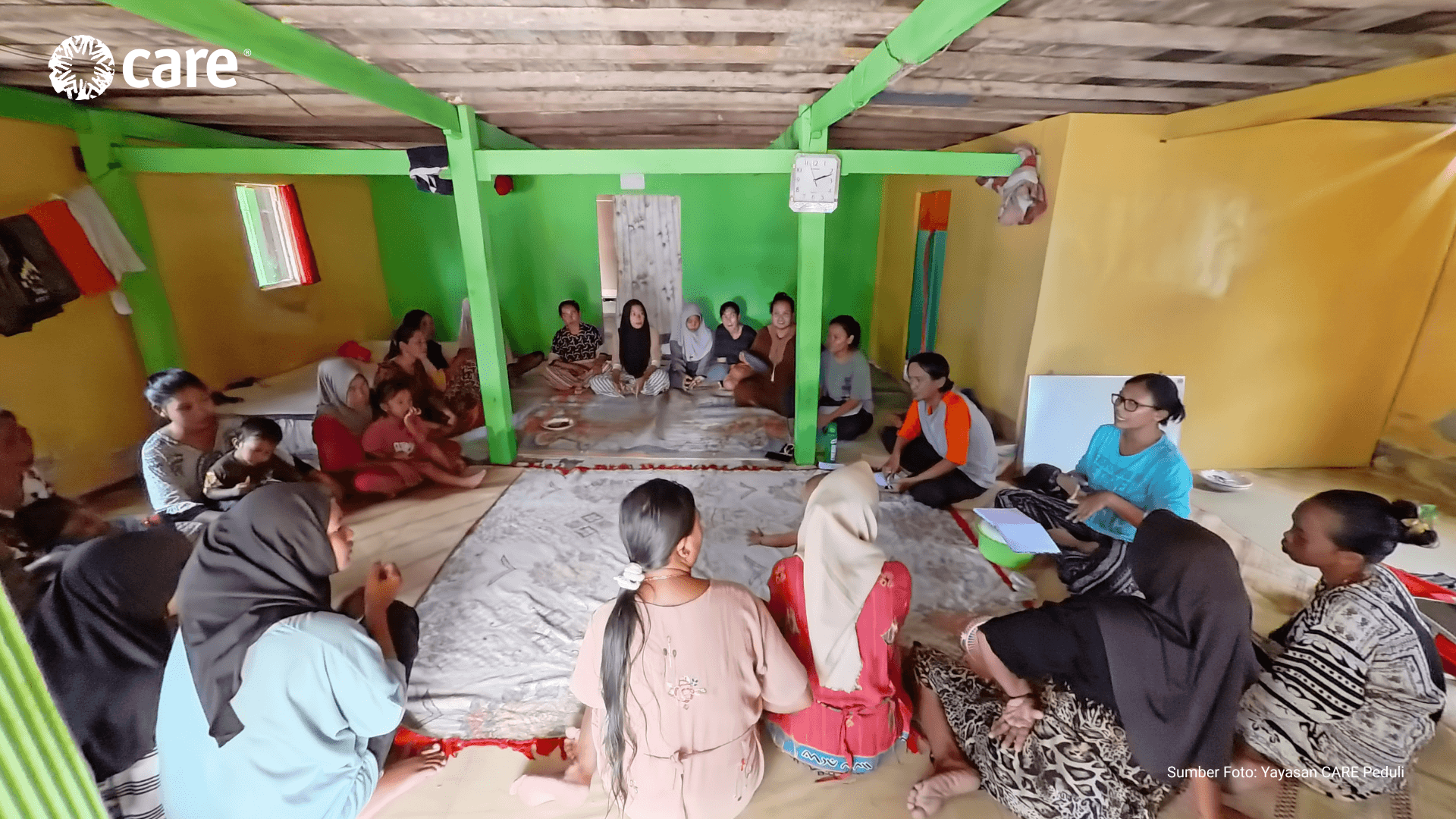
But there is a catch. Families often borrow their seedlings from the punggawa, which makes it hard to break free from a cycle of debt. Things began to shift when Daeng Alang joined a women’s group supported by CARE Indonesia through the POWERE project (Participation of Women in Renewable Energy). Since December 2025, members have met every week and saved between Rp5,000 and Rp10,000, a deliberately small amount so that every woman can take part. Balances are counted openly in front of the whole group.
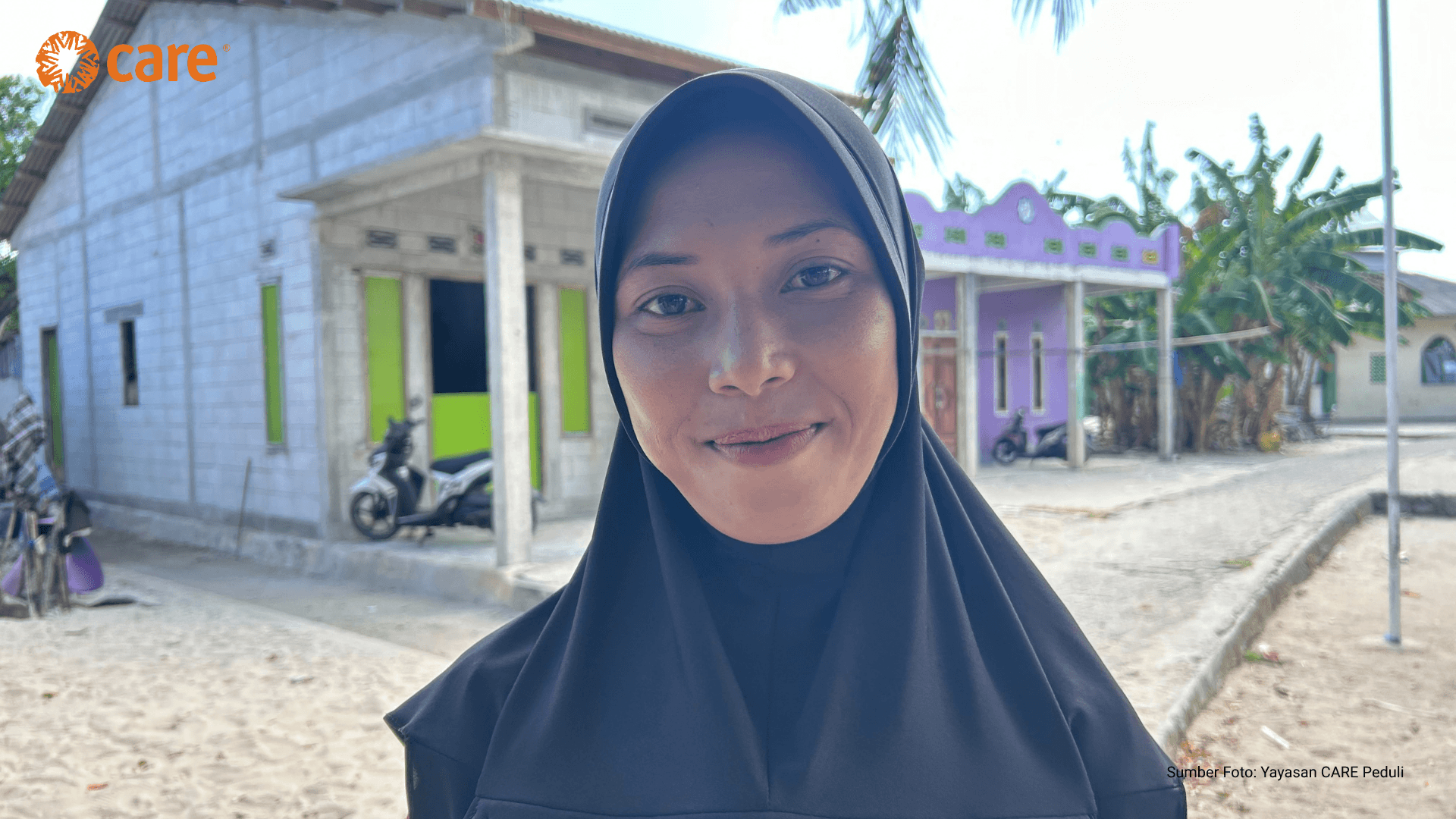
“I was drawn to the way they save so openly, and I wanted to learn how to save,” she says. “I’m learning to set money aside so I can use it for my seaweed livelihood.”
Since joining, she says, the biggest gain has been the habit of putting money aside. The group has also opened up something they never had before.
“I’ve learned how to make decisions together, because before this, there had never been a women’s group in our hamlet that met every week,” she says.
Her savings, she explains, will go toward buying seaweed seedlings, so she no longer has to borrow them from the punggawa. She has also picked up business knowledge, learned to keep orderly financial records for the group, and found fresh motivation to save. There was even a delightful surprise: she discovered that seaweed can be used in cooking, including cakes.
“In the seaweed processing training, we learned to use seaweed as an ingredient in foods and drinks like meatballs, cendol, stuffed tofu, and fritters,” she says.
Her involvement has widened her horizons in another way, too. She has learned about renewable energy, such as trying an electric-powered boats. She believes this new knowledge can help her and other women in seaweed farming.
“We’ve gained so much new knowledge, like saving money and making food from seaweed, things we never understood before. We’ve also learned that there are boats powered by electricity. We hope this can support our livelihoods, so we don’t have to depend so heavily on fuel for our boats,” she says.
Writer: Kukuh Akhfad
Editor: Swiny Adestika