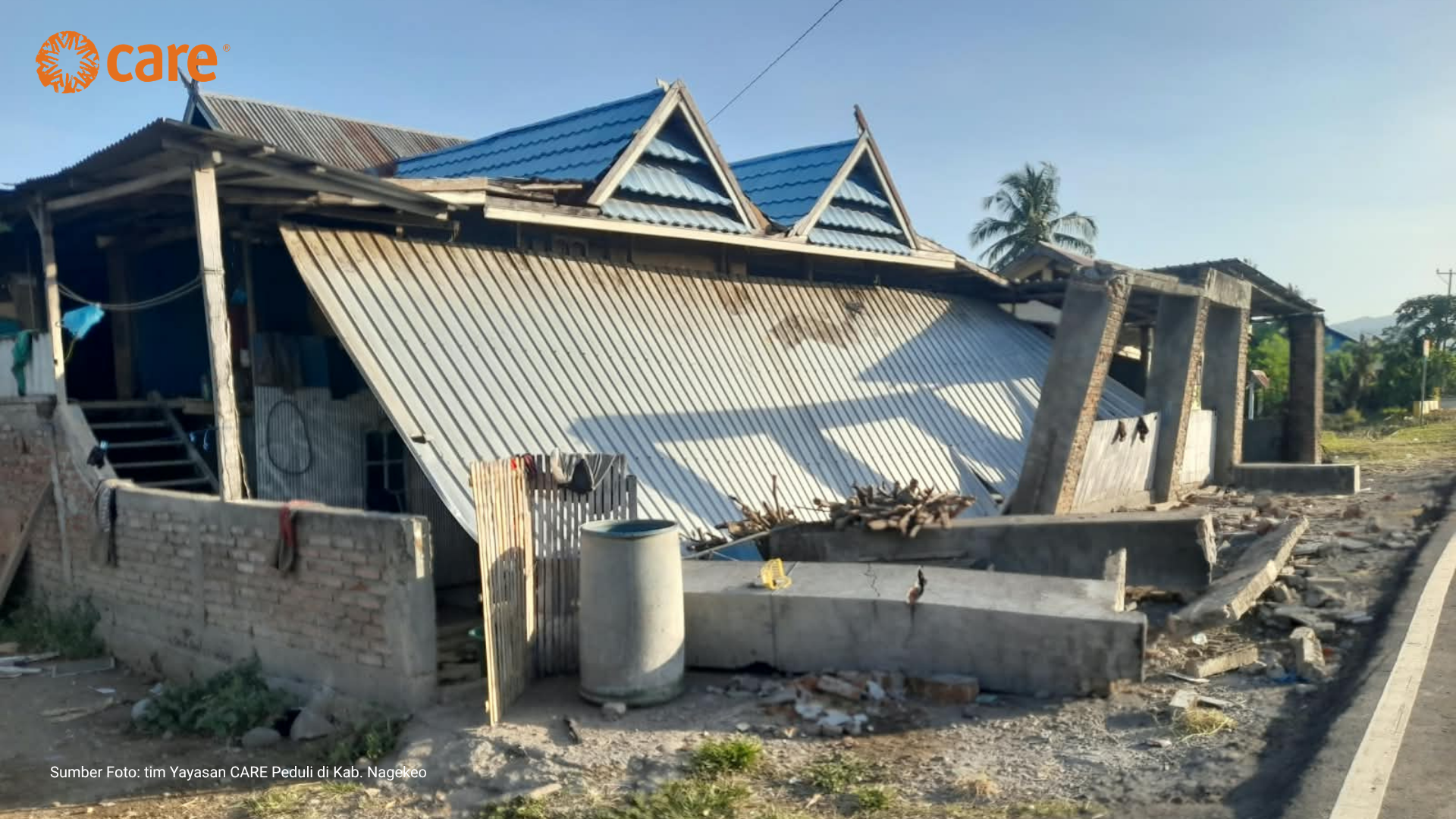
Sigi, August 31st, 2026 – Yayasan CARE Peduli (CARE Indonesia), in collaboration with the Sigi District Government and Karsa Institute, are distributing CARE Packages for Emergencies (CP4E) to families affected by the recent earthquake in Central Sulawesi. A total of 60 affected families in Lembantongoa Village, Palolo Subdistrict, receive the CARE Package for emergency, which are designed to help meet essential household needs, including hygiene and personal care, household supplies, lighting, water storage, cooking equipment, and emergency shelter items. The handover ceremony took place at the Lembantongoa Village Office in Palolo Subdistrict (31/8) and was attended by Head of the Sigi District Disaster Management Agency (BPBD), Henri Kusuma Rombe; Palolo Subdistrict Secretary, Nasirun; and Lembantongoa Village Head, Arman.
A magnitude 6.7 shallow earthquake, with a depth of approximately 10 kilometers, struck on 16 June 2026 at 10:27 a.m. Central Indonesia Time (WITA), with its epicenter located around 42 kilometers southeast of Palu. The earthquake was felt across four districts and one municipality, including Sigi, Parigi Moutong, Poso, and Palu City. According to data from the Central Sulawesi Provincial BPBD, Sigi was among the areas hardest hit by the earthquake.
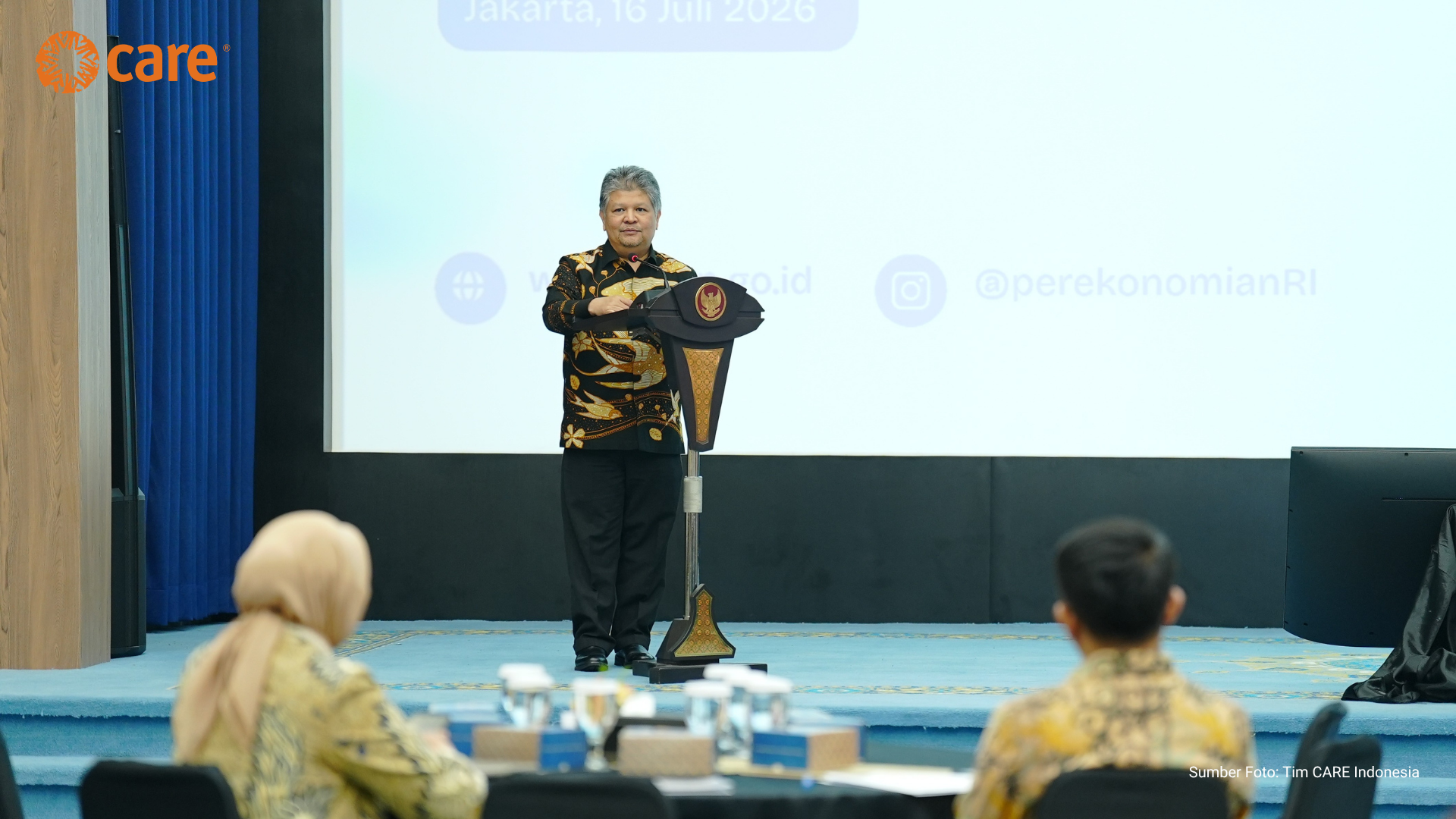
Dr. Abdul Wahib Situmorang, CEO of Yayasan CARE Peduli (CARE Indonesia), said CARE continues to coordinate closely with local authorities and humanitarian partners, including Karsa Institute, to provide post-emergency assistance that responds to the needs of all family members, particularly women and children.
“Emergency response must address the gaps in essential needs for every member of a family. That is why CARE’s post-disaster response takes into account the specific needs of women and children, including hygiene and menstrual health needs, clean water storage, and essential items to support temporary shelter. All of these non-food items are brought together in a compact CARE Package for Emergencies, or CP4E,” said Abdul.
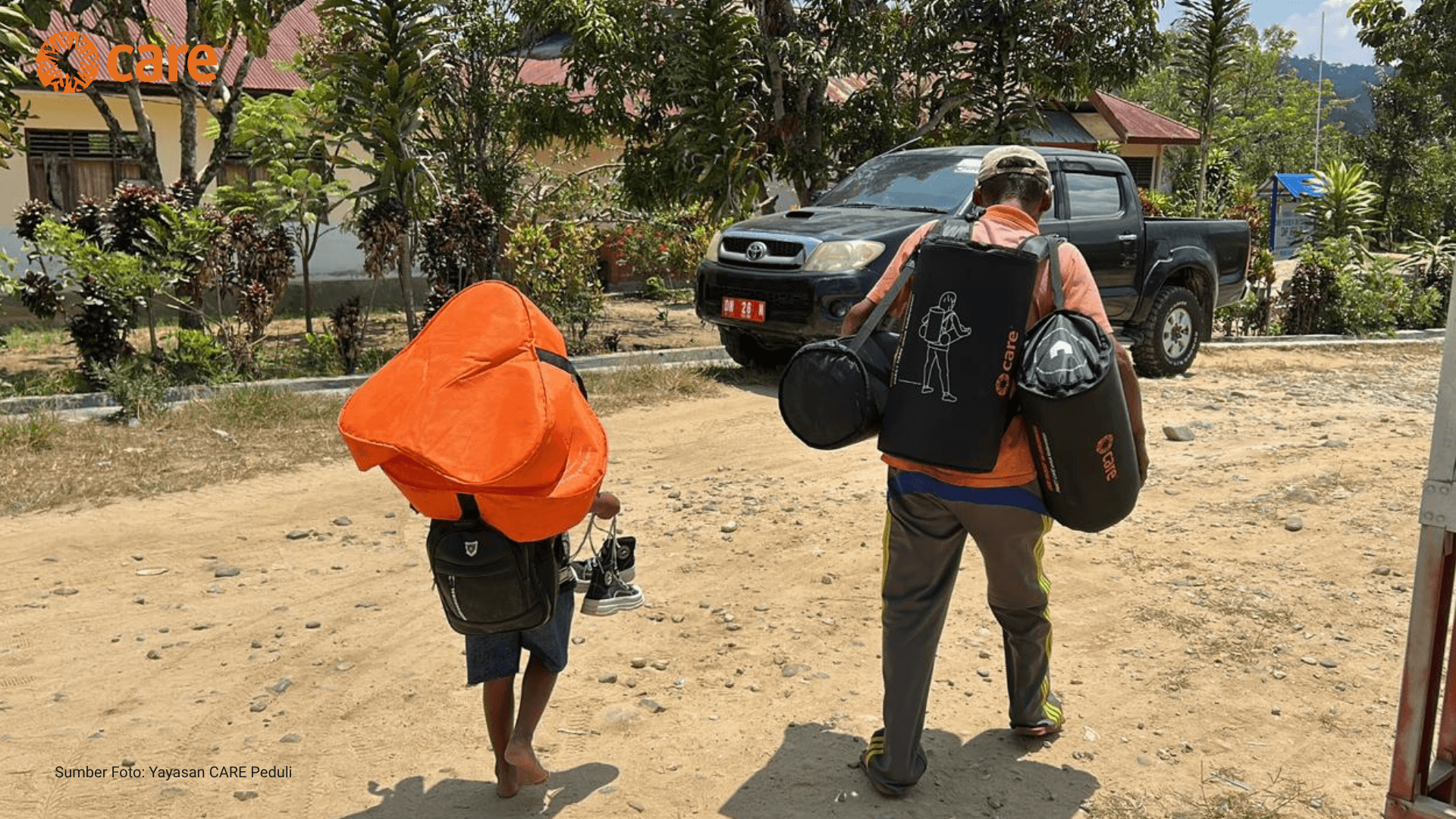
According to Abdul, the CP4E is particularly relevant for Lembantongoa, a relatively isolated village where access can be challenging during an emergency. The package is designed to be practical and easy for families to carry, allowing them to take essential supplies with them when they need to move to a safer location. Abdul also ecplained that the package’s three-bag design also makes it easier for different family members to share the load. The CP4E can be separated into three individual emergency bags, while its spacious, water-resistant compartments can also be used to store additional family essentials, such as extra clothing and important documents.
Echoing Abdul’s view, Rahmat Saleh, Director of Karsa Institute, said the emergency package could be particularly valuable for families in remote communities such as Lembantongoa, especially when access to and from the village is disrupted.
“Lembantongoa Village in Palolo Subdistrict is one of three villages that experienced significant damage from the earthquake. Its relatively isolated location also means that humanitarian assistance can take longer to reach families during an emergency. With the CP4E, families can have essential supplies with them and remain in a safer location while waiting for further assistance. What makes the CP4E different from conventional emergency relief packages is that it can be repacked, stored by families, and kept as a preparedness kit that can be used whenever an emergency occurs. Emergency packages like this are both important and practical. We hope this type of support can be made available on a larger scale and distributed more widely across Central Sulawesi,” Rahmat said.
About CARE Package for Emergencies
The CARE Package for Emergencies (CP4E) is designed to help families meet essential needs during an emergency and the early stages of displacement. Each package includes:
- Hygiene and personal care items, including toothpaste and toothbrushes, shampoo, soap, underwear, sanitary pads, and other hygiene supplies;
- Solar-powered lighting equipment for families with limited access to electricity or lighting;
- Water storage and filtration supplies, including buckets, jerry cans, filter cloths, and a foldable funnel;
- Cooking equipment, including a knife, cups, frying pan, cooking pot, stove, and plates; and
- Emergency shelter items, including tarpaulins, mosquito nets, sarongs, and jarik cloth.