
Indonesia has set an ambitious goal of becoming a high-income country by 2045 through its Golden Indonesia 2045 vision. To achieve this, the Government has introduced a range of strategies, including infrastructure development, industrial transformation, and investments in human capital.
However, one critical driver of development often receives less attention: ensuring that women have equal opportunities to work, grow, and lead.
Gender equality in the workplace is still frequently viewed solely as an issue of protecting women’s rights. Yet growing evidence shows that when women have equal access to employment, training, leadership opportunities, and workplace protection, the benefits extend far beyond individuals. Gender-responsive workplaces improve business productivity, strengthen industrial competitiveness, and contribute to national economic growth.
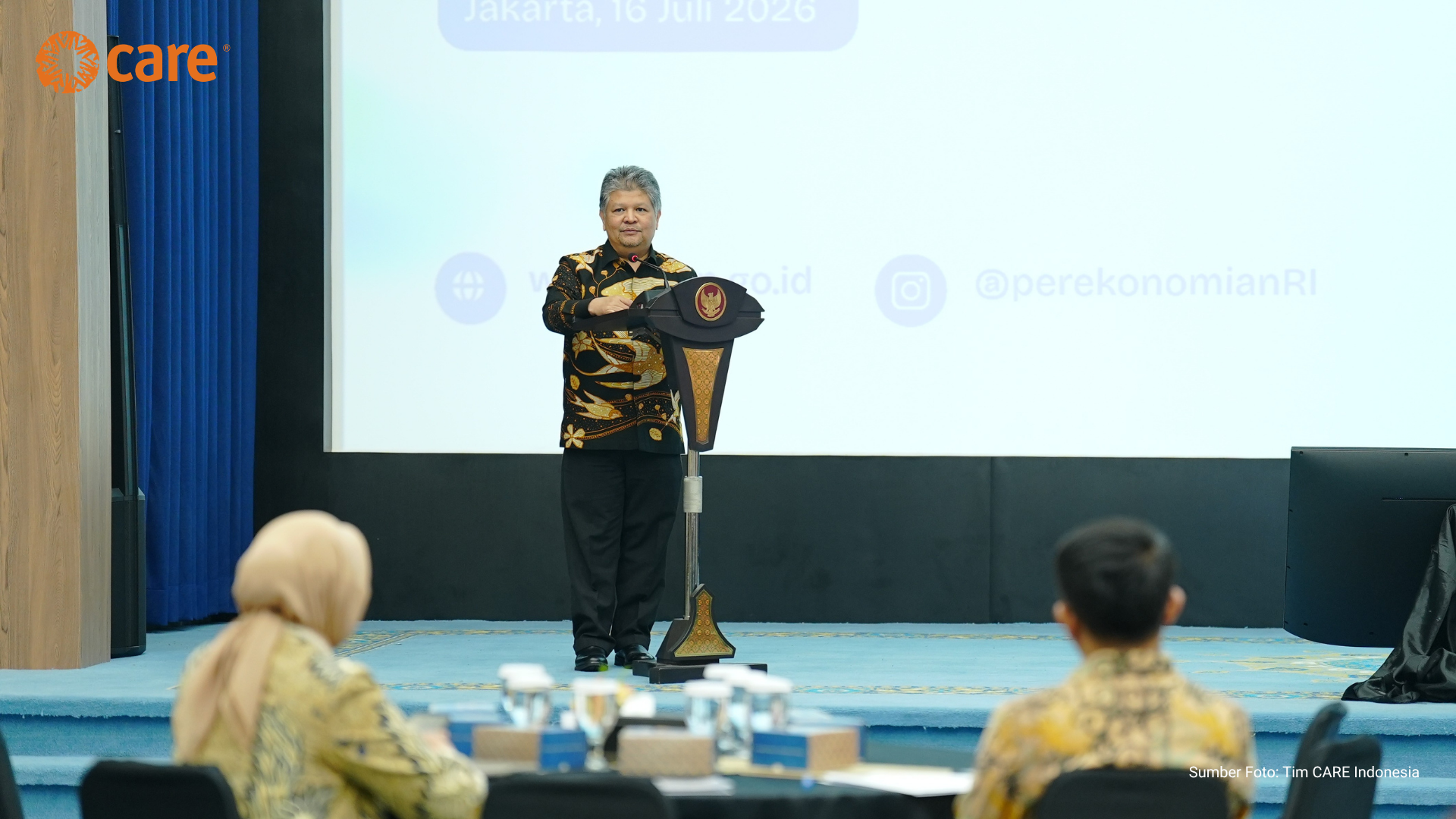
These issues were at the center of the Dialogue on Strengthening Gender-Responsive Practices to Enhance National Industrial Competitiveness, organized by the Coordinating Ministry for Economic Affairs at the Ali Wardhana Building in Jakarta on Thursday (16 July).
In his opening remarks, Dida Gardera, Acting Deputy for the Coordination of Industry, Manpower, and Tourism at the Coordinating Ministry for Economic Affairs, said that the Government is targeting economic growth of 5.4 until 5.6 percent in 2026, with acceleration to 8 percent by 2029, driven by investment, food security, and downstream industrial development. According to him, adopting gender-responsive business practices is essential to achieving sustainable productivity.
“The integration of Gender Mainstreaming (PUG) into industry is aligned with the 2025–2045 National Long-Term Development Plan (RPJPN) and the 2025–2029 National Medium-Term Development Plan (RPJMN) in support of the Golden Indonesia 2045 vision. This includes ensuring equal career opportunities, eliminating the gender pay gap, protecting women’s rights, including maternity leave and lactation facilities—implementing gender-responsive occupational safety and health standards, and creating workplaces free from violence and harassment,” he said.
“If we look at Indonesia’s population, 49 percent are women. Therefore, it is impossible to overlook women’s contribution to national development,” said Dr. Amurwani Dwi Lestariningsih, Deputy for Gender Equality at the Ministry of Women’s Empowerment and Child Protection, during her presentation.
Currently, Indonesia’s female Labour Force Participation Rate (LFPR) stands at around 56 percent, significantly lower than the 84 percent recorded for men.
The Government aims to increase women’s labour force participation to 70 percent by 2045. Achieving this target requires collaboration among government institutions, the private sector, educational institutions, civil society organizations, and families to create an enabling environment where women can participate and thrive in the workforce.
According to Amurwani, Indonesia has established a strong legal foundation for promoting gender equality, including the 1945 Constitution, the ratification of the Convention on the Elimination of All Forms of Discrimination against Women (CEDAW), and the implementation of Gender Mainstreaming policies since 2000. Nevertheless, significant gender disparities remain.
“One of the most significant challenges lies in women’s participation in the workforce. Although women’s access to education continues to improve, equal opportunities to enter the labour market, advance into leadership positions, and receive equal pay have yet to be fully realized,” she said.
Amurwani explained that these challenges are not primarily caused by women’s lack of capacity, but rather by persistent social norms that reinforce traditional gender roles.
“Science, Technology, Engineering, and Mathematics (STEM) are still widely perceived as masculine fields. These stereotypes often discourage women, not because they lack the ability, but because they feel these sectors are not meant for them,” she added.
Eripson M. H. Sinaga, Assistant Deputy for Agro-Industry, Chemical, Pharmaceutical, and Textile Industry Development at the Coordinating Ministry for Economic Affairs, highlighted that women form the backbone of many labour-intensive industries.
Indonesia’s textile, textile products, and footwear industries employ approximately 5.02 million workers, the majority of whom are women. Likewise, around 97 percent of workers in the tobacco manufacturing industry are women.
“The sustainability of Indonesia’s industrial sector cannot be separated from the contribution of women workers. When women face discrimination, lose their jobs, or are denied opportunities for advancement, the consequences extend beyond individuals and their families, they also affect the productivity of our national industries,” he explained.
According to Eripson, gender-responsive business practices have become an integral component of Environmental, Social, and Governance (ESG) principles. For companies seeking to remain competitive in global markets, creating inclusive workplaces is no longer optional, it is a strategic necessity.
“These practices are not merely about meeting international standards. They are a long-term investment in strengthening human capital and enhancing the competitiveness of Indonesian industries as we move toward Golden Indonesia 2045,” he added.
Fritz Simon Saortua, Head of the Working Team for Equality in Working Conditions under the Directorate General of Industrial Relations and Workers’ Social Security, Ministry of Manpower, emphasized that companies must ensure comprehensive protection for women workers. This includes maternity protection, family-friendly workplace policies, equal promotion opportunities, and workplaces free from violence and discrimination. He noted that the Government has also introduced regulations to promote gender equality for women workers.
“When women have equal access to education, employment, leadership opportunities, and workplace protection, companies benefit from a more productive workforce, industries become more competitive, and Indonesia is better positioned to maximize its demographic dividend,” Fritz said.
Yoseph Billie Dosiwoda, Secretary General of the Indonesian Footwear Association (Asosiasi Persepatuan Indonesia/APRISINDO), also expressed support for providing greater assistance to women workers, including workplace childcare facilities. However, he emphasized that careful planning is needed to ensure children’s health and safety.
“We support the provision of daycare facilities in workplaces because they can ease the burden on employees with young children, especially women workers. However, this requires careful consideration, particularly in factory environments where exposure to chemicals may pose risks to children,” Yoseph explained.
Business associations also play an important role in bridging communication between the Government and the private sector by conveying industry perspectives to policymakers while helping members understand and implement government regulations.
Representing the Indonesian Food and Beverage Producers Association (Gabungan Produsen Makanan Minuman Indonesia/GAPMMI), Irwan S. Widjaja said the association continues to encourage its members to comply with government regulations, including those related to gender-responsive business practices.
“As an association, we encourage our members to align their company policies with government regulations. GAPMMI’s role is primarily to serve as a bridge between regulators and businesses while reminding our members of their responsibilities,” Irwan concluded.
Author: Kukuh Akhfad
Editor: Swiny Adestika
