Meeting children’s nutritional needs is not only about providing food, but also about ensuring that every family has access to safe, nutritious, locally sourced, and sustainably managed food. In Indonesia, nutrition challenges remain significant. According to the 2024 Indonesian Nutritional Status Survey (SSGI), the national stunting prevalence declined to approximately 19.8 percent in 2024. However, it remains a serious issue that requires continued and collective action.
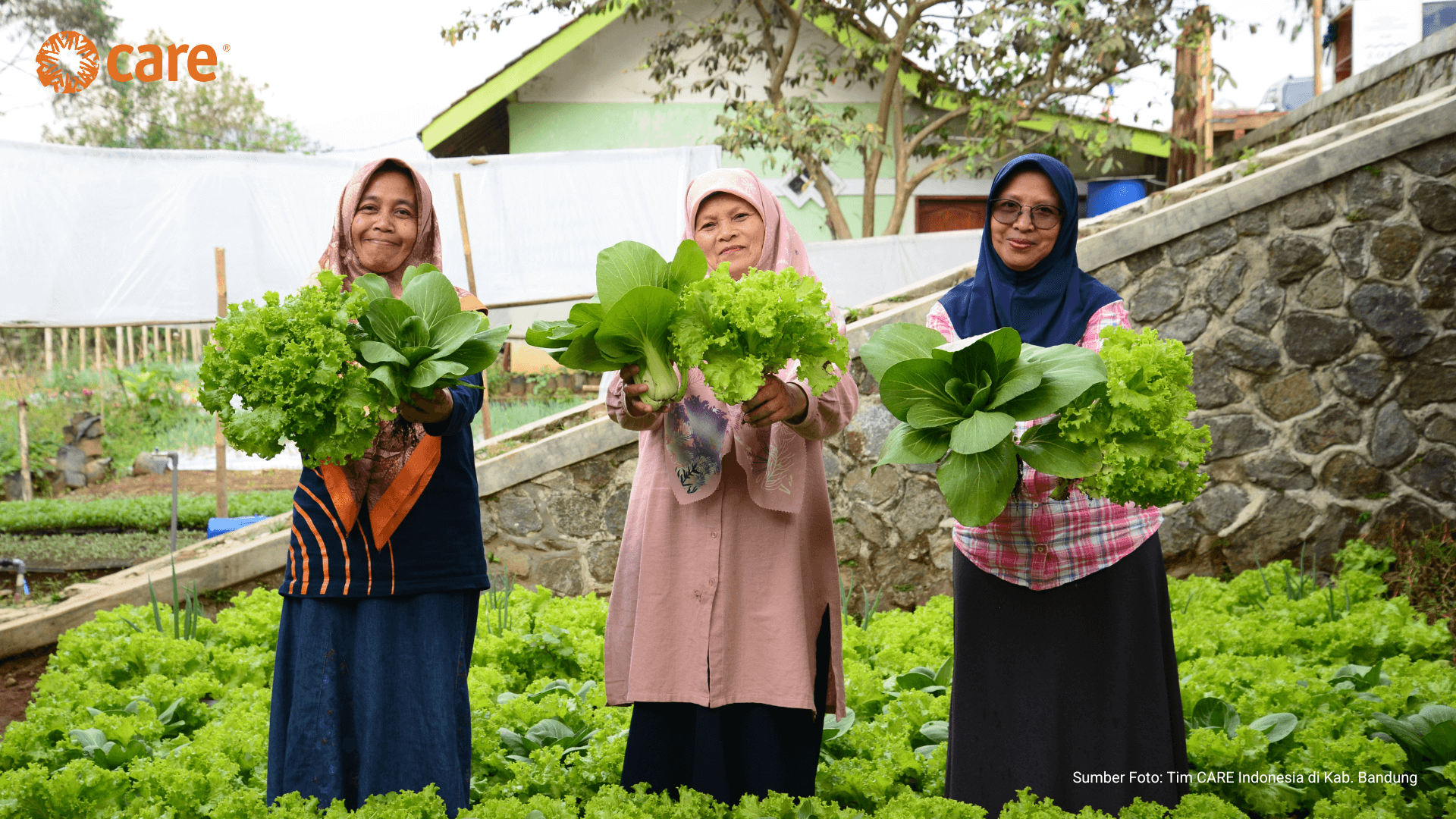
CARE Indonesia, together with its partners, supports family nutrition through the establishment of community-based nutrition gardens managed by women’s groups. These nutrition gardens have been implemented in Musi Banyuasin District, Bandung District, West Sumbawa District, and Nagekeo District. A nutrition garden is a piece of land collectively managed by community groups—often facilitated by women—to cultivate a variety of nutritious local foods such as vegetables, fruits, tubers, and plant-based protein sources. The harvests serve as a direct source of nutritious food for families and communities, while surplus produce is often sold to generate additional income for women group members managing the gardens.
Local Food for Balanced Nutrition
Fresh and diverse local food contributes to meeting Indonesia’s national standards for child nutrition, which promote a diverse, balanced, and safe diet. By utilizing produce from nutrition gardens, families are able to prepare meals rich in vitamins, minerals, and fiber, in line with the “four-star menu” dietary recommendations issued by the Ministry of Health of the Republic of Indonesia.
Nutrition gardens directly address children’s nutritional needs by ensuring the availability of nutritious food within close proximity to households. From an economic perspective, these gardens strengthen family self-reliance through the use of local resources that provide tangible benefits for both consumption and household income.
More importantly, nutrition gardens foster collective awareness that adequate nutrition is the result of collaboration between improved food access, family nutrition education, and strong community support. By planting, harvesting, processing, and consuming food from their own gardens, Indonesian families are taking concrete steps toward healthier, stronger, and more productive lives.
Nutrition Gardens and the Circular Economy
Beyond improving nutrition, community nutrition gardens also support the development of a circular economy. Produce that is not consumed directly can be processed into value-added products or sold to increase group income. Meanwhile, organic household waste can be converted into compost to enrich the soil, creating an efficient and environmentally friendly production cycle.
Some nutrition gardens are integrated with Black Soldier Fly (BSF) maggot cultivation to process household organic waste. Managed by women’s groups, the maggots are further utilized as organic fertilizer, animal feed, and inputs for fish farming, strengthening both environmental sustainability and household livelihoods.
Women play a critical role in ensuring that family nutritional needs are met. In many communities, women are not only responsible for food preparation but also serve as managers of nutrition gardens, key learners of nutrition practices, and catalysts for healthier dietary behavior change. Their participation in nutrition gardens also creates opportunities to strengthen organizational capacity, enhance decision-making roles, and expand social and economic networks.
The implementation of community-based nutrition gardens is highly relevant to the theme of National Nutrition Day: “Fulfill Balanced Nutrition through Local Food.” Communities, particularly women’s groups, are becoming more empowered through enhanced skills in integrated nutrition garden management, while maximizing the potential of locally available food resources and generating additional household income.
Author: Kukuh Akhfad
Editor: Swiny Adestika