Water is essential for life and is a fundamental human right. According to a study by CARE International, approximately 2.6 billion people worldwide still lack access to safely managed drinking water. This situation creates inequality, as women and girls are often responsible for collecting water from wells or other sources for households without access. In Indonesia, data from the Coordinating Ministry for Infrastructure and Regional Development shows that, as of March 2025, around 28 million people still face difficulties accessing clean water.
Access to clean water and sanitation is not only an infrastructure issue, but also a matter of human rights and social justice. The World Water Day 2026 fact sheet highlights that when women are involved in decision-making processes related to water, services become more inclusive, sustainable, and effective. When water is available close to home, women and girls gain more time and opportunities to engage in other activities such as education, work, and participation in community life.
Awalia Murtiana, Portfolio Manager at CARE Indonesia, explained that CARE Indonesia adopts a development approach that places women at the center of change. Therefore, its programs promote inclusive development and ensure that women have equal access.
“In West Sumbawa District, CARE Indonesia, in collaboration with AMMAN and with support from the local government, implemented a clean water provision program as part of efforts to reduce stunting. This initiative also aimed to meet the water needs of children and expected mother experiencing Chronic Energy Deficiency (CED),” she said.
Awalia further emphasized that women possess valuable local knowledge in managing and sustaining natural resources. When women are involved as community leaders, members of water committees, or agents of change, the solutions developed are often more sustainable and responsive to community needs.
“Easier access to water for women enables them to live healthier, safer, and more dignified lives, while also opening greater opportunities for economic independence and participation in decision-making processes,” she added.
CARE International also notes that in crisis situations, such as disasters, the burden on women to provide water for domestic needs increases, along with safety risks. This is largely because women are often responsible for managing household water needs. Therefore, ensuring safe and accessible water points in crisis settings is critical.
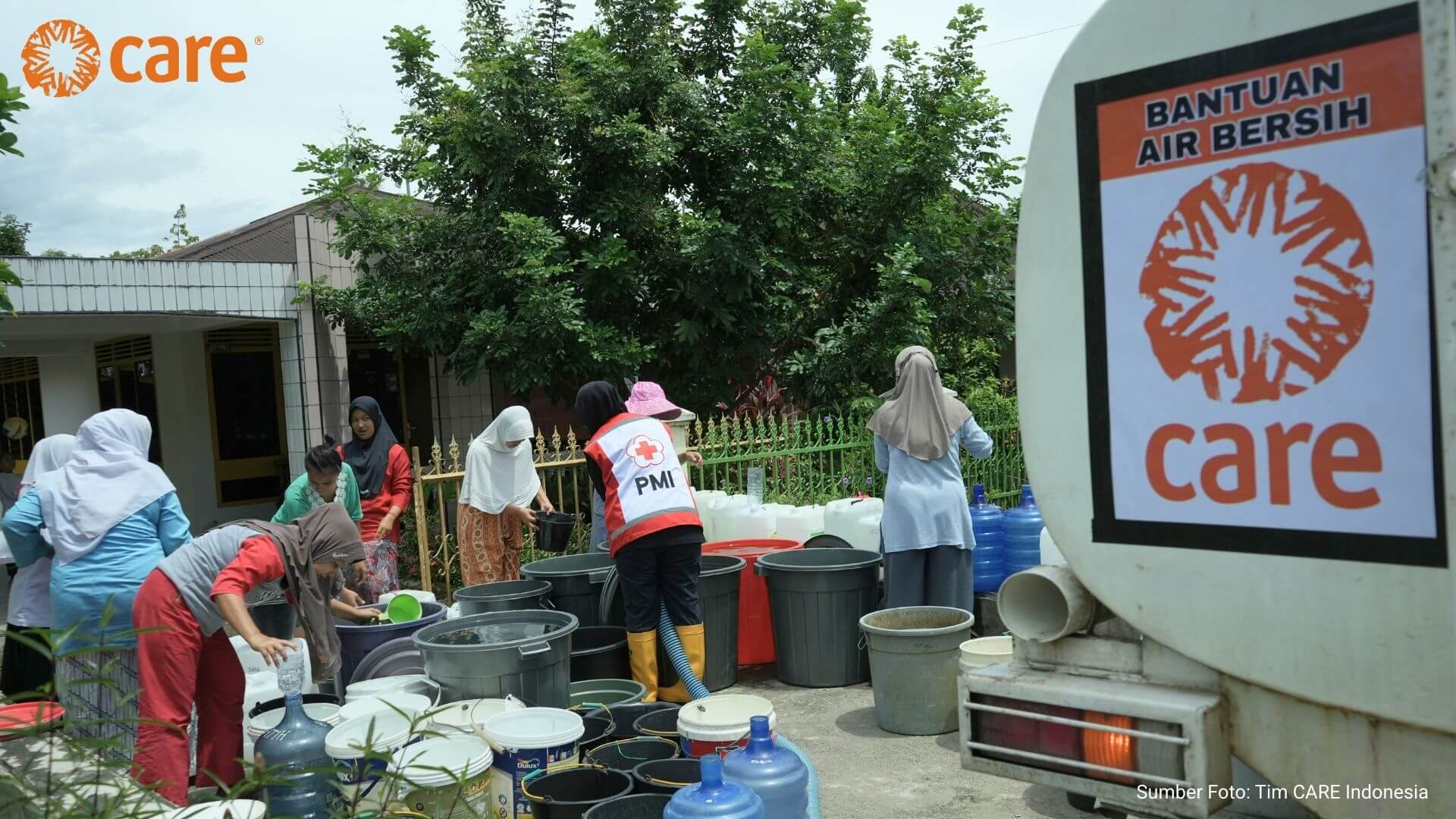
In its water provision efforts, CARE Indonesia tailors its approach to the conditions of affected communities by ensuring safe and inclusive access to water for vulnerable groups, particularly women. Together with partners, CARE Indonesia ensures that water distribution points meet Sphere standards.
Meri Susanti, one of the residents affected by the water crisis since early December 2025 in Padang City, relies on clean water supply provided by CARE Indonesia in collaboration with PMI West Sumatra. She explained that the water assistance has been highly beneficial in meeting daily needs and is easily accessible.
“The water distribution point is only about 100 meters from our homes, so it is very helpful for us. Even when the water trucks arrive at night, we women still feel safe when collecting water,” she said.
Through the Sumatera Bangkit Response, CARE Indonesia, together with PMI, has ensured access to clean water for flood-affected communities in West Sumatra and Aceh through water distribution and supporting facilities. As of the end of February 2026, a total of 3,335,505 liters of clean water had been distributed to 286,117 people in Padang City, along with 100,000 liters for 3,517 households (17,588 people) in Aceh Tamiang, complemented by water storage tanks, purification units, and well-cleaning services.
World Water Day emphasizes that women play a significant yet often unrecognized role in water management. Therefore, empowering and involving women in water governance is key to ensuring more inclusive, safe, and sustainable access for all. When women are engaged in decision-making and water resource management, access becomes safer, closer, and more aligned with community needs.
Writer: Kukuh Akhfad
Editor: Swiny Adestika