
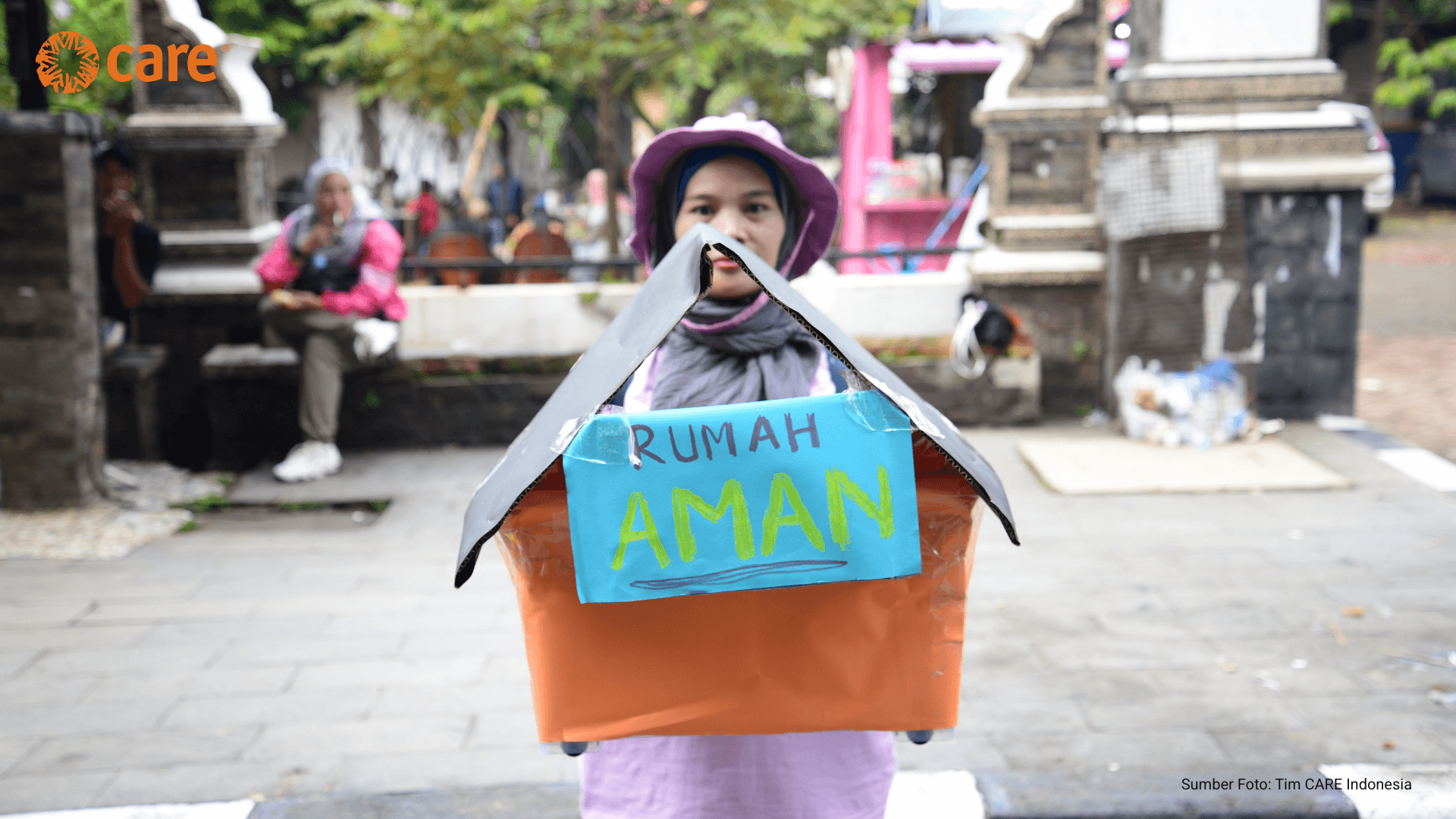
Every woman has the right to live, learn, work, and participate in society without fear. The right to safety and equal access in public spaces, workplaces, educational environments, and digital spaces is a fundamental human right that must be fulfilled. Indonesia’s National Commission on Violence Against Women (Komnas Perempuan), in its Guidelines for Monitoring Violence Against Women within the Human Rights Framework, states that human rights are universal, inalienable, and inherently linked to human dignity.
However, the reality on the ground shows that significant challenges remain. According to data from the SIMFONI-PPA system, throughout 2025 there were 28,933 reported cases of violence, affecting 30,013 women as victims.
Women continue to face risks of violence and discrimination across various spaces, from public transportation and educational institutions to workplaces. Sexual harassment in public transport, intimidation in the workplace, and violence in school environments are still reported by many women and girls.
SIMFONI-PPA also reports that public facilities, educational institutions, and workplaces ranked as the second, third, and fourth most common locations for violence against women in 2025. This situation indicates that spaces intended to support daily activities have not yet become fully safe for everyone.
These challenges have become increasingly complex with the rise of digital spaces, where people can easily interact online. Reports from Komnas Perempuan show that Online Gender-Based Violence (OGBV) has continued to increase in recent years. The Legal Aid Institute for the Indonesian Women’s Association for Justice (LBH APIK) recorded 250 cases in 2023 and 200 cases in 2024. This form of violence does not only occur on screens but also affects survivors’ real lives, causing psychological distress, social stigma, and limiting their ability to express themselves and participate in public spaces.
Violence in digital spaces, workplaces, and public areas shares the same root causes, unequal power relations and social norms that still tolerate behavior that demeans women. As long as these conditions persist, women will continue to face barriers to fully participating in social, economic, and political life.
Efforts to restore safe and equal spaces for women workers can include strengthening workplace institutions such as Bipartite Cooperation Institutions (LKS Bipartit) and task forces for the prevention and handling of gender-based violence and sexual harassment (GBV-SH). CARE Indonesia, together with its partners, has strengthened task forces and LKS Bipartit structures in two garment factories in Sukabumi District and Demak District. Strengthening these structures and integrating them within factory systems, bringing together management and workers, has helped reinforce prevention and response efforts to GBV-SH.
Sari Kusandi, a management representative involved in the task force and LKS Bipartit at PT Glory Industrial Semarang Demak, explained that once the task force and LKS Bipartit structures were strengthened and formally assigned, the process of responding to worker complaints became faster. “We no longer rely solely on HR to respond to workers’ grievances. The LKS Bipartit and task force are now able to respond to cases more effectively. In practice, workers have become more confident, and their potential is increasingly developing,” said Sari.
Vemi Januarita, a representative from the GBV-SH Prevention and Response Task Force at PT Dasan Pan Pacific Indonesia, also acknowledged that the establishment of the task force has provided her with valuable learning opportunities and capacity-building on gender equality, different forms of GBV-SH, and response mechanisms. “I feel a significant change in myself. My capacity has grown. I have become more confident at work, sharing opinions, coordinating with colleagues, and I even had the courage to pursue a promotion. Now I serve as a Supervisor in the accessories warehouse,” she said.
In community spaces, efforts to restore safe environments free from violence and promote equal access for women are equally important. One initiative supported by CARE Indonesia and its partners is the establishment of community complaint posts for GBV-SH cases, formally recognized through a decree issued by the village head. Tri Suwarni, a member of the GBV response support team in Sri Gunung Village, Musi Banyuasin District, said that such initiatives can help create safer spaces at the grassroots level.
“My hope is that one day there will be no more gender-based violence, no more women becoming victims or feeling marginalized without justice. Women and girls should have the courage to speak up,” she said.
International Women’s Day serves as an important reminder of the need to fulfill women’s rights to safe spaces and equal access. The 2026 theme from UN Women, “Rights. Justice. Action. For All Women and Girls,” calls for the removal of structural barriers to women’s rights, strengthened access to justice, and the realization of human rights for all women and girls around the world.
Restoring safe spaces and strengthening equal access for women requires collective commitment. Increasing public awareness about gender-based violence is an essential first step. Workplaces need to establish prevention and response mechanisms that are survivor-centered. In public spaces, policies and facilities that support women’s safety must be strengthened. In digital spaces, digital literacy and shared responsibility to prevent the spread of harmful content against survivors are essential to building a safer ecosystem.
Ruang Setara (Equal Spaces) is the call to action promoted by CARE Indonesia in this year’s International Women’s Day campaign. Ruang Setara invites everyone to firmly affirm that women have the right to safe spaces and equal access, at home, in schools, in communities, at workplaces, and in digital environments. Public voices, experiences, and hopes are essential in driving broader social change, because awareness, safety, and equal access for women must exist in every sphere of life, both physical and digital.
Let’s share your voice, support, and hopes for safe spaces free from gender-based violence and equal access for all, including women, in here.
Writer: Kukuh Akhfad
Editor: Swiny Adestika
