Search
Close this search box.

CARE Indonesia’s Contribution at the OECD Forum: Building Trust and Strengthening Grievance Mechanisms in the Garment Industry

Stories

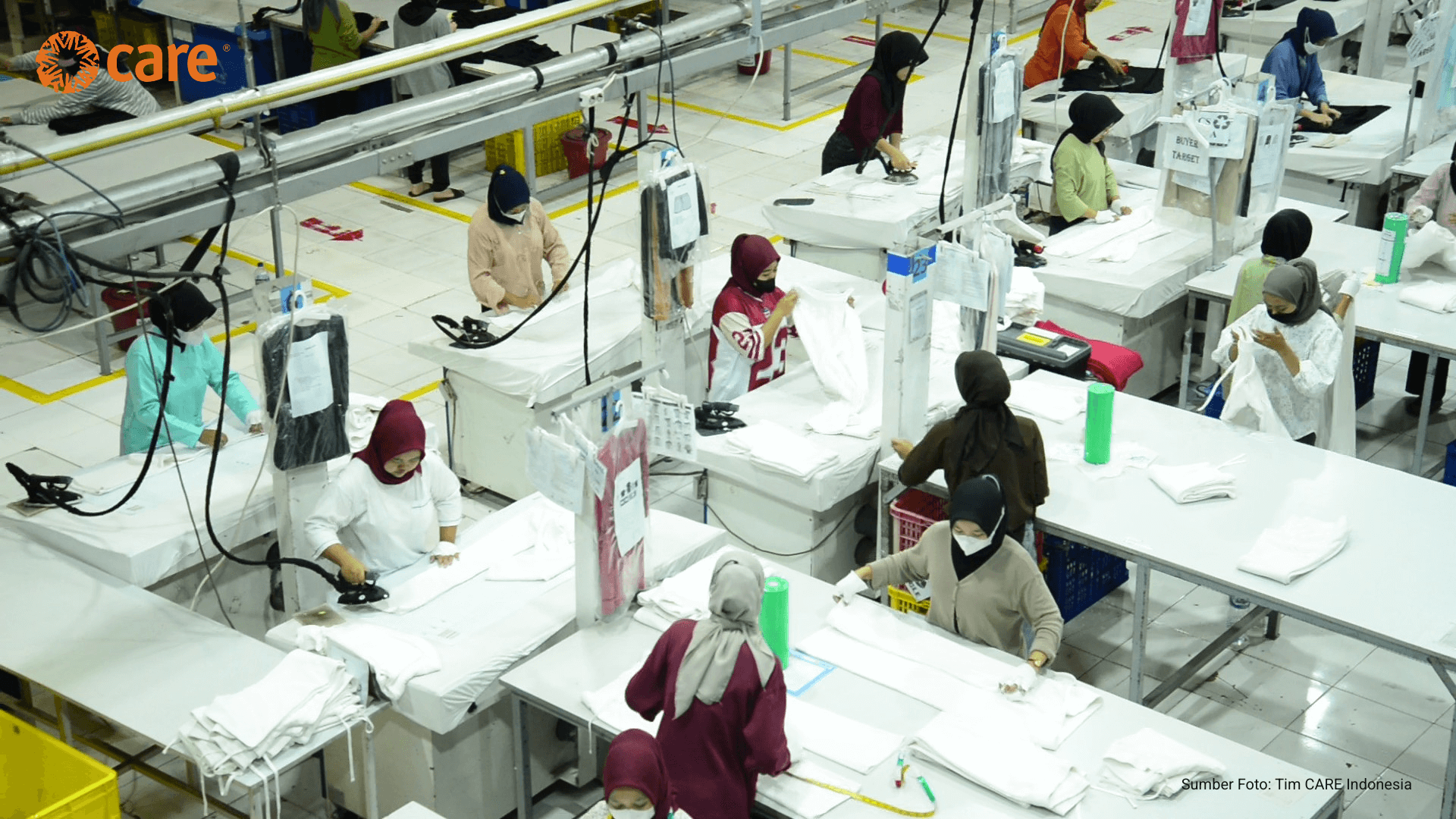
Ensuring that workers feel safe to raise concerns in the workplace is a critical priority. This was the key lesson shared by CARE Indonesia during the 2026 Organization for Economic Co-operation and Development (OECD) Forum. Drawing from its experience supporting garment factories in Indonesia, CARE Indonesia emphasized that having a system in place alone is not enough, the determining factor is workers’ trust in the mechanism itself.

Awalia Murtiana, Program Manager at CARE Indonesia, explained during the forum that some companies already have grievance mechanisms established. However, in practice, these systems are often underutilized. Workers tend to hesitate to report issues and only voice complaints when situations become severe or no longer tolerable.

“The core challenge is not the absence of procedures or policies, but how the system is experienced by workers in their daily lives. Many workers doubt the confidentiality of reports, worry about workplace rumors, or fear potential consequences after speaking up. This shows that grievance mechanisms are not merely technical tools, but social spaces shaped by power relations, workplace culture, and a sense of safety,” she said during the OECD forum held online on Friday (13/2), which was attended by more than 90 participants from the CARE Impact Partner network.

According to Awalia, to better understand these challenges, CARE Indonesia implemented a series of participatory approaches in partner factories, including worker focus group discussions, stakeholder mapping, internal factory assessments, and surveys to examine how grievance mechanisms function in practice.

“The intervention focused on strengthening the system holistically through a co-creation process designing solutions jointly with management and workers to ensure that changes are genuinely owned by the factory. The process began by strengthening understanding of gender equality, risks of gender-based violence in the workplace, and labor regulations that form the foundation of worker protection,” she added.

During the forum, Awalia also highlighted that knowledge alone is insufficient to drive behavioral change. Therefore, both workers and management were supported in developing practical skills such as assertive communication, dialogue facilitation, negotiation, as well as case handling and documentation.

“Another significant change took place within the structure of factory grievance mechanisms. Bipartite Committees were strengthened as formal platforms bringing workers and management together to resolve issues collaboratively. CARE Indonesia also supported the establishment of dedicated task forces to handle gender-based violence cases confidentially and through a survivor-centered approach,” she explained.

Awalia noted that gradual changes among workers have begun to emerge. Workers have become more confident in using grievance channels and better understand whom they can approach when facing problems. For CARE Indonesia, this increase is seen as a positive indicator.

“When workers begin to report, it means the system is starting to gain trust. Alongside increased reporting, relationships between workers and management have also improved. Communication has become more open and respectful, case documentation is more organized, and committees that were previously inactive are now functioning as active dialogue platforms. In one factory, workers even began approaching committee members directly after finally understanding clear communication pathways,” she said.

She further emphasized that the impact of these changes is felt not only by workers but also by companies. Strengthened grievance mechanisms help improve compliance beyond administrative documentation and into daily practice. A more open working environment also supports operational stability and production quality, demonstrating that worker protection and business sustainability can go hand in hand.

“From this experience, an effective system requires trust. When workers believe their voices are heard and handled safely, grievance mechanisms move beyond formality and become real tools for creating safer and more equitable workplaces for all,” Awalia concluded.


Writer: Kukuh Akhfad
Editor: Swiny Adestika
CARE Response Sumatera Bangkit: Restoring Access to Clean Water and Essential Needs for Survivors in Aceh and West Sumatra

Stories

Hydrometeorological disasters, including flash floods, landslides, and riverbank erosion, struck the provinces of Aceh, North Sumatra, and West Sumatra in late November 2025. Rapid Needs Assessments and Gender Assessments conducted by CARE Indonesia in December 2025 revealed that 76 percent of communities in Aceh Tamiang experienced limited access to clean water as well as shortages of daily necessities such as hygiene supplies, household items, food, sanitation materials, and women’s hygiene products, including sanitary pads. The lack of clean water was largely caused by wells being filled with mud during the floods. Indonesia’s National Disaster Management Agency (BNPB) reported that, as of Friday (27/2), approximately 270,779 houses in Aceh and West Sumatra were damaged, affecting families’ personal belongings and essential household assets.

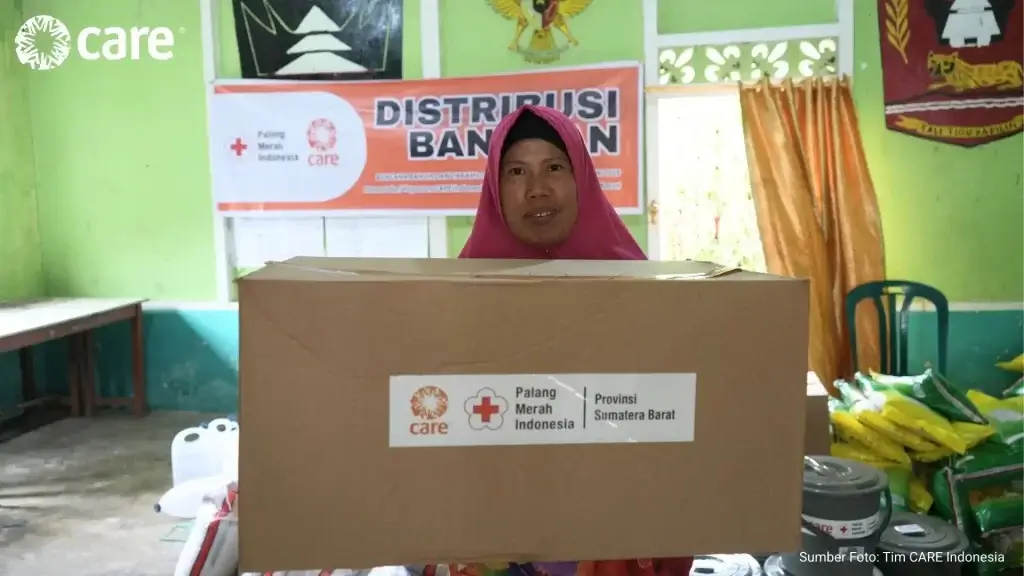
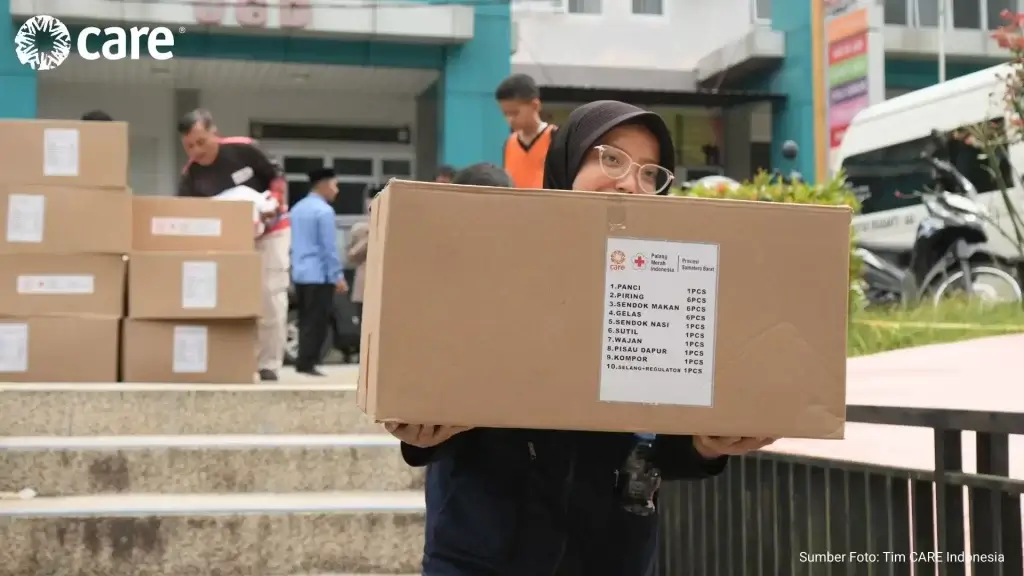
Together with partners, CARE Indonesia delivered gender-responsive assistance tailored to the needs of affected families, including food packages, kitchen sets, hygiene kits, bedding kits, household cleaning equipment, dignity kits, and clean water along with supporting infrastructure for disaster survivors across Aceh and West Sumatra. On Thursday (29/1), community members gathered at the Pagadih Village Hall in Palipuh Subdistrict, Agam District, where CARE Indonesia and the Indonesian Red Cross (PMI) West Sumatra distributed assistance to 20 households affected by landslides. The village, home to approximately 2,200 residents, was struck by landslides in early December 2025, causing severe damage to at least 20 houses and isolating the community for two weeks after road access was blocked by debris.

Nismawati, a single mother of four from Pagadih Village, shared that her home is no longer habitable after being buried by landslide debris, and most of her household belongings were destroyed. “It rained heavily since the afternoon, and I noticed the ground around my house shifting, so I decided to stay at a relative’s house. The next morning at around six, I returned and found my house already covered by soil. Now my home and belongings can no longer be used,” she said. She explained that the assistance package containing cooking equipment, food supplies, and personal hygiene items—has greatly supported her daily needs. “These items replace everything I lost. I can also send food to my youngest child, who is currently attending high school in another area. I am grateful and thankful to CARE Indonesia and PMI,” she added with a smile.

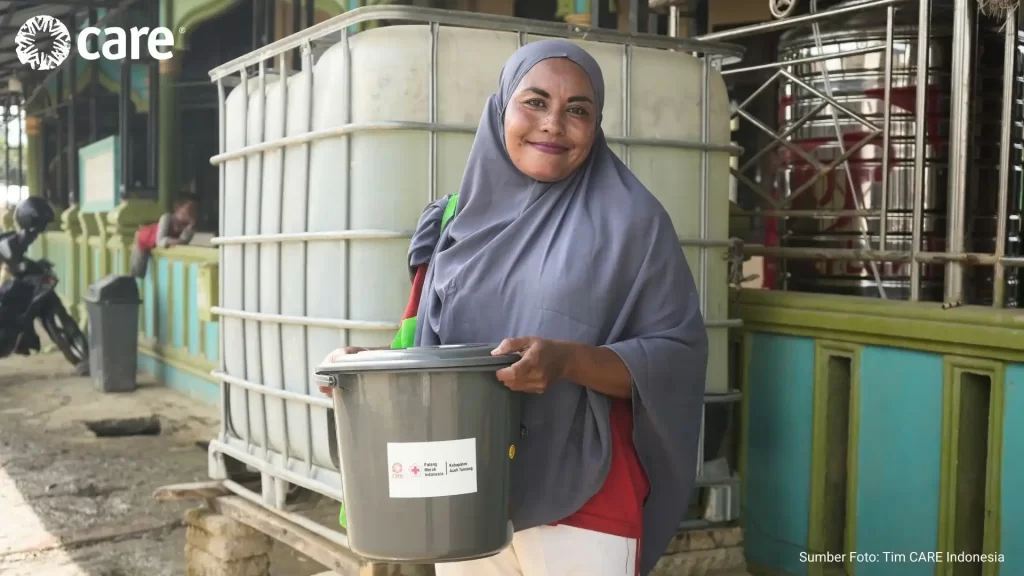
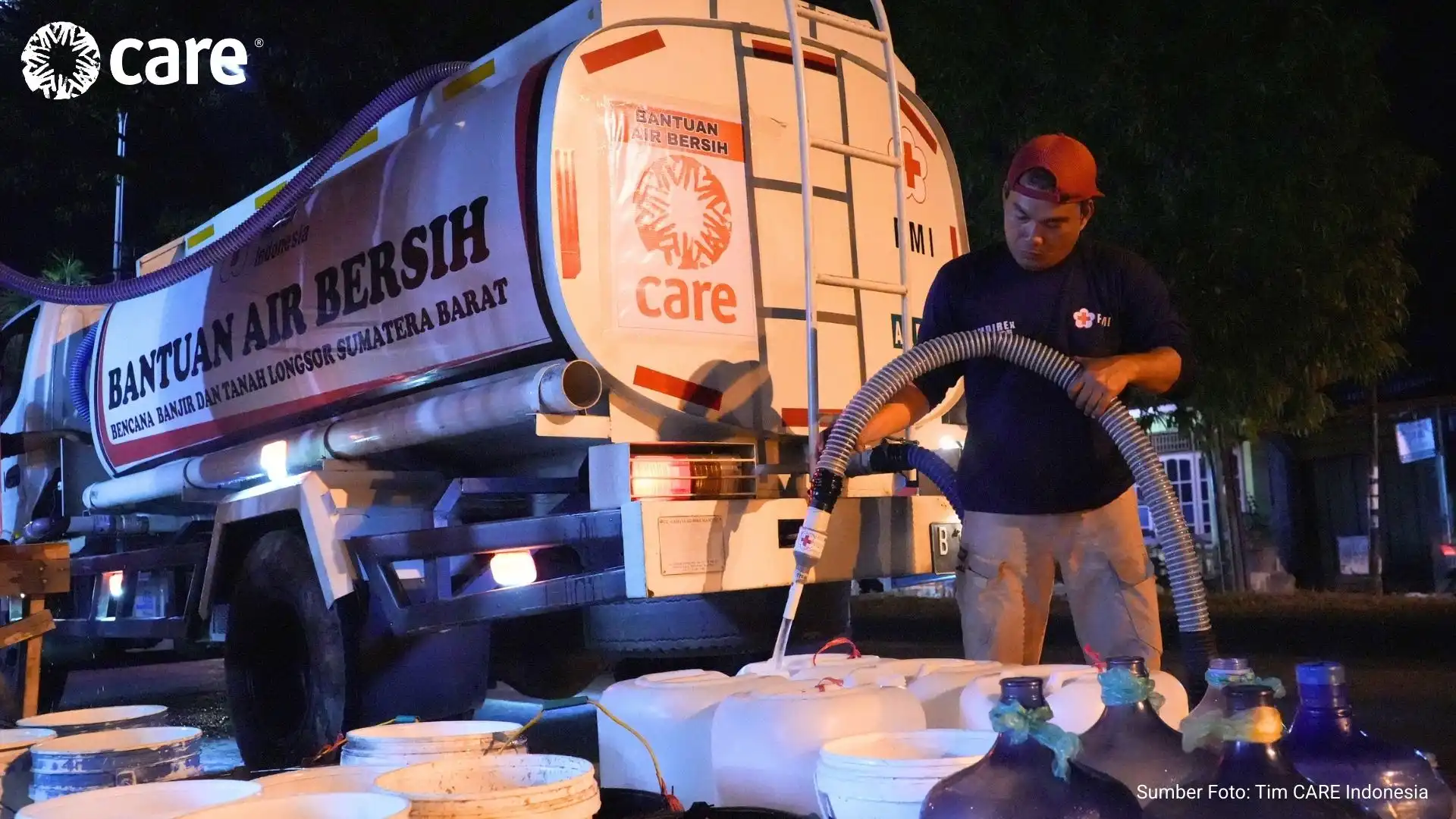
The flash floods in late November 2025 also damaged the Batang Kuranji Dam, triggering a water crisis in several areas of Padang City. The floods damaged pipelines belonging to the local water utility company (PDAM) and caused community wells to dry up, forcing residents to rely on water distributed by tanker trucks. Meri Susanti, one of the residents affected since early December 2025, explained that her family depends entirely on water supplied by CARE Indonesia and PMI after their well dried up due to the floods. “Since the water source disappeared, my family has relied on water assistance from PMI and CARE Indonesia for bathing, cooking, and washing. The water distribution point is only about 100 meters from our house, so it has been very helpful,” she said.

As of Wednesday (25/2), CARE Indonesia and PMI West Sumatra had distributed 3,335,505 liters of clean water and installed 20 water storage tanks across Padang City, reaching 286,117 people. In addition, 450 cooking sets, 650 food packages, and 790 personal hygiene kits were distributed to 832 households, benefiting 3,568 people across West Sumatra Province.

Household Assistance Supports Recovery for Families in Aceh Tamiang

Khairunisa, a resident of Dusun Damai in Kota Kuala Simpang Subdistrict, Aceh Tamiang, and a single mother of one child, shared that flood waters reached approximately four meters high, damaging many of her personal belongings. According to her, the bedding kits and dignity kits provided by CARE Indonesia have been essential in replacing items lost during the floods.

“During the heavy rain, the water kept rising until my house collapsed. When I returned the next day, everything had been washed away. I am now staying at my sister’s house, where eight adults and three toddlers live together. The assistance package, especially the mosquito net, has been very helpful in protecting my toddler from mosquitoes at night,” she said on Monday (16/2).

She also explained that the flood damaged her household well, making clean water assistance crucial for daily life. “This water support is very important because we still do not have adequate access to clean water here. It becomes even more essential during Ramadan, when water needs increase,” she added.

In Aceh Tamiang District, CARE Indonesia collaborated with the Indonesian Red Cross (PMI) Aceh Tamiang and Geusaba to distribute assistance. As of Thursday (26/2), CARE Indonesia and its partners had distributed 995 bedding kits and 1,755 dignity kits to 203 households, benefiting 449 people. A total of 100,000 liters of clean water had also been delivered to 3,517 households, reaching 17,588 people.

Supporting infrastructure for clean water access included the provision of 12 water storage tanks, nine water purification units, 20 hoses, nine water pumps, 17 water suction pumps, six generators, and well-cleaning services. Additionally, 12 emergency latrines for men and women were constructed in Kuala Simpang Subdistrict.

Field observations indicate that the needs of affected families in West Sumatra and Aceh remain significant. Assistance to meet clean water needs, household equipment, hygiene supplies, and daily essentials is still urgently required. CARE Indonesia is currently preparing an additional 620 hygiene and basic needs packages for survivors in Aceh Tamiang, which will be distributed together with partners in the coming phase of the response.


Writer: Kukuh Akhfad
Editor: Swiny Adestika