
Amid the floodwaters that inundated Kuala Simpang, Aceh Tamiang District, one of the most fundamental necessities of daily life suddenly disappeared for affected communities: access to clean water. In emergency situations, the provision of safe water is a critical priority, as it is directly linked to public health and survival. Insufficient quantity and poor quality of water are among the primary causes of public health crises during humanitarian emergencies.
The floods not only submerged homes and roads but also contaminated nearly all community water sources. Wells that had long sustained daily life were transformed into pools of mud mixed with waste, rendering them unsafe for use, let alone for drinking. This situation was directly observed by Renee Manoppo, Humanitarian & Emergency Response Manager of CARE Indonesia, during a rapid needs assessment conducted as part of the flood response in Aceh Tamiang (10–18 December).
“Seventy-six percent of residents experienced difficulties accessing clean water. Communities struggled to obtain water because their wells were buried under mud carried by the floods. In disaster situations, water is not merely a basic need, it is a source of life,” Renee explained while recounting her field experience in Aceh Tamiang.
She further noted that even during floods of relatively smaller scale, community water sources are almost always contaminated. However, the situation in Kuala Simpang was far more severe. Nearly 100 percent of household wells were polluted by mud, debris, and wastewater that had mixed together during the flooding.
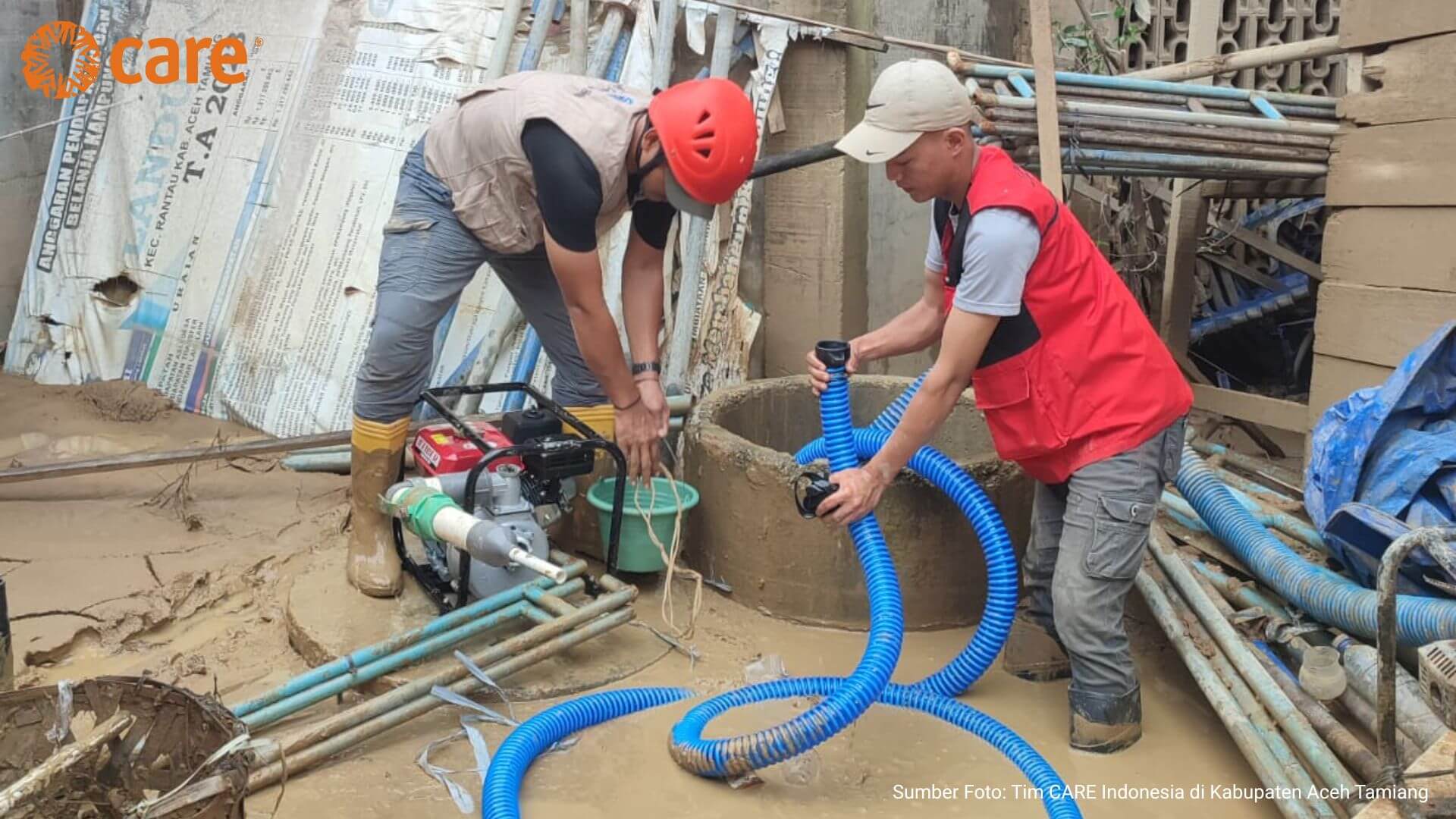
“This is why the provision of mud pumps was absolutely crucial. These pumps were not intended to provide instant drinking water, but rather to serve as an initial step to rehabilitate community wells so they could become usable again,” she explained.
Recognizing the urgency of clean water access, preparations were made even before the response team was deployed. Renee shared that prior to her departure to Kuala Simpang on 10 December 2025, she coordinated with various partners, including the Gadjah Mada University Alumni Family (KAGAMA Care). She learned that KAGAMA Care planned to support clean water access by deploying a Water Treatment Unit (WTU), but still lacked equipment to remove thick mud from contaminated wells.
“Due to the lack of sludge pumps, we provided two specialized mud pumps. The process was far from simple. All dirty water and mud had to be completely removed from the wells. After that, the wells were rehabilitated using alum and chlorine so that sediments could settle and bacteria could be eliminated. Only then could clearer water be further processed,” she explained.
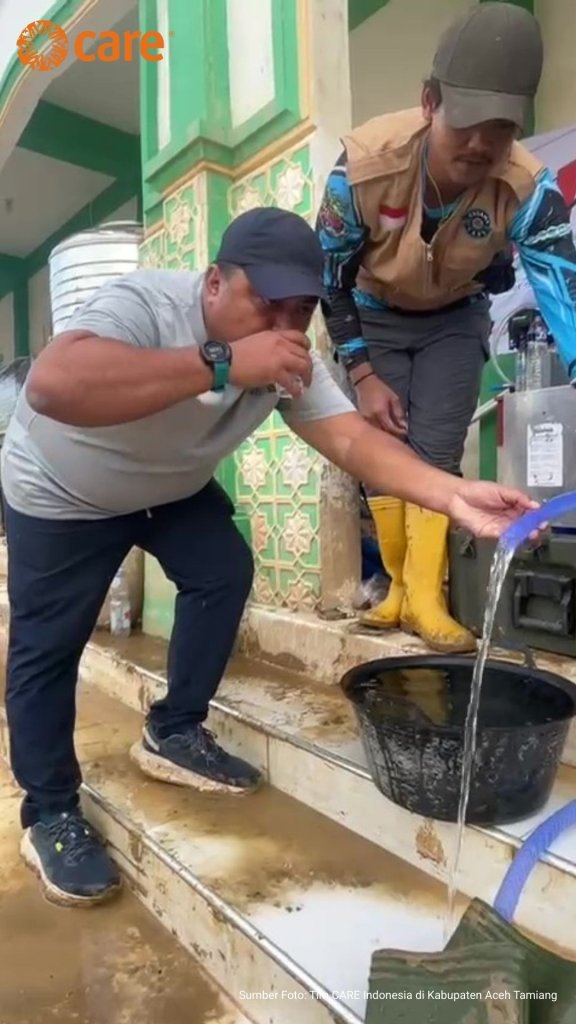
Renee further described that once the wells had been cleaned, water extraction equipment and filtration systems could be installed. Water drawn from rehabilitated wells was then filtered and passed through ultraviolet (UV) sterilization to eliminate microorganisms. A series of tests followed, including visual inspection, odor and taste assessment, as well as measurements of pH and total dissolved solids (TDS). These trials were conducted at Ibnu Hasan Islamic Boarding School in Rantau Sub-district, Aceh Tamiang, which served as the KAGAMA Care coordination post.
“During the testing phase, no one was willing to drink the treated water directly. I understood their concerns about the risk of illness. Therefore, armed with positive test results, I decided to try the water myself. Thankfully, I experienced no digestive issues at all,” Renee said with a smile.
She added that the mud pumps could be rotated from one well to another. After a well was fully rehabilitated, the pump was moved to the next location across various areas in Aceh Tamiang District, including Kampung Lando in Rantau Sub-district, Kampung Sukajadi in Karang Baru Sub-district, and Kampung Kuala Simpang in Kota Kuala Simpang Sub-district. Rehabilitating a single well typically required two to three hours, depending on the well’s depth and level of contamination.
Renee explained that the system produced up to 24,000 liters of clean water per day. Based on Sphere standards, this volume is sufficient to meet the minimum daily water needs of approximately 1,600 people.
“As of Thursday, 18 December 2025, this equipment had been used to rehabilitate four wells, benefiting approximately 450 people across several areas of Aceh Tamiang. The mud pumps have now been handed over to the KAGAMA Care team so that well rehabilitation efforts can continue. We hope that, moving forward, more communities will gain easier and more sustainable access to clean water,” she concluded.
Author: Kukuh A. Tohari
Editor: Swiny Adestika
