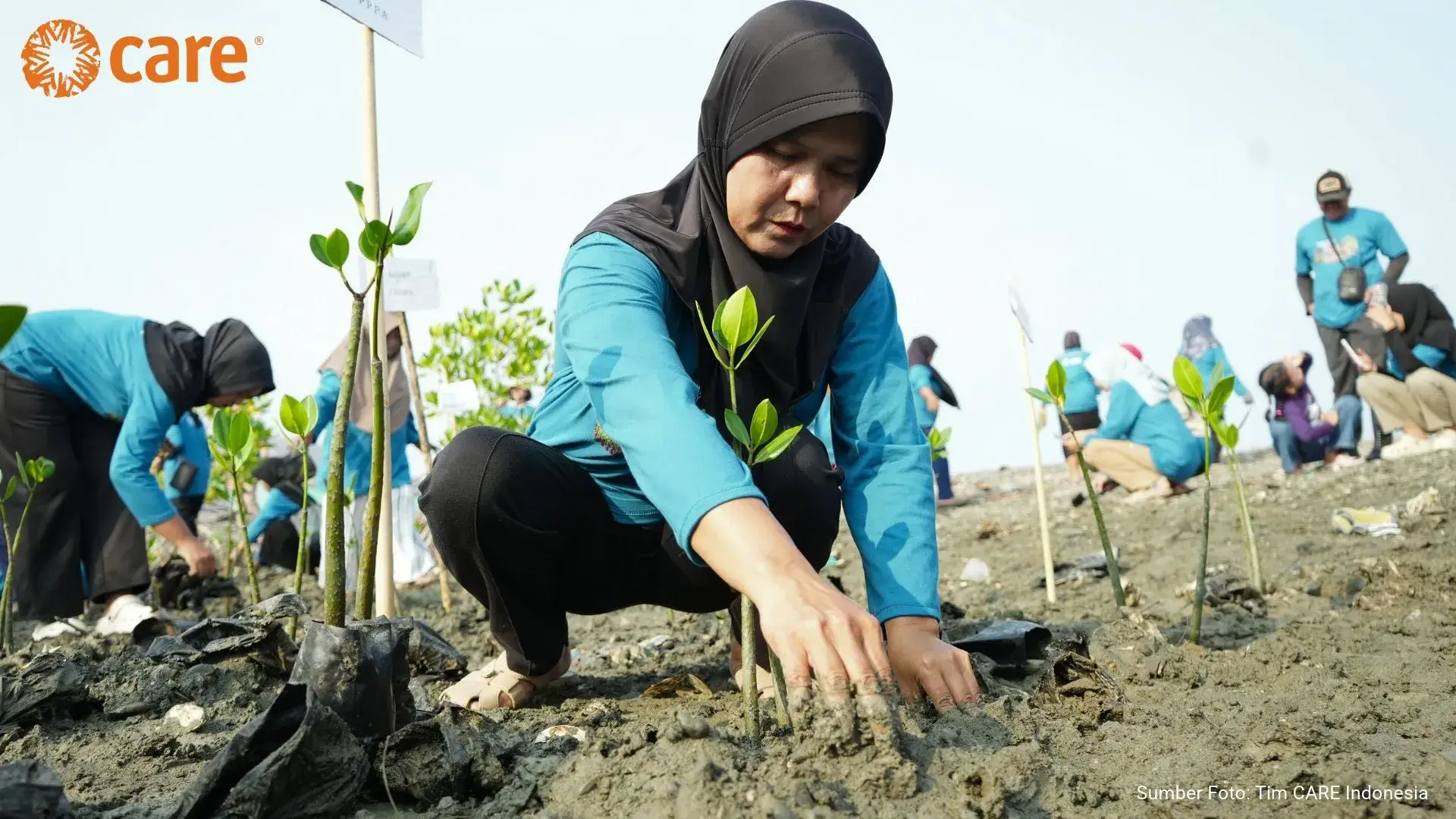
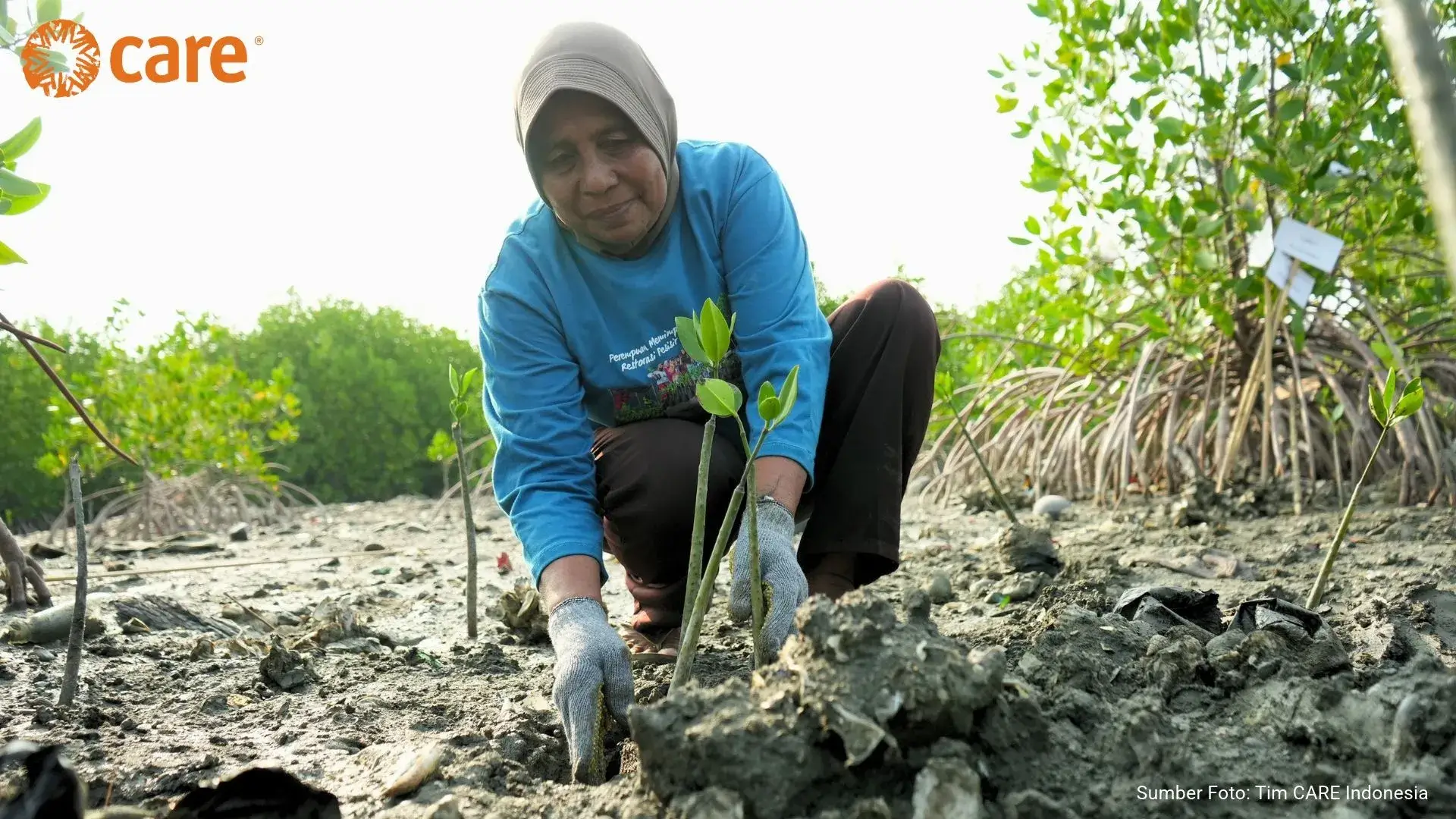
For the people of Cempa Village, Tojo Una-Una District, Central Sulawesi, mangroves are more than just coastal vegetation. Protecting and preserving mangrove ecosystems is an important part of efforts to strengthen the resilience of coastal communities. With support from CARE Indonesia and Karsa Institute, and funding from the Ford Foundation, local communities, including women, are working alongside the village government and other stakeholders to rehabilitate mangrove ecosystems in Cempa Village.
This collaborative initiative began with seedling propagation in April 2026 and has now entered the mangrove planting phase. A symbolic mangrove planting ceremony was held on Sunday, November 8. The event was attended by representatives of the Ministry of Women’s Empowerment and Child Protection, the Ministry of Marine Affairs and Fisheries, the Tojo Una-Una District Government, the Head of Cempa Village, and the CEO of CARE Indonesia.
To date, 28,000 mangrove seedlings have been planted. The initiative aims to plant a total of 50,000 mangroves across five hectares of coastal land. The participation of various stakeholders in the planting activity reflects the importance of collaboration in protecting coastal ecosystems while strengthening the resilience of communities living in these areas.
“Through mangrove planting and ecosystem restoration, the people of Cempa Village are expected to continue protecting their coastal environment. More than simply planting trees, this initiative represents a long-term investment in safeguarding livelihoods, protecting residential areas, and strengthening community resilience in the face of environmental change,” said Dewa Ayu Laksmiadi, Deputy Assistant for Gender Mainstreaming in Human Development and Culture, Community Empowerment, and Regional Government at the Ministry of Women’s Empowerment and Child Protection.