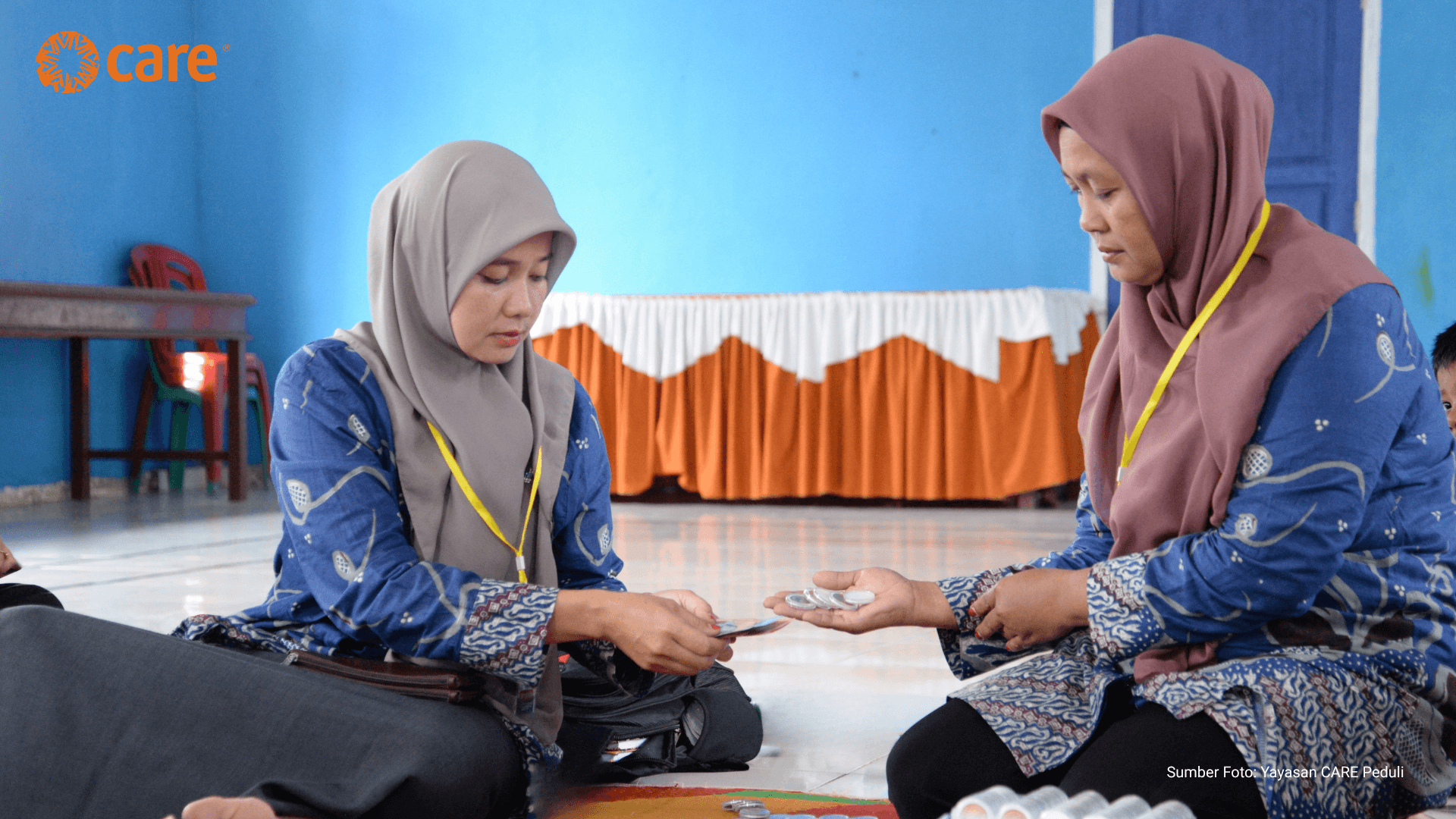
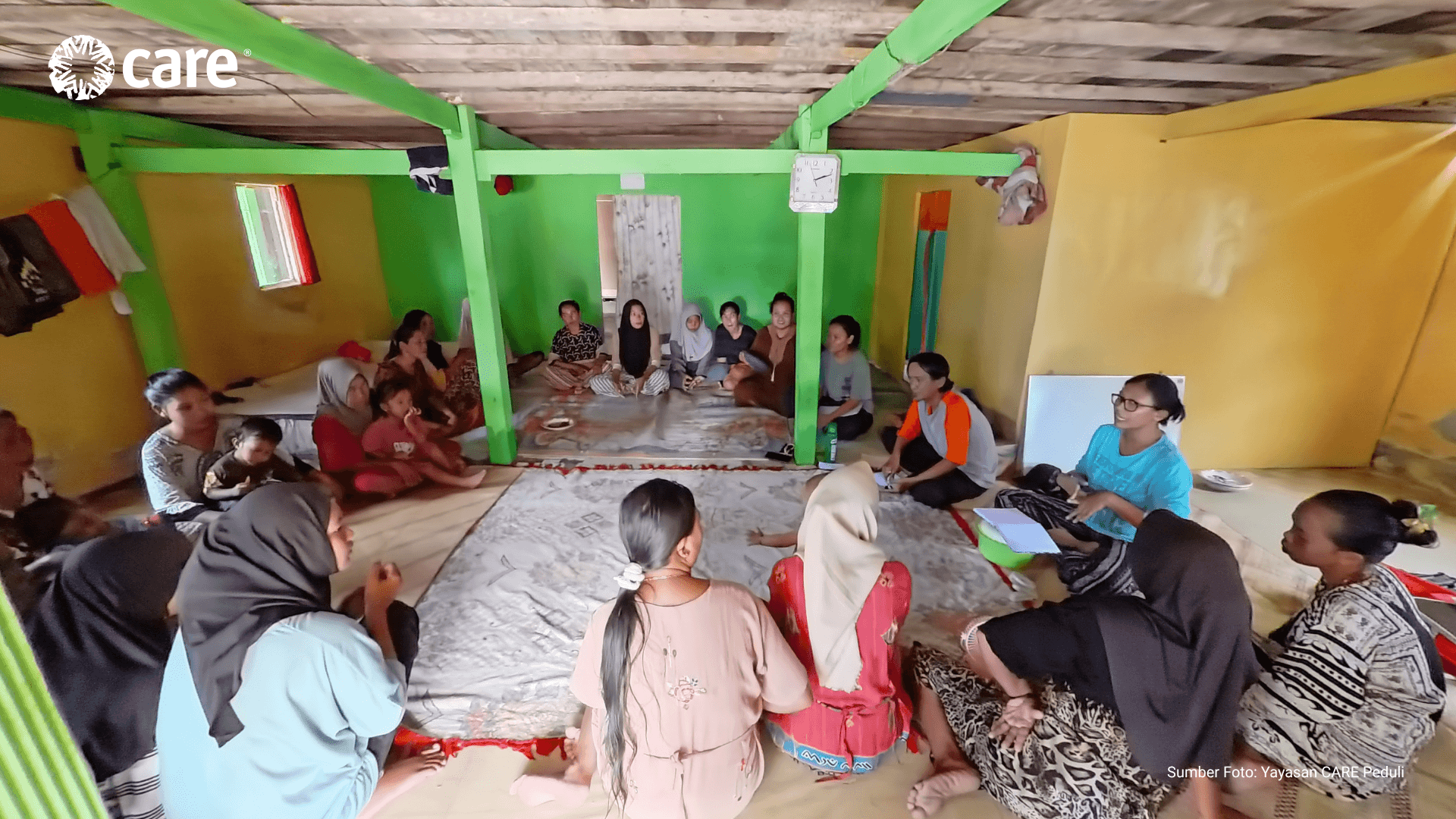
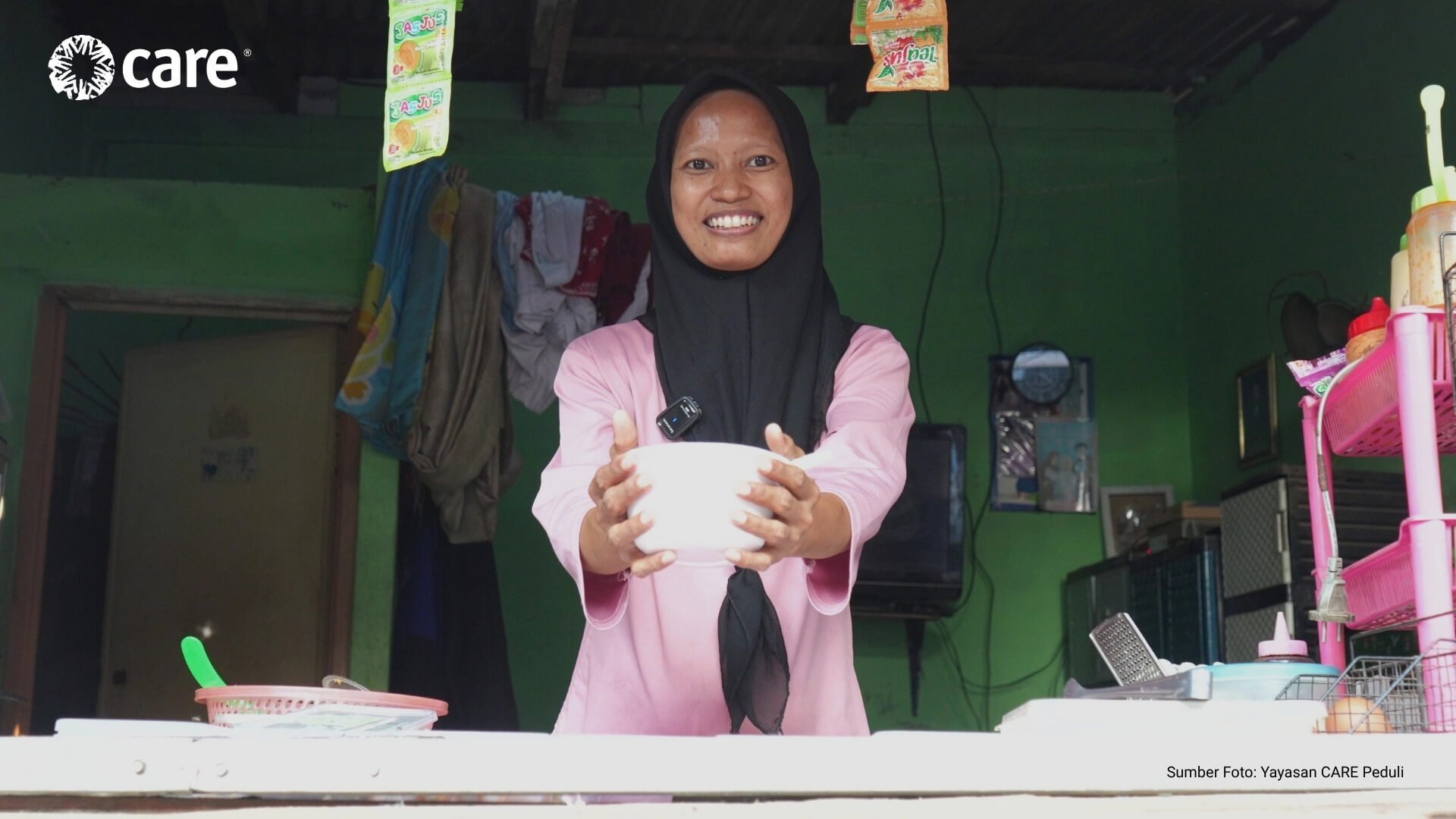
In Musi Banyuasin District, woven handicrafts made from oil palm midribs have become one of the region’s flagship products and are now included in the local government’s electronic procurement catalog. The women artisans producing these woven products come from several villages and are members of Women-led Economic Business Groups (Kelompok Usaha Ekonomi Perempuan/KUEP).
Iswandi Gunata, CARE Indonesia’s Field Officer in Musi Banyuasin District, explained that palm fronds weaving was selected as the primary livelihood activity for many KUEP groups due to the easy availability of raw materials. The midribs are sourced from unused oil palm fronds, helping to manage agricultural waste that would otherwise accumulate in plantation areas, while being transformed into artistic products with economic value that are highly sought after by buyers.
Beyond developing small-business from palm frond waste, Iswandi shared that some KUEP members have also taken the initiative to utilize other forms of waste, such as empty fruit bunches for straw mushroom cultivation, as well as Black Soldier Fly (BSF) maggot cultivation to process household organic waste. According to Iswandi, the strong enthusiasm of KUEP members to develop environmentally friendly small-business based on circular economy principles has received support and appreciation from various stakeholders, including oil palm plantation company PT Hindoli and the Musi Banyuasin District Government.
“Waste management not only has environmental benefits, but can also become a source of livelihood for women’s groups. This is what we hope will continue to receive support and collaboration from multiple stakeholders, including the local government and PT Hindoli, which has consistently supported women’s empowerment,” he said.
Iswandi further explained that the significant potential for developing handicraft small-business and circular economy–based waste management initiatives by KUEP has strengthened multi-stakeholder support. This led to the implementation of learning visits and training aimed not only at enhancing women’s groups capacities, but also at encouraging replication and sustainable scaling-up of these businesses.
In January 2026, a learning journey to two locations on Java Island was carried out. “The first learning visit was to the Maggot Center in Depok City. We received strong support from the Head of the Musi Banyuasin Environmental Agency, Oktarizal; the Regent’s Special Staff, Mualimin Pardi Dahlan; and the CSR Manager of PT Hindoli to directly observe how circular economy principles are applied at this maggot center,” Iswandi explained.
Positive responses were expressed by both representatives of the Musi Banyuasin District Government and the corporations. According to Iswandi, witnessing firsthand how the Maggot Center, working in collaboration with the Beji Timur Sub-district Government successfully engaged communities in organic waste management provided new perspectives for participants in the learning visit.
“The learning experience in Depok broadened our perspective that waste management is not only about environmental protection, but can also become a livelihood source for women’s groups. This learning will be jointly reflected upon across sectors and strengthens our confidence that collaborative efforts among stakeholders can be more integrated, ultimately leading to improved community livelihoods, particularly for women. One KUEP member in Musi Banyuasin has already initiated maggot cultivation, but it has not yet been fully integrated. Moving forward, we hope to see broader multi-stakeholder support to scale this maggot farming initiative, linking it with nutrition gardens and livestock activities managed by communities, including women.” he added.
The second learning journey, Iswandi shared, was equally inspiring—accompanying 10 women palm frond weavers from five villages to Kulon Progo District. The women artisans came from Karya Maju, Sumber Agung, and Cipta Praja villages in Keluang Sub-district, as well as Banjar Jaya and Sri Mulyo villages in Tungkal Jaya Sub-district.
According to Iswandi, the women artisans showed remarkable enthusiasm and determination. They displayed no hesitation about flying across islands, driven by their desire to improve the quality and variety of woven products they have long produced, and to reach broader markets.
“This was a moment we had truly been waiting for. I saw how enthusiastic the women artisans were in following every instruction and how meticulous they were during practice sessions. There, we observed a wide range of woven products using various base materials such as rattan, banana stem fiber, pandan leaves, and water hyacinth,” he recalled.
Iswandi noted that the enthusiasm of KUEP women artisans remained consistently high throughout every training session. As their fingers skillfully interlaced materials into intricate patterns, creating beautiful handicrafts, smiles and laughter filled the room—adding energy and warmth to the practice sessions.
“I closely observed how serious these women were about learning. Throughout the training, they never complained; instead, they were always curious about what they would learn next. The goal was not only to sharpen their technical skills, but also to strengthen their confidence to continue creating,” he said.
Before they realized it, the five-day learning journey in Kulon Progo came to an end, and the group returned to Musi Banyuasin. Iswandi explained that following the training, KUEP women artisans will begin producing woven crafts that combine palm midribs with rattan, banana stem fiber, pandan leaves, and water hyacinth.
This learning journey not only enhanced technical knowledge, but also inspired participants to scale up existing good practices in their villages, making women-led initiatives more impactful and far-reaching.
“When women are given space, skills, and support, they are able to create change and generate positive economic impact. With multi-stakeholder support and the persistence of women’s groups, environmentally friendly small-business based on circular economy principles can become sustainable. For me, this process is not only about the final products, but about how women learn from one another, support one another, and build collective economic independence within a supportive ecosystem,” Iswandi concluded.
Writer: Kukuh Akhfad
Editor: Swiny Adestika